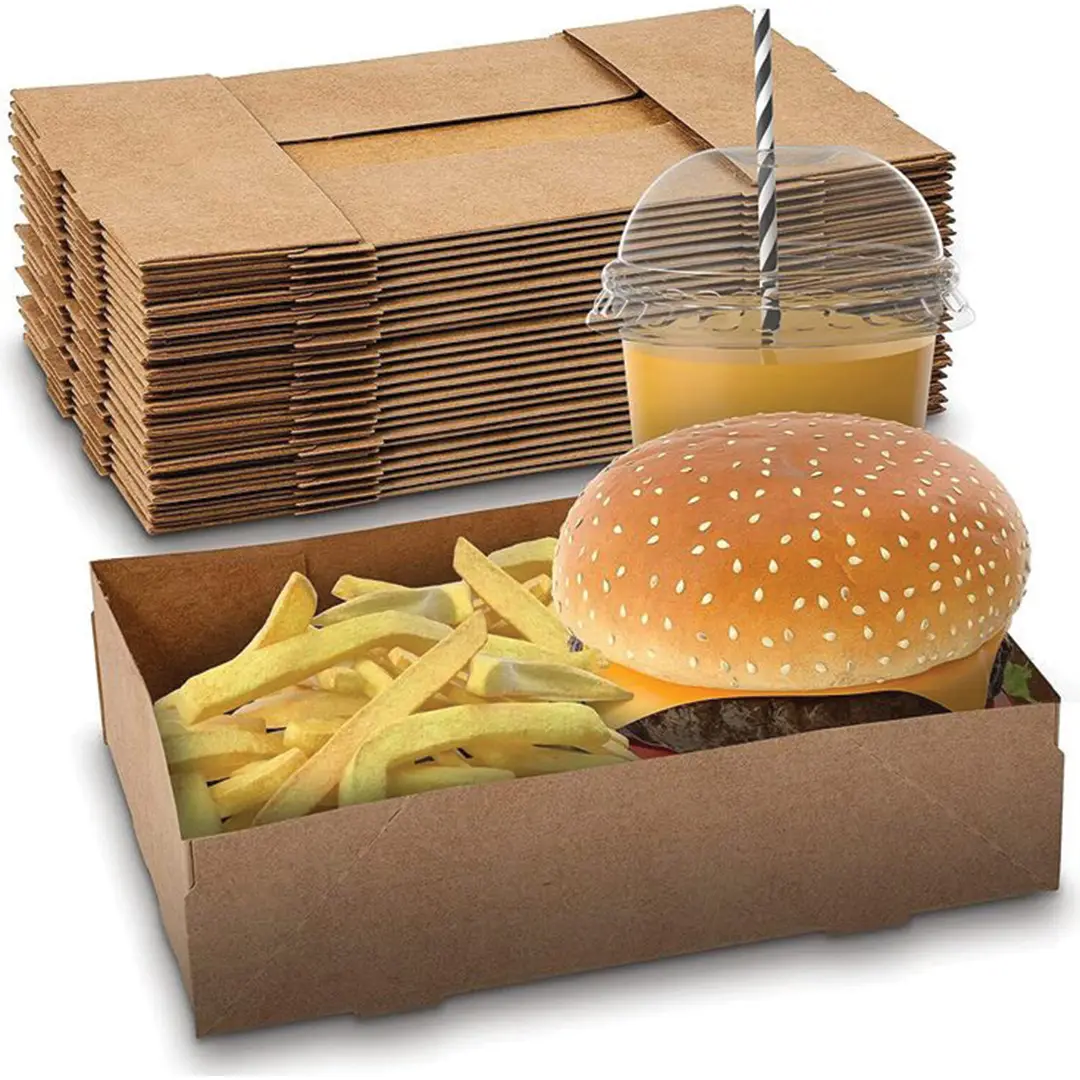
Custom Burger Trays
Trays sized for a burger plus a side, in board that holds under heat.
Specification & quoteProduct range
Trays fail in a predictable way. The board flexes under a hot, wet load, the corners lose their shape, and the customer ends up carrying the tray with two hands and a worried expression.
Choosing well is mostly a question of board weight against load. The pages in this range set out what each tray shape carries, so the specification matches the food rather than the price list.
18 products in this range
Short enquiry
Tell us what you serve and roughly how many you need. We reply with a specification, a minimum quantity and a lead time.
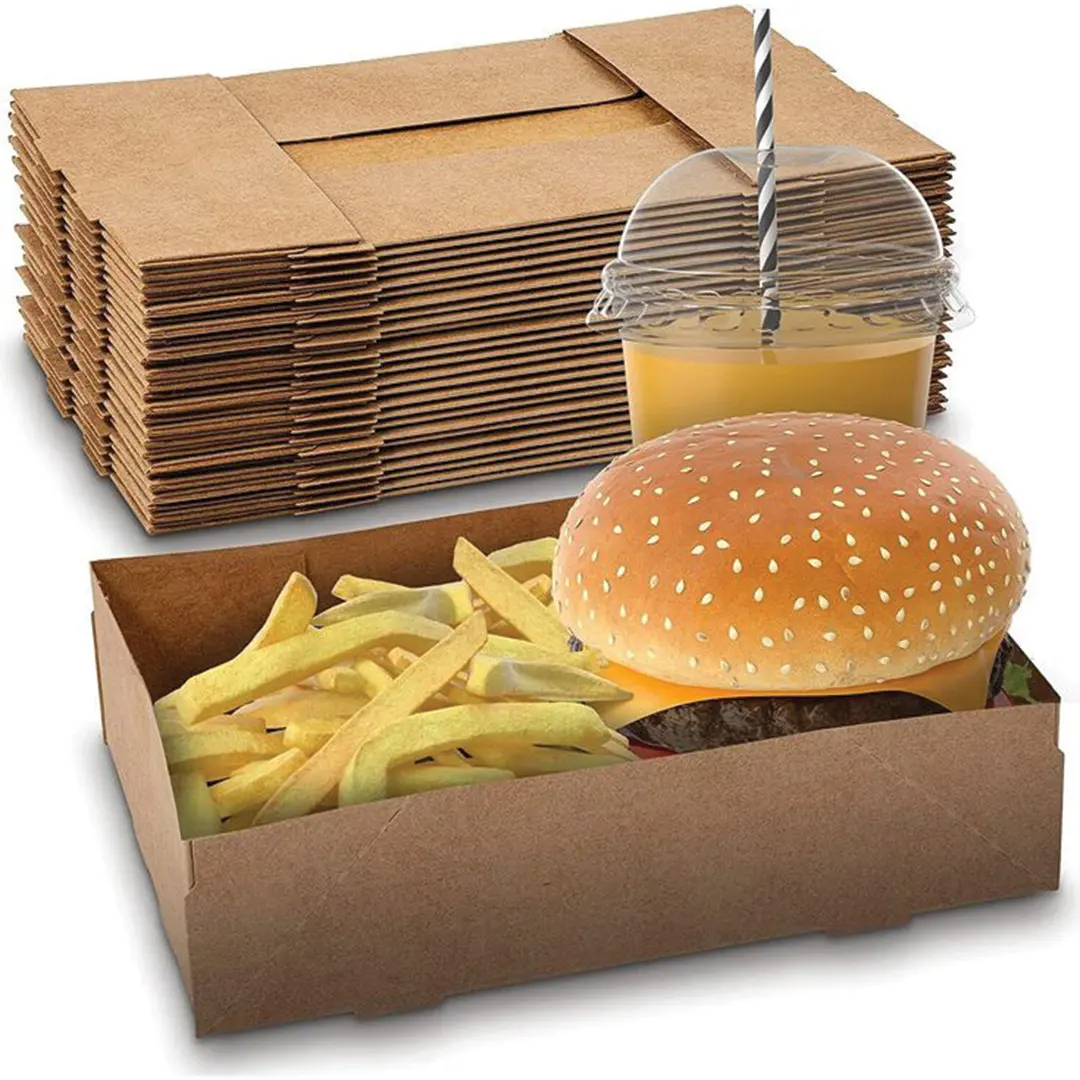
Trays sized for a burger plus a side, in board that holds under heat.
Specification & quote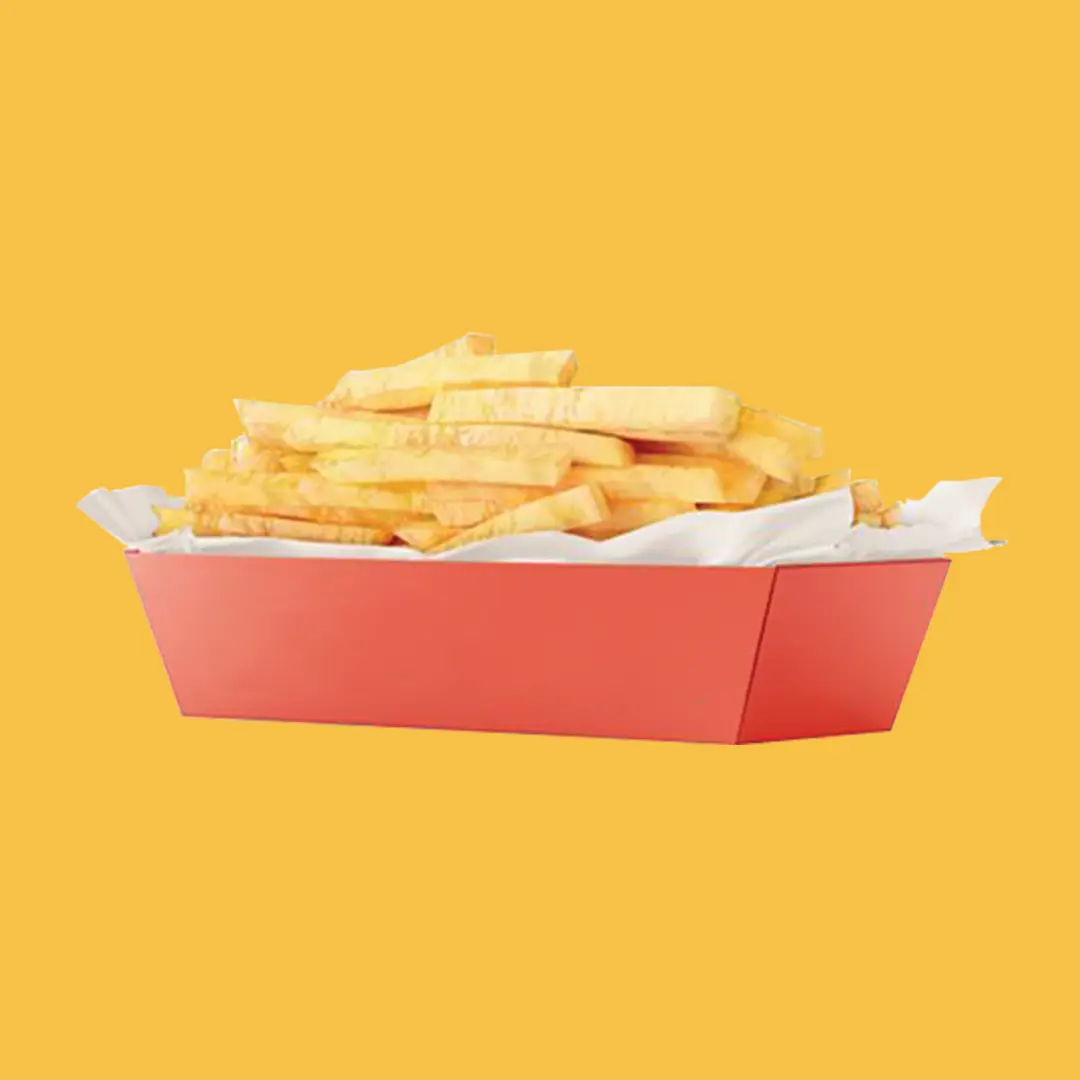
Deep-walled trays for loaded fries and toppings.
Specification & quote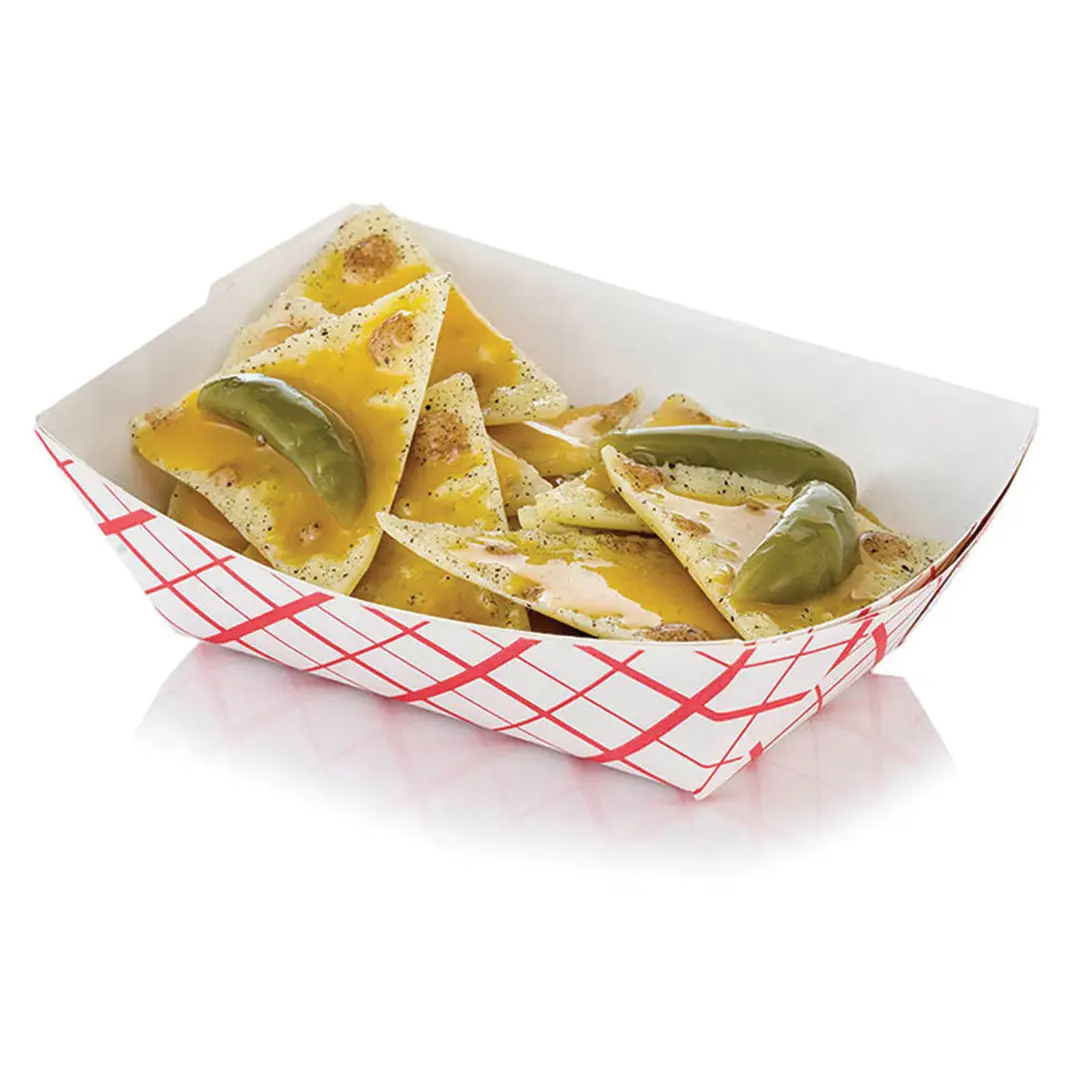
Trays with a separate dip well for cheese and salsa.
Specification & quote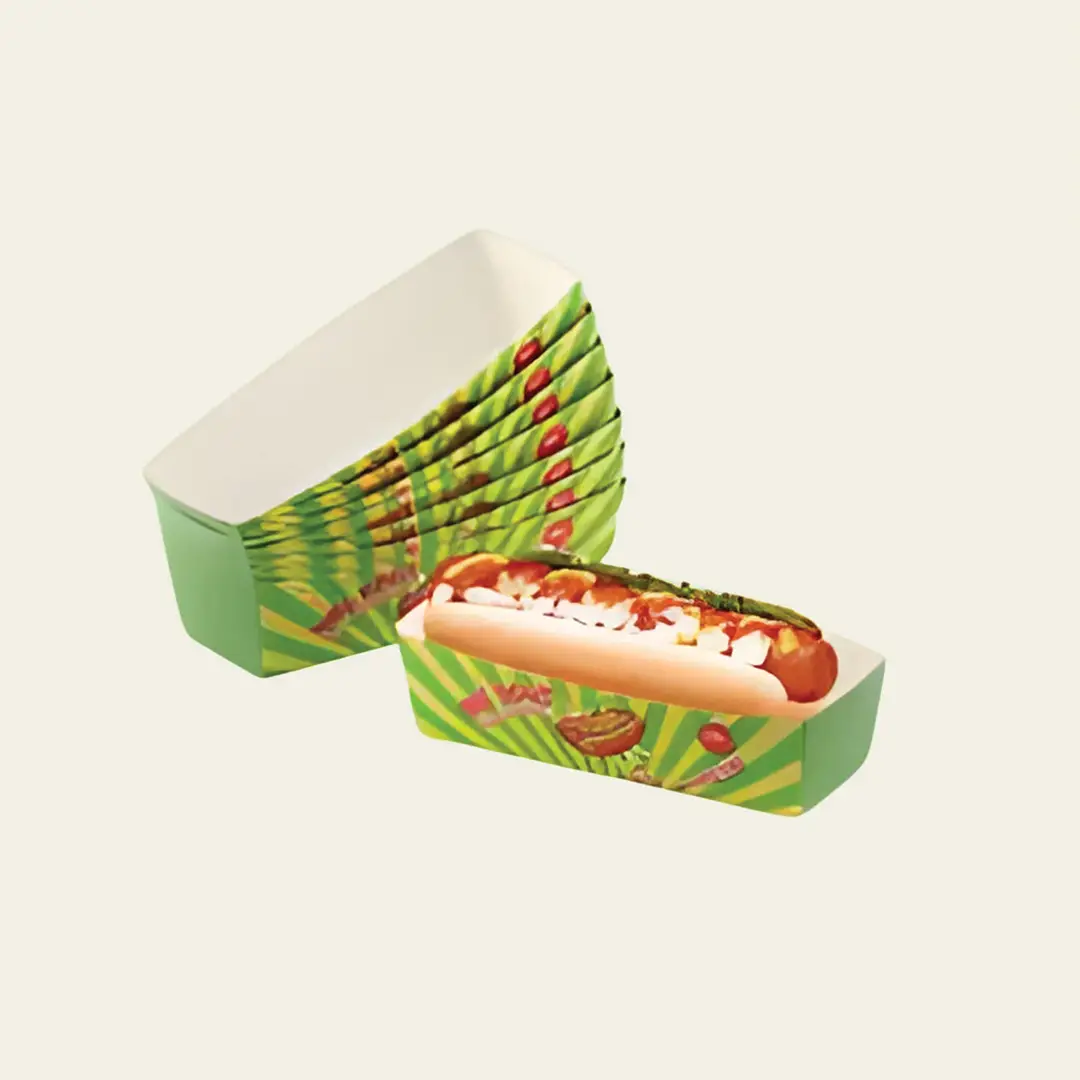
Trays with a channel for the roll and space for a side.
Specification & quote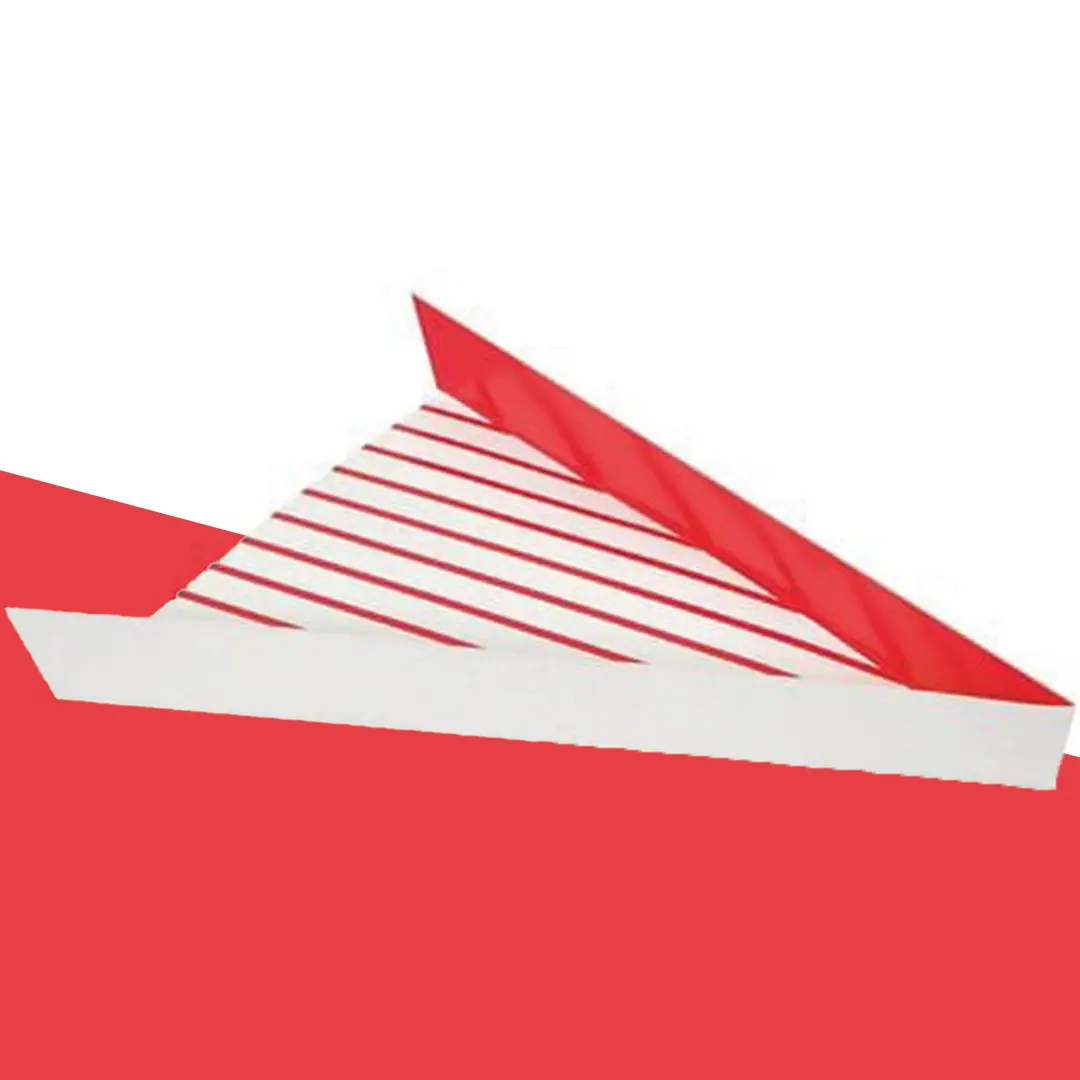
Rigid board bases sized to your whole-pizza diameter.
Specification & quote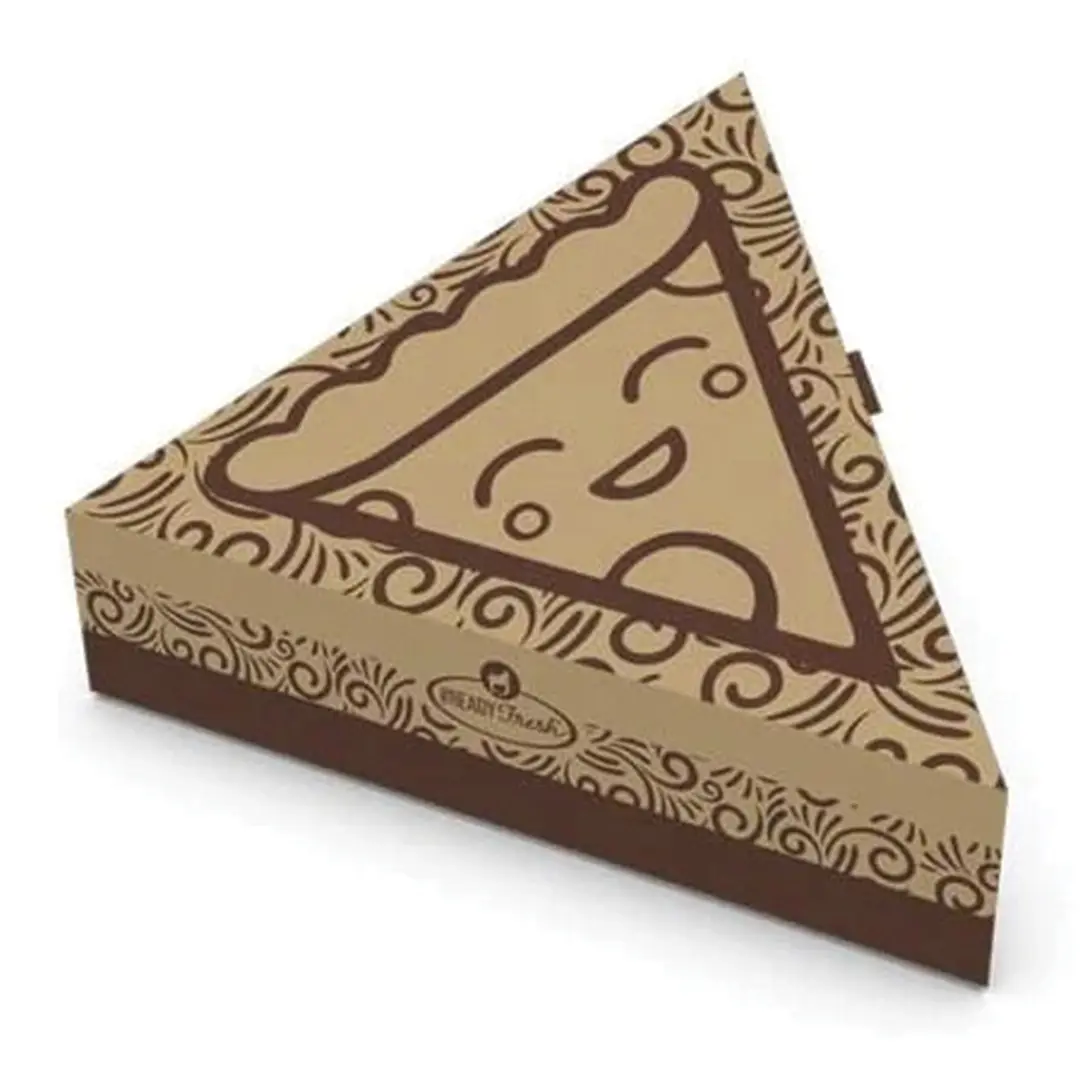
Wedge trays supporting a slice all the way to the tip.
Specification & quote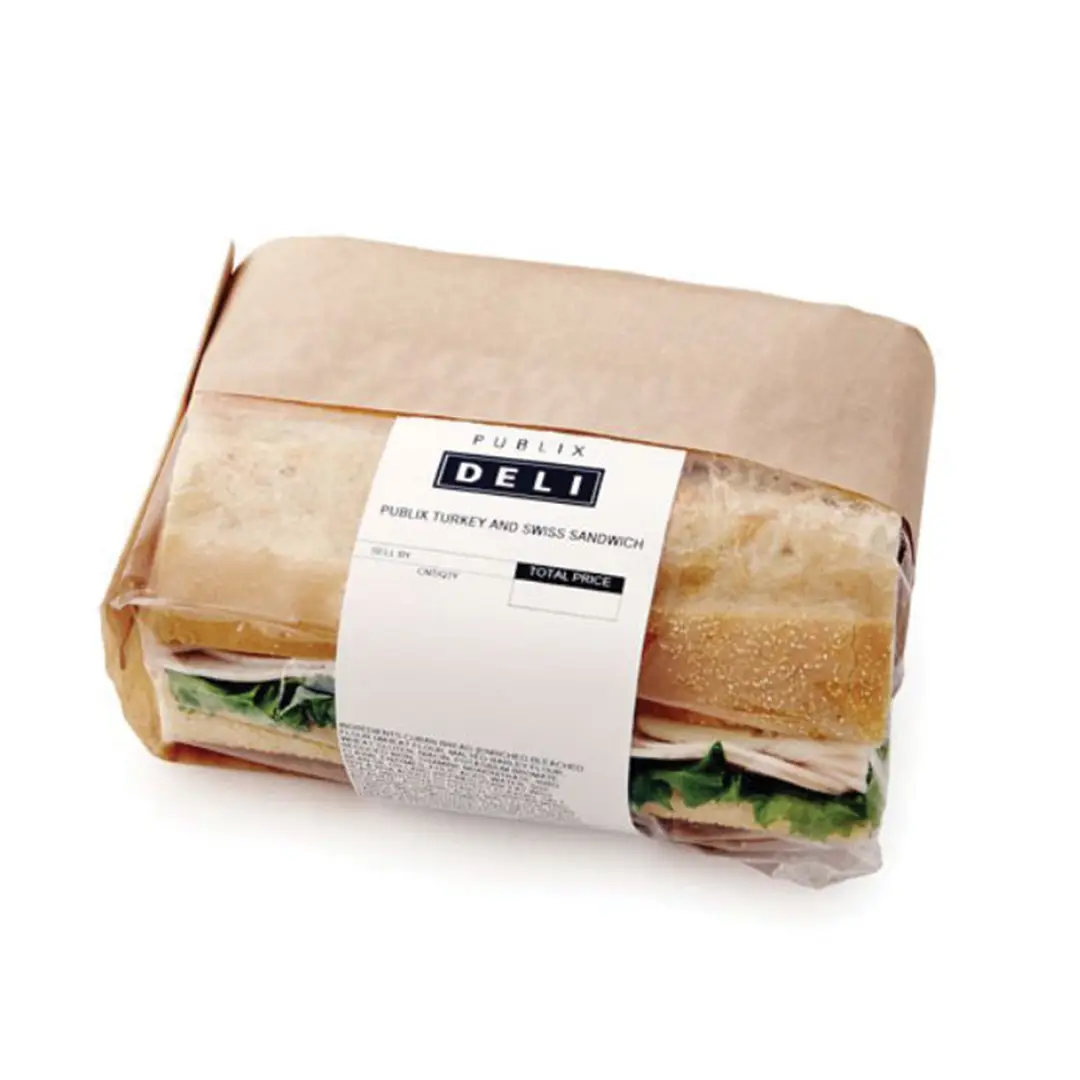
Platter trays for office catering and buffet orders.
Specification & quote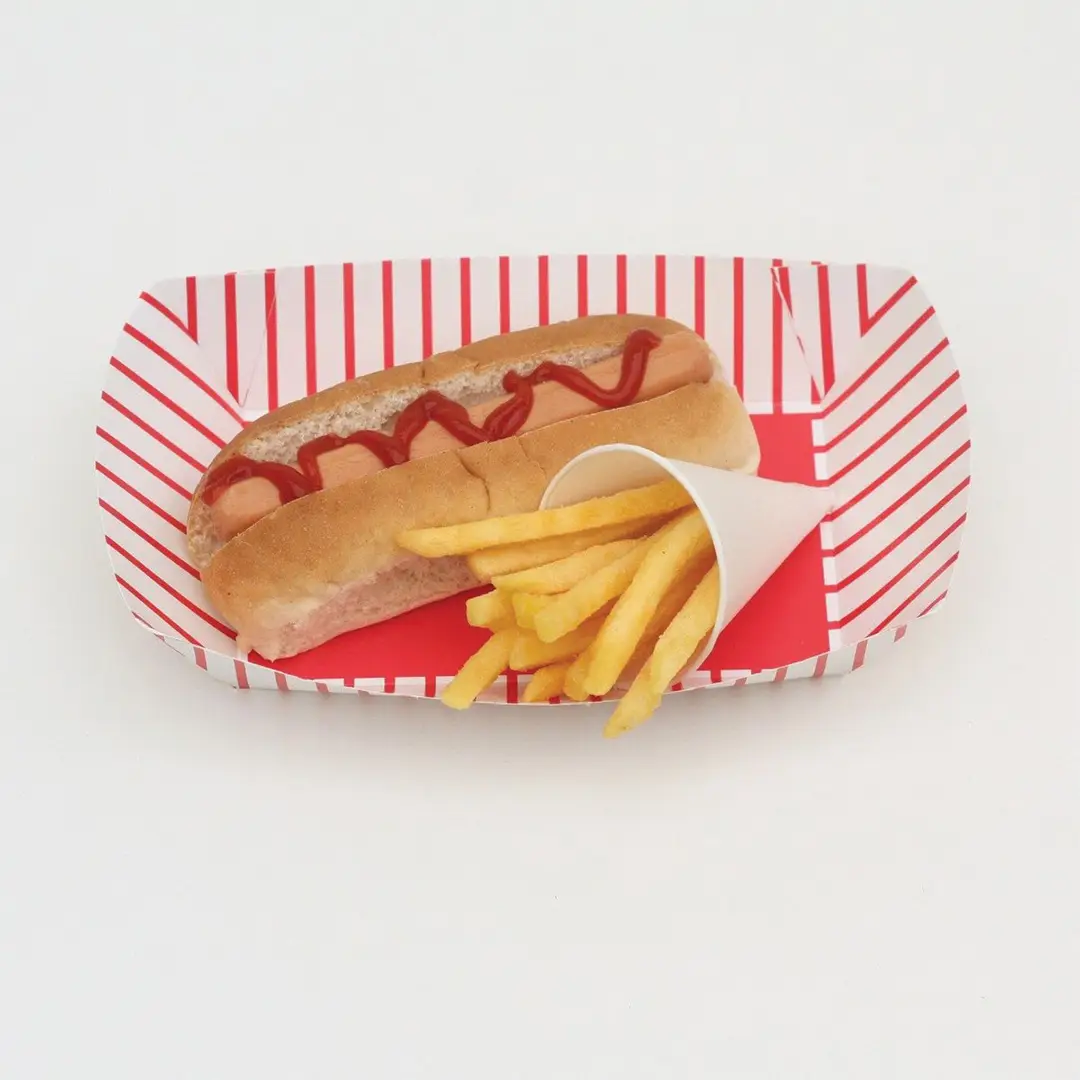
Small trays for single portions eaten standing up.
Specification & quote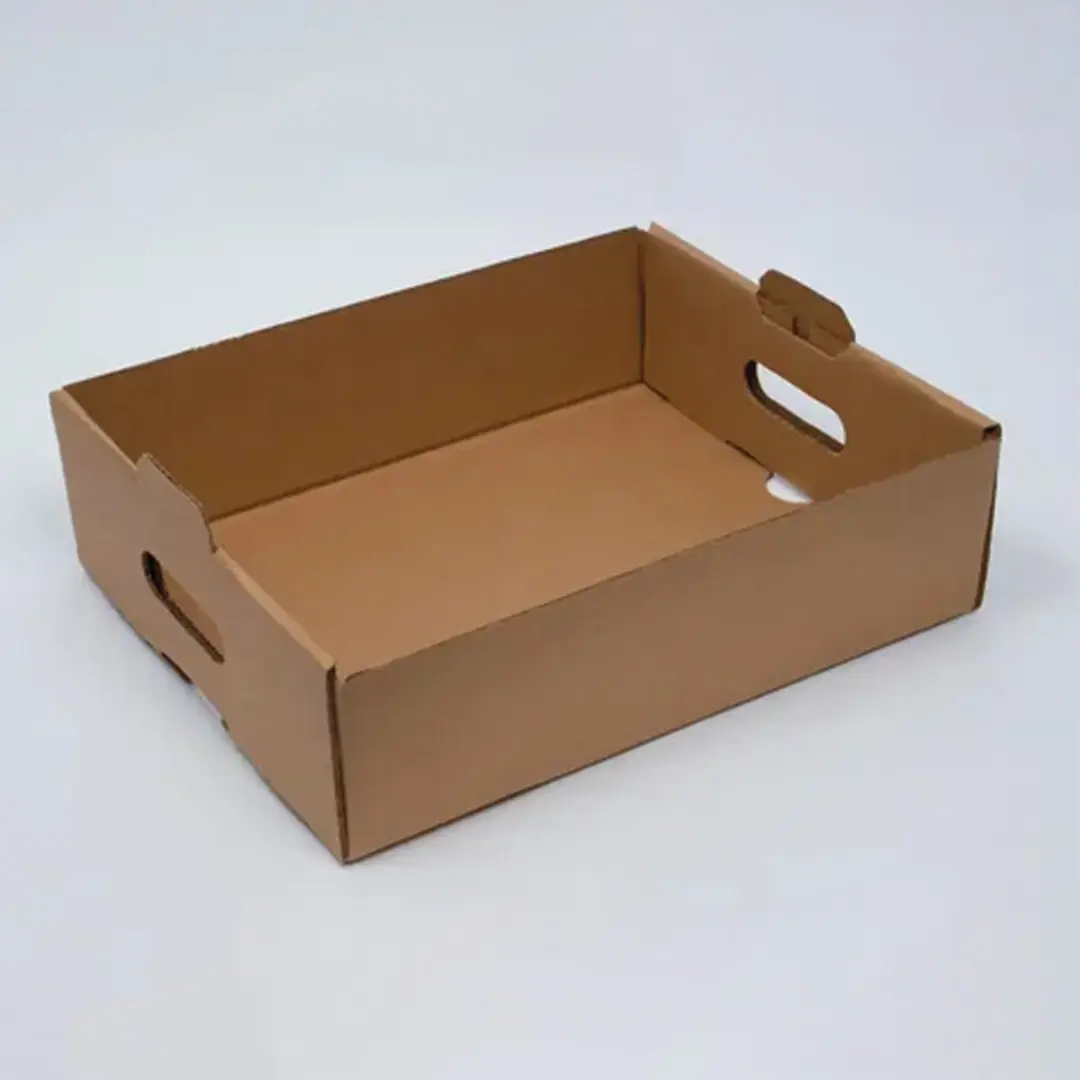
Compartment trays keeping a main, a side and a dip apart.
Specification & quote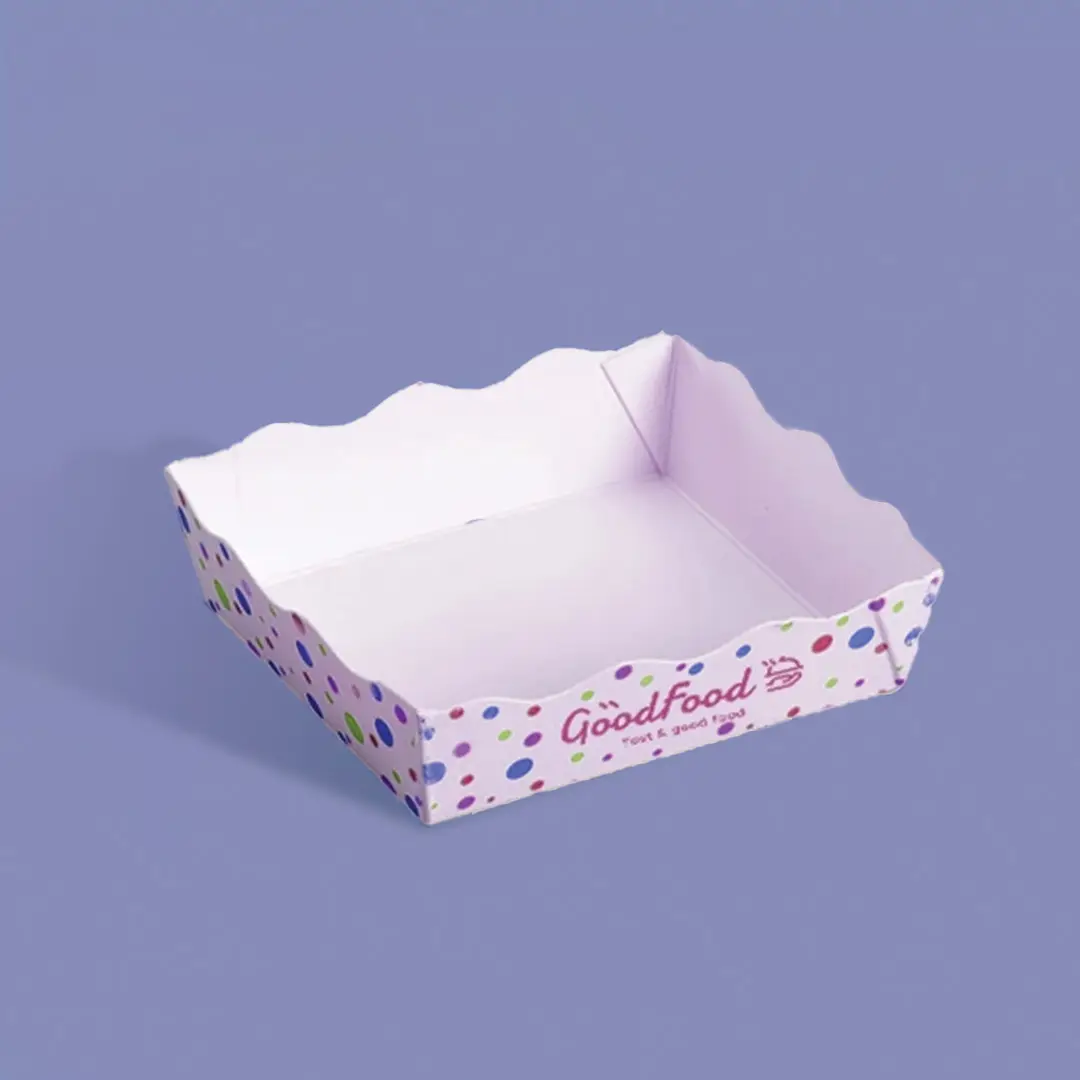
Trays for cakes and pastries bought several at a time.
Specification & quote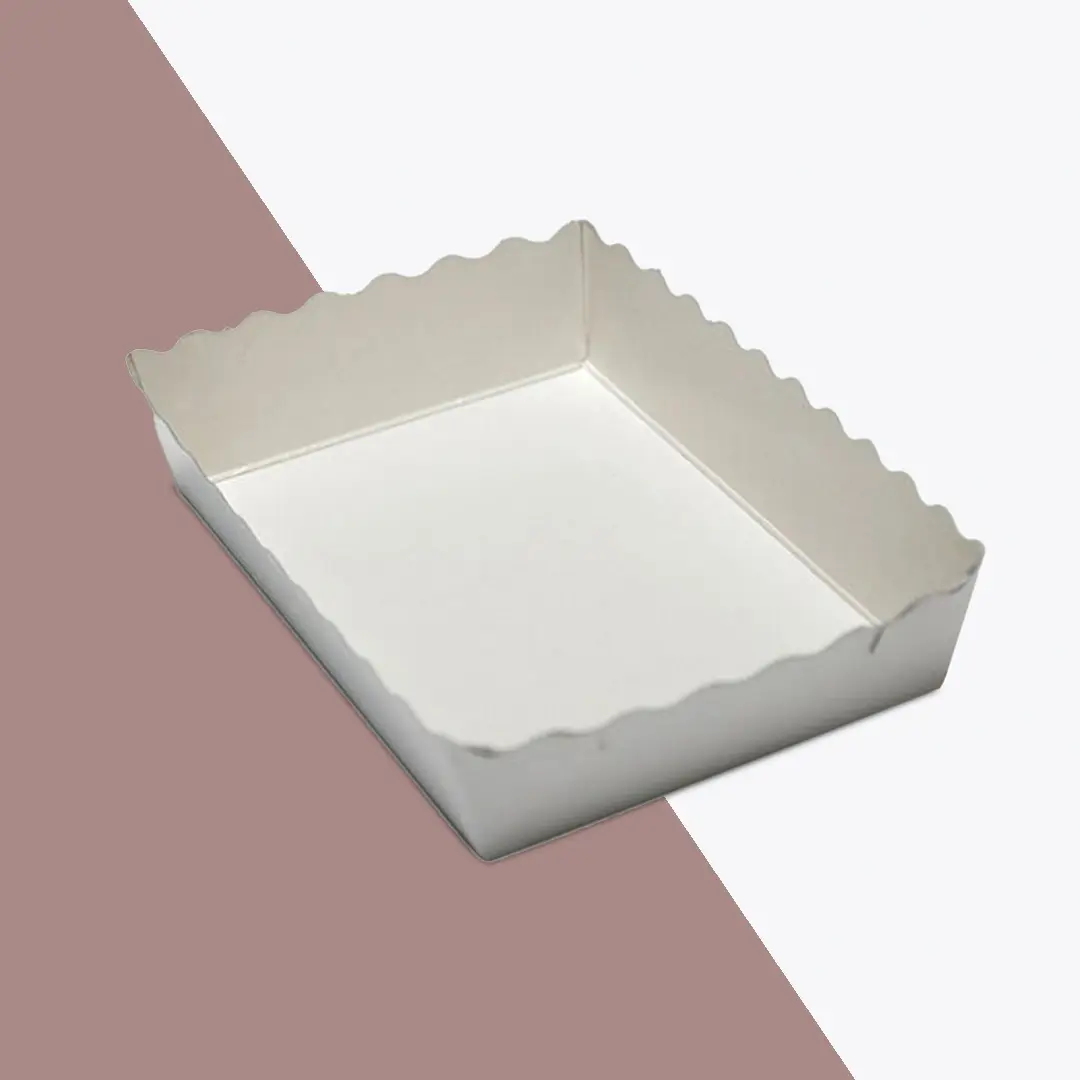
Presentation trays for plated desserts and sharing boards.
Specification & quote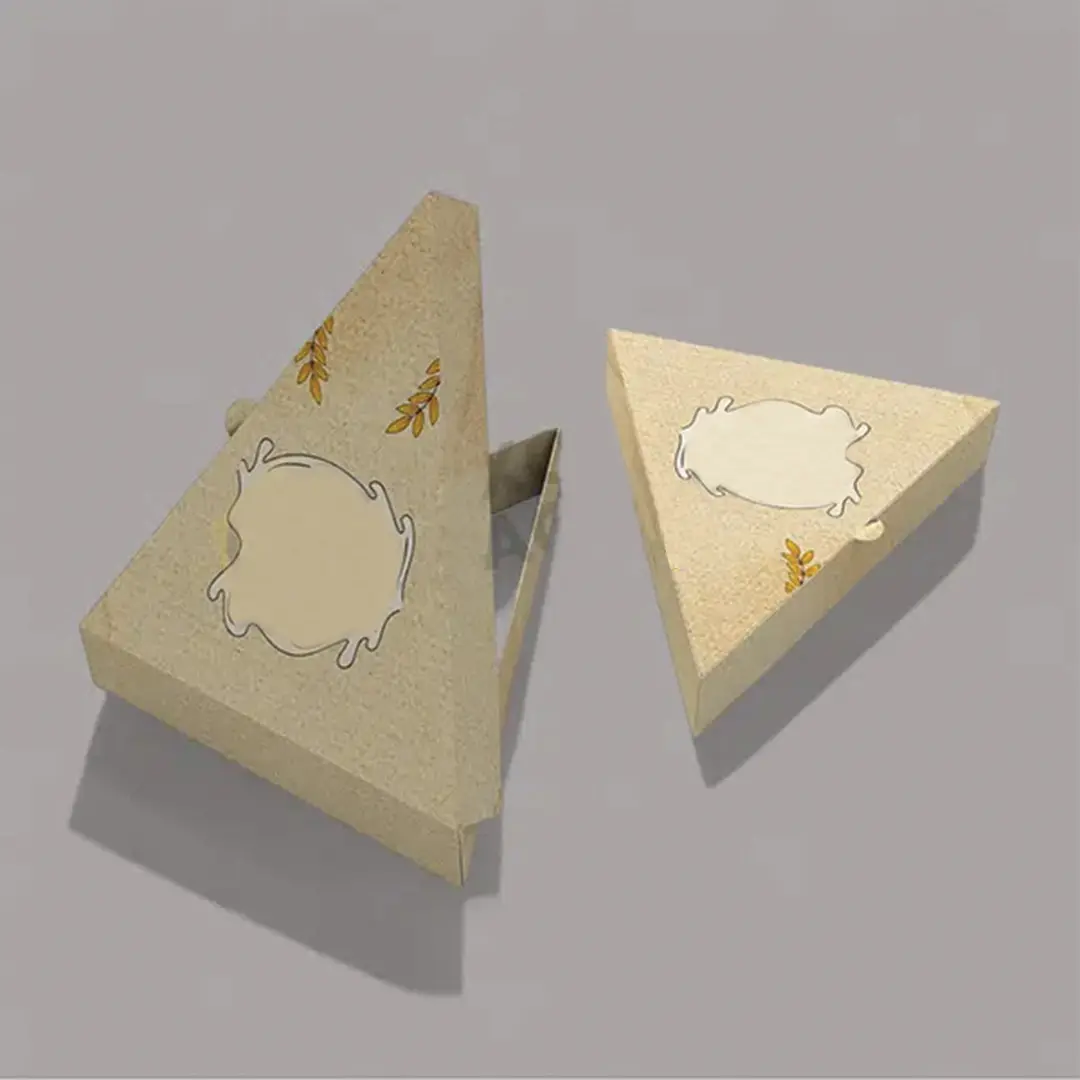
Flat trays for folded crepes with sauces and fruit.
Specification & quote
Deep trays for popcorn portions carried to a seat.
Specification & quote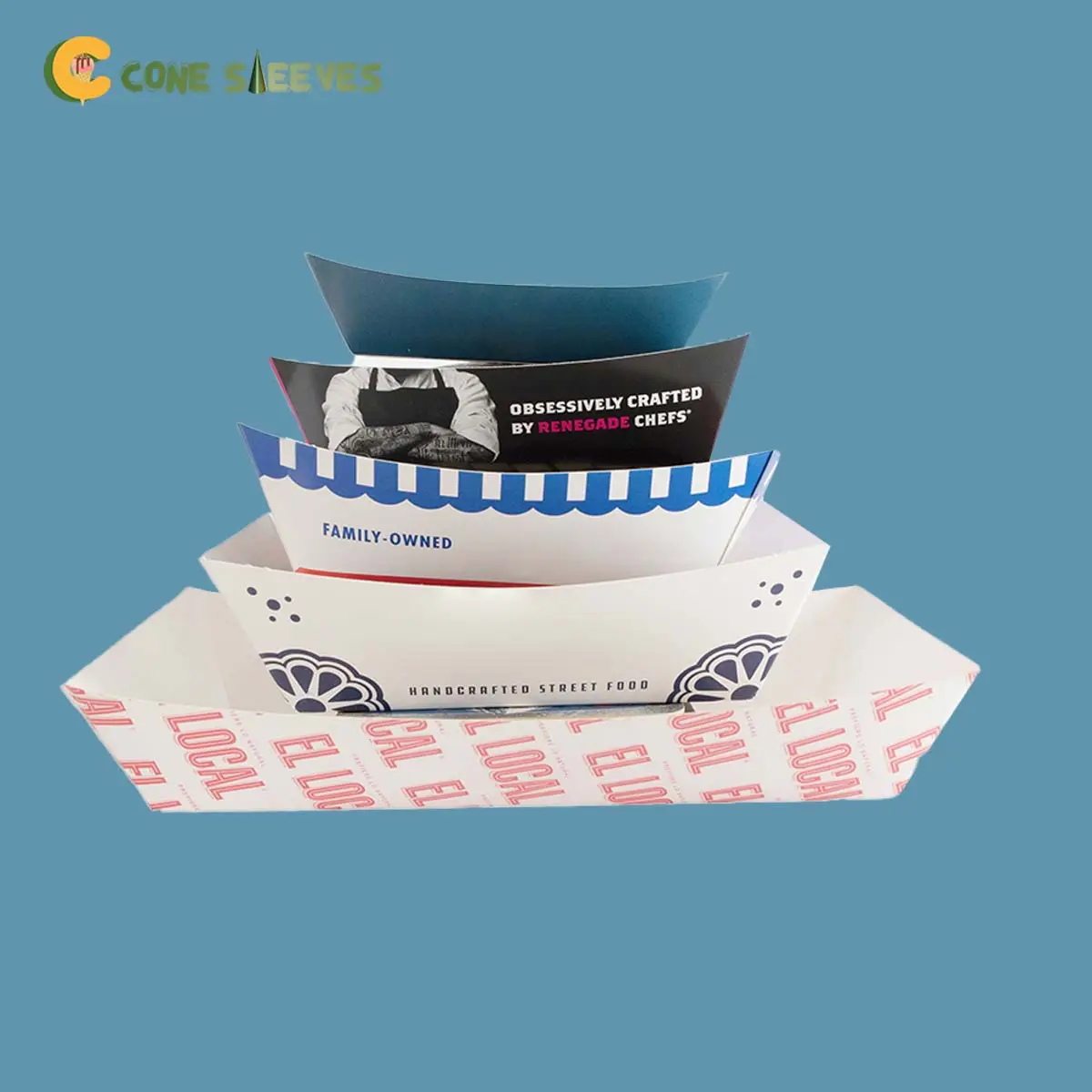
General-purpose printed trays for markets, events and canteens.
Specification & quote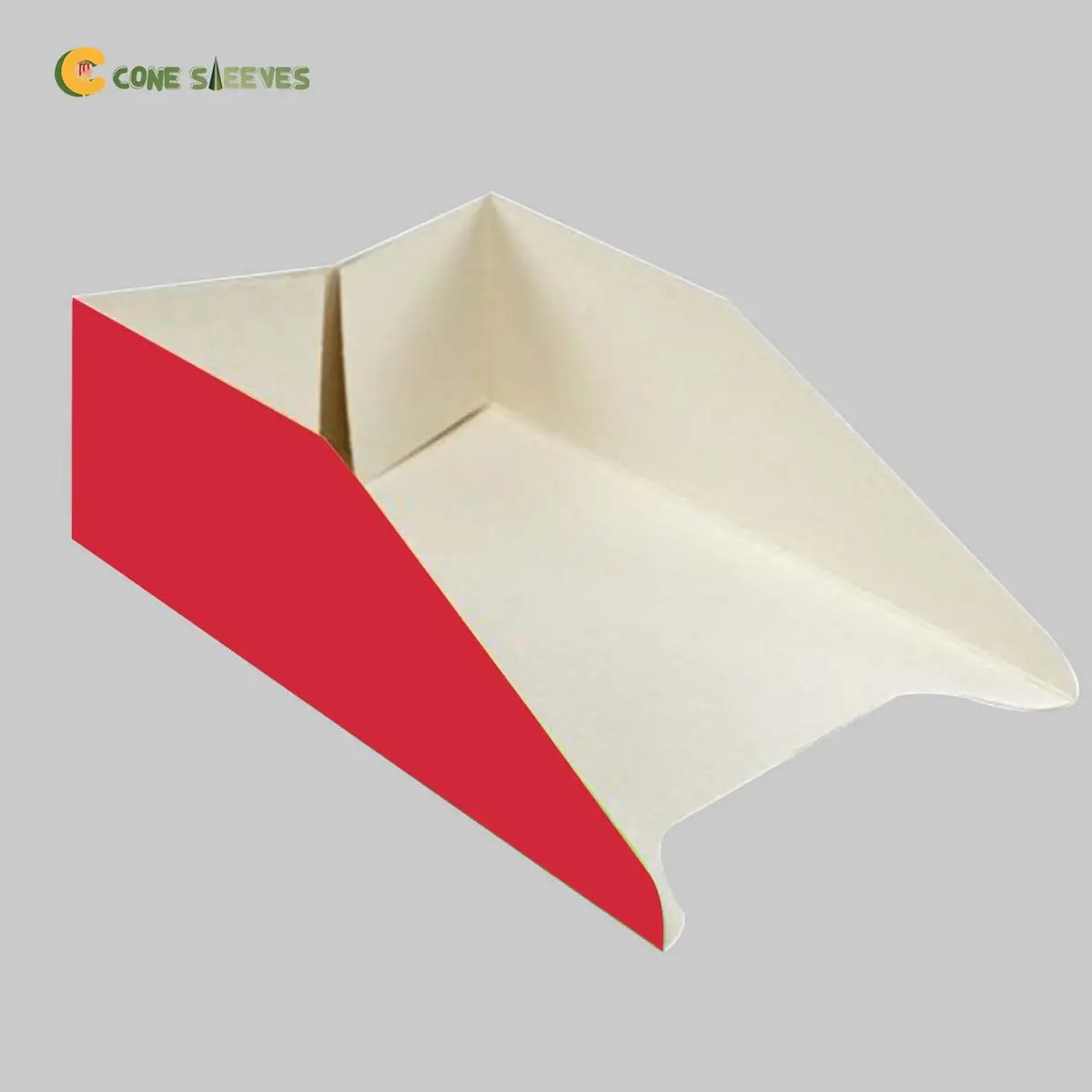
Trays sized for loaded waffles with sauces and toppings.
Specification & quote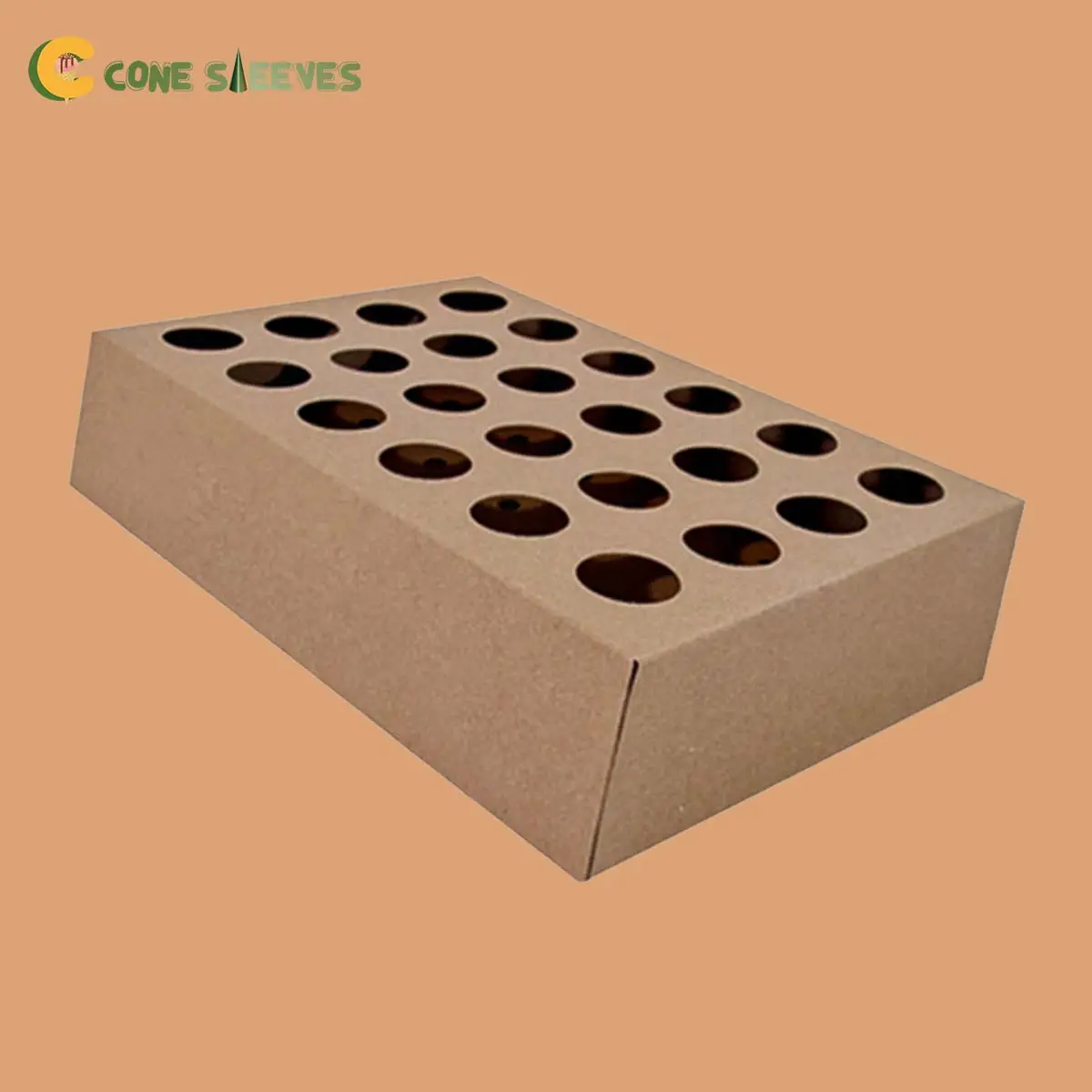
Board stands that hold a filled cone upright at the till or table.
Specification & quote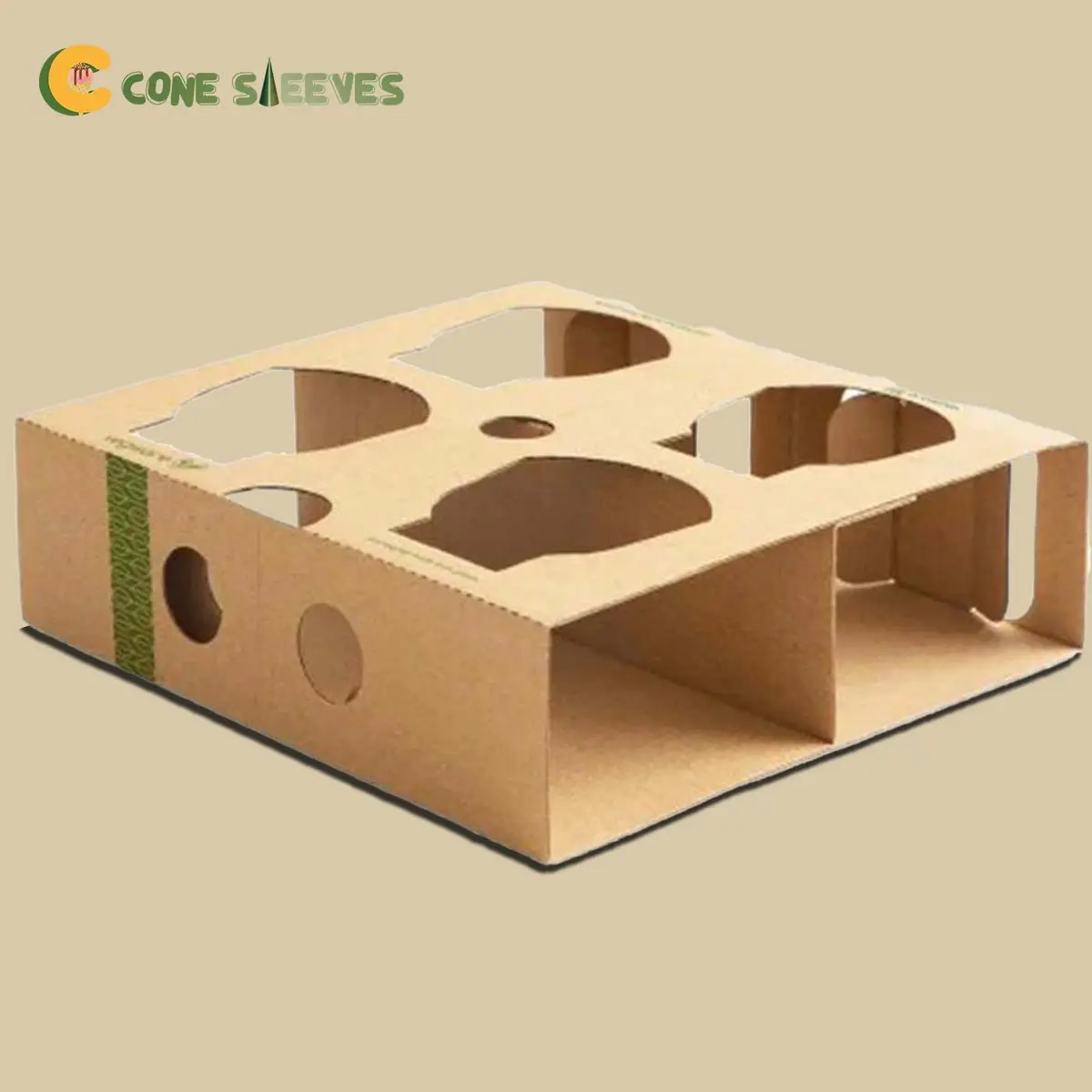
Carriers that let one person take four cones away at once.
Specification & quote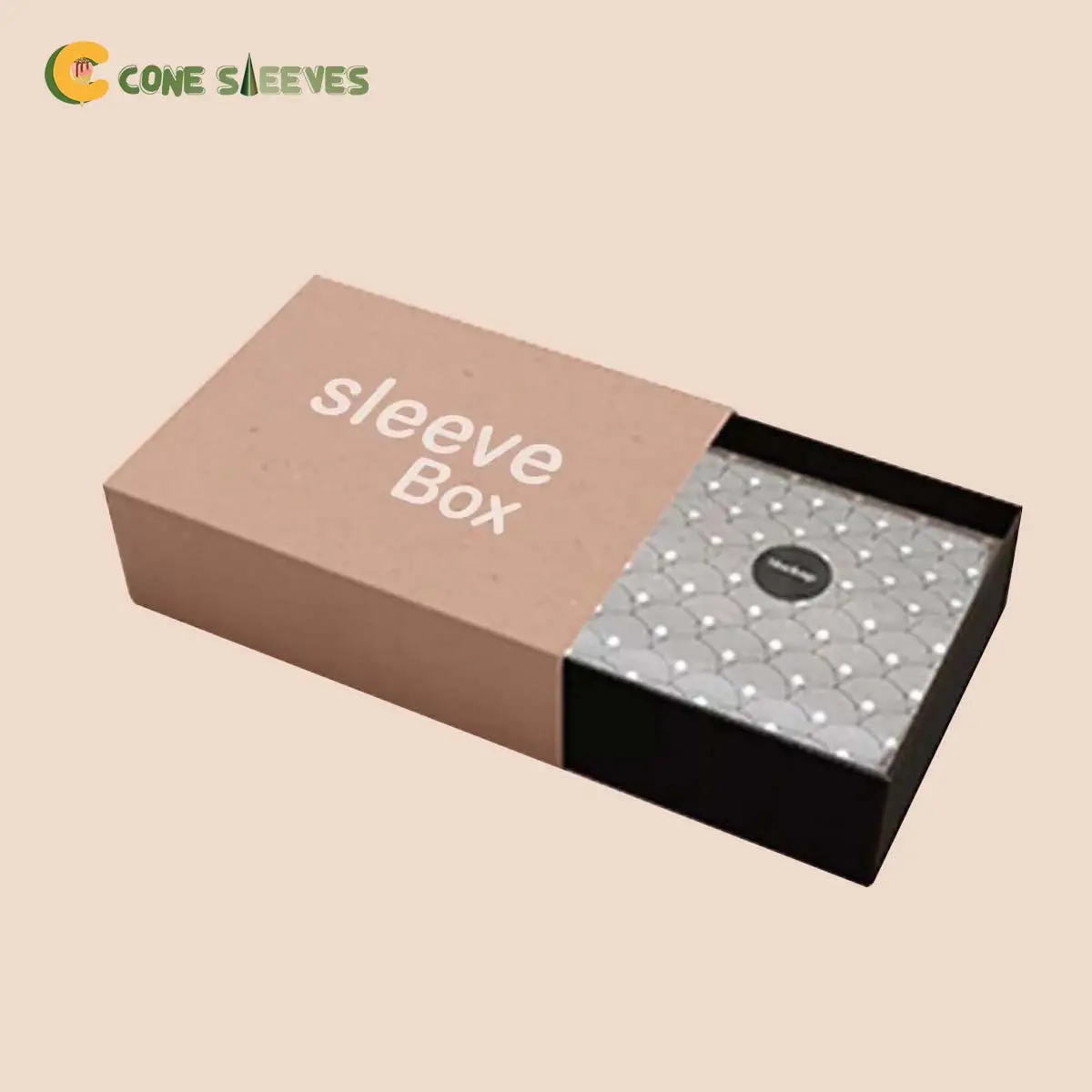
Trays and sleeves printed together so colours and stock match.
Specification & quoteThe two ends of the range behave very differently once food is on them.
| Lighter board | Heavier board | |
|---|---|---|
| Suits | Dry, light portions — pastries, doughnuts, popcorn | Hot, wet or heavy loads — loaded fries, nachos, full meals |
| Behaviour when hot | Softens quickly under steam | Holds its corners through a full service |
| Carrying | Fine on a table, flexes in one hand | Stays flat carried one-handed |
| Takes fine detail cleanly on a smooth face | Same print quality; the surface is simply thicker | |
| Stacking | Nests tightly, less storage space | Takes more storage room per thousand |
If you are unsure, specify for the heaviest item on your menu. A tray that is over-specified is an annoyance; one that is under-specified is a complaint.
Sites that sell two cones to one customer usually add cone holders that stand a filled cone upright at the till.
A tray is looked down into, not across. Artwork placed on the walls disappears once food is loaded, so the base and the rim do the visible work.
Keep logos off the centre of the base where the food sits, and let them run along the rim or in the corners. On a lighter board, printing the underside is worth considering — that is the face people see when a tray is carried at chest height.
| Internal dimensions | Length, width and wall depth, or the portion size in grams |
|---|---|
| Load | What goes on it, and whether it is served hot or wet |
| Board preference | Coated white, kraft, or greaseproof-lined |
| Finish | Unlaminated, matt or gloss |
| Volume | Annual usage as well as the first order quantity |
| Assembly | Flat-packed for assembly on site, or pre-formed |
Board grammage options, lead times and minimum quantities are confirmed on the written quote for your specification.
Both are possible and the difference matters. Flat-packed trays store in a fraction of the space but need a few seconds each to form. Pre-formed trays are ready instantly and take considerably more storage. Busy sites with limited back-of-house space usually take flat.
A greaseproof-lined board handles oil and light sauce for the length of a normal service. Standing liquid is different — nothing in an open board tray is designed to hold it, and a pot is the honest answer for anything genuinely runny.
They are when a side would otherwise make the main soggy, or when you want a meal deal to look like a set rather than two loose items. For a single portion they add cost without adding much.
Internal dimensions or the portion in grams, what it carries, whether it is hot or wet, and your quantity.
Flat stores in a fraction of the space and takes seconds to form. Pre-formed is instant and takes far more room.
Many can, and for delivery it is worth doing. Tell us at quote stage, because the rim has to be designed for it.
Yes, and some sites use plain trays with a printed liner instead, which is often cheaper for the same visual effect.
In cases on national carriers. Flat-packed trays ship far more economically than pre-formed ones for the same quantity.
Yes, and doing so spreads one setup across both sizes instead of paying for it twice.
A range, specified against the load rather than chosen from a list. Tell us the heaviest thing the tray carries.