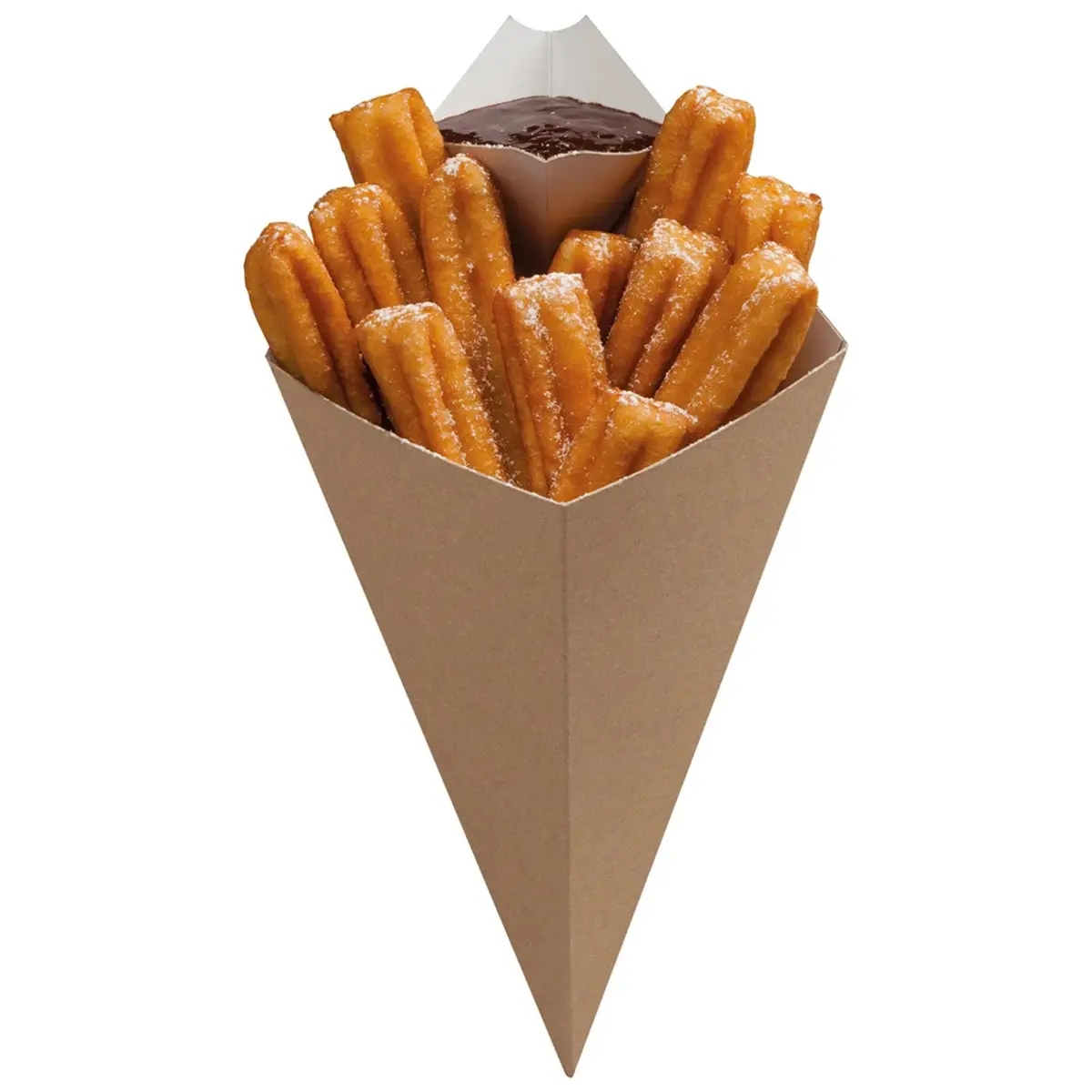
Cone Fries Packaging
Cone-shaped chip holders for walking customers at markets and festivals.
Specification & quote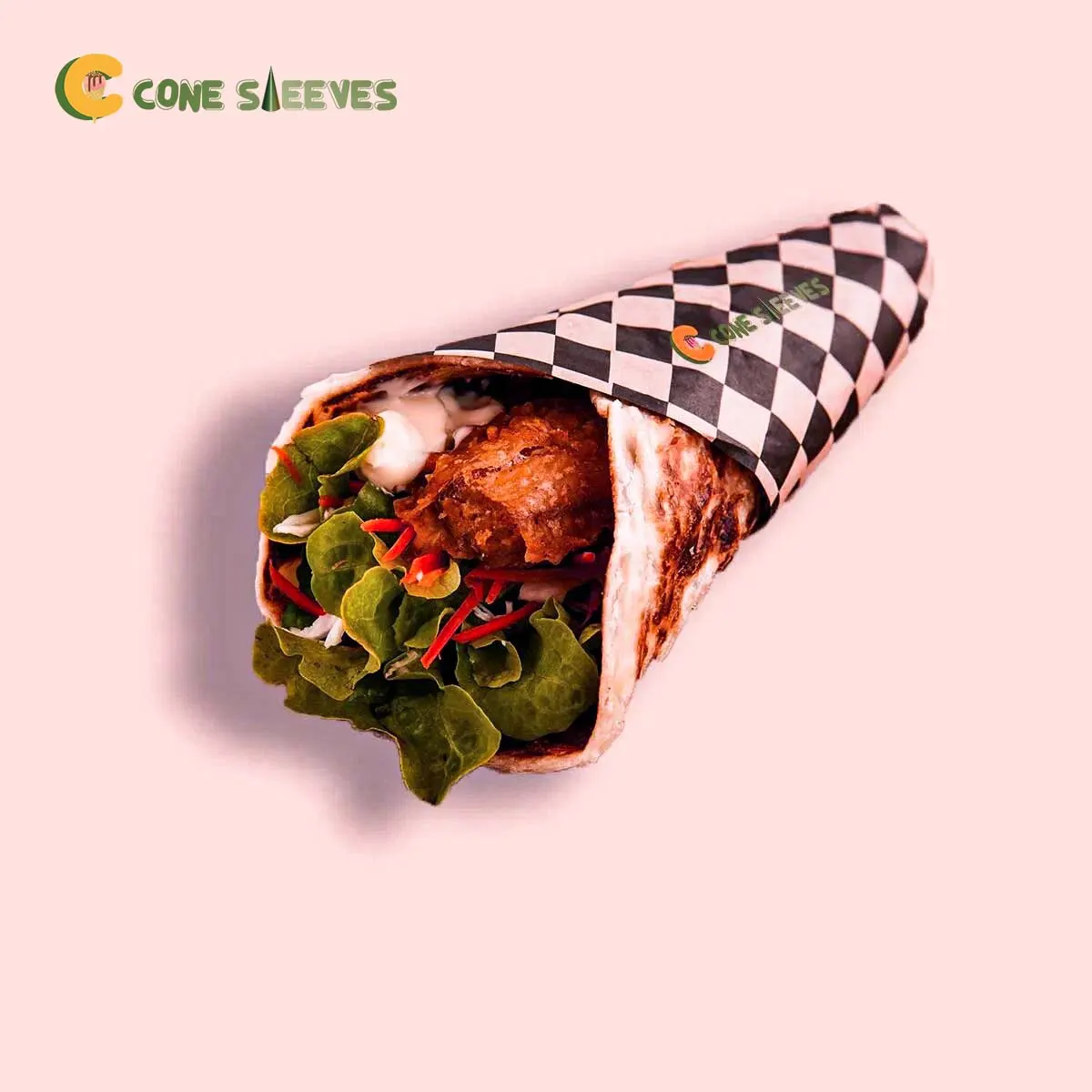
Cone Sleeves
Serving fried chicken in a cone is a street-food format that works because it frees a hand and looks generous for the portion size. It also puts hot oil directly against the packaging.
That is a materially different specification from an ice cream sleeve, even though the shape is similar.
From £0.30 per sleeveIndicative starting price, excluding VAT and delivery. Your unit cost moves with quantity, board, colour count and finish, and the figure that binds is the one written on your quotation.
Short enquiry
Tell us the quantity and any date you are working to. We reply with the board, print and finish, plus the minimum order quantity and lead time.
Design Your Own
Pick a colour, put your name on it, and see how the idea reads before you ask anyone for a price. It is a sketch rather than a manufacturing proof — the real shape is cut from the product you already serve.
Sleeve colour
Finish
Leave two or three centimetres of wafer showing. Customers read a visible cone as freshly made, and the sleeve still catches the first drips.
Carry this into the full designerThe full page adds the size, board, print and quantity, then sends the whole specification over in one go. Nothing is committed to at any point.
Fried food arrives at temperature and continues to release oil into the packaging for several minutes. A board specified for ice cream goes translucent quickly under it.
A grease-resistant liner or coating is not optional here. It is the difference between a sleeve that looks fine at the end of service and one the customer is holding by their fingertips.
If a cone is not the right shape for your portion, chip and fried food packaging in other formats covers scoops and cartons.
| Board | Grease-resistant lined or coated board |
|---|---|
| Depth | Deeper than an ice cream wrap, set from your portion |
| Point | Reinforced or closed to hold small pieces |
| Full colour or spot; matt finish grips better than gloss | |
| Portion sizing | Set from the weight you serve, not a nominal volume |
Grease-resistant grades are confirmed against your fryer temperature and holding time on the quote.
Send us two or three of the cones you use, or the top diameter and slant height. We reply with a written specification, the minimum order quantity and the lead time for your job.
We supply a die template cut to your cone before design work starts. Full file requirements are set out in our artwork guidelines.
Lead times depend on the print method, run length and press schedule, so we confirm yours on the quote rather than publishing a single figure.
Orders are dispatched on national carriers to any UK address. Seedelivery information for how dates are given.
The shape often works but the board rarely does. Untreated stock soaks through within minutes of hot chicken going in, so the sensible route is the same die in a grease-resistant board.
A reinforced or closed point on the die. It is worth specifying explicitly, since a sleeve designed to wrap a solid cone assumes there is a cone in there holding everything up.
A grease-resistant lined or coated board, specified against your fryer temperature and how long portions are held before they are eaten. We confirm the grade on the quote.
A reinforced or closed point on the die. A sleeve designed to wrap a solid cone assumes something is holding the contents up, which loose pieces are not.
The shape often works. The board rarely does, because untreated stock soaks through within minutes of hot chicken going in.
Deeper than an ice cream sleeve, because savoury cones are filled higher. Measure a made-up portion rather than working from the empty cone.
A matt finish grips considerably better than gloss when hands are greasy, which is why it is the usual specification for fried food.
They are mostly bought for exactly that, because a cone leaves the customer a free hand. Outdoor trading argues for a laminated finish as well.
Yes. The grease resistance is a lining on the inner face, so the printable outer surface behaves like any other coated board.
Weigh a typical serving on your own scales and send us the figure. Portion descriptions vary far too much between kitchens to size from.
Sizing questions are usually quicker on the phone, especially if you have the product in front of you.
Cone-shaped chip holders for walking customers at markets and festivals.
Specification & quote
Scoops and cartons for chip portions, sized by weight rather than by name.
Specification & quote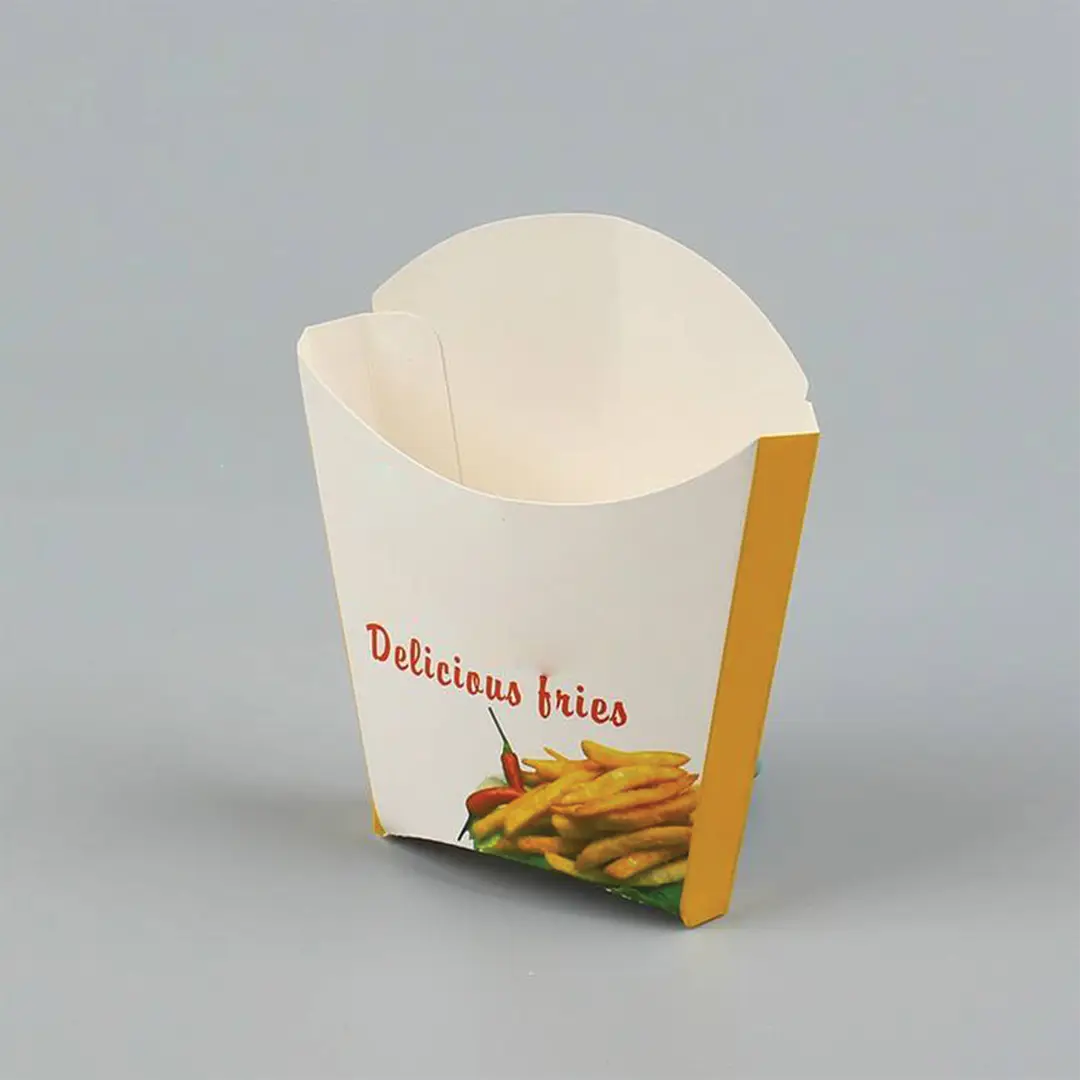
Open-topped chip sleeves in grease-resistant board.
Specification & quote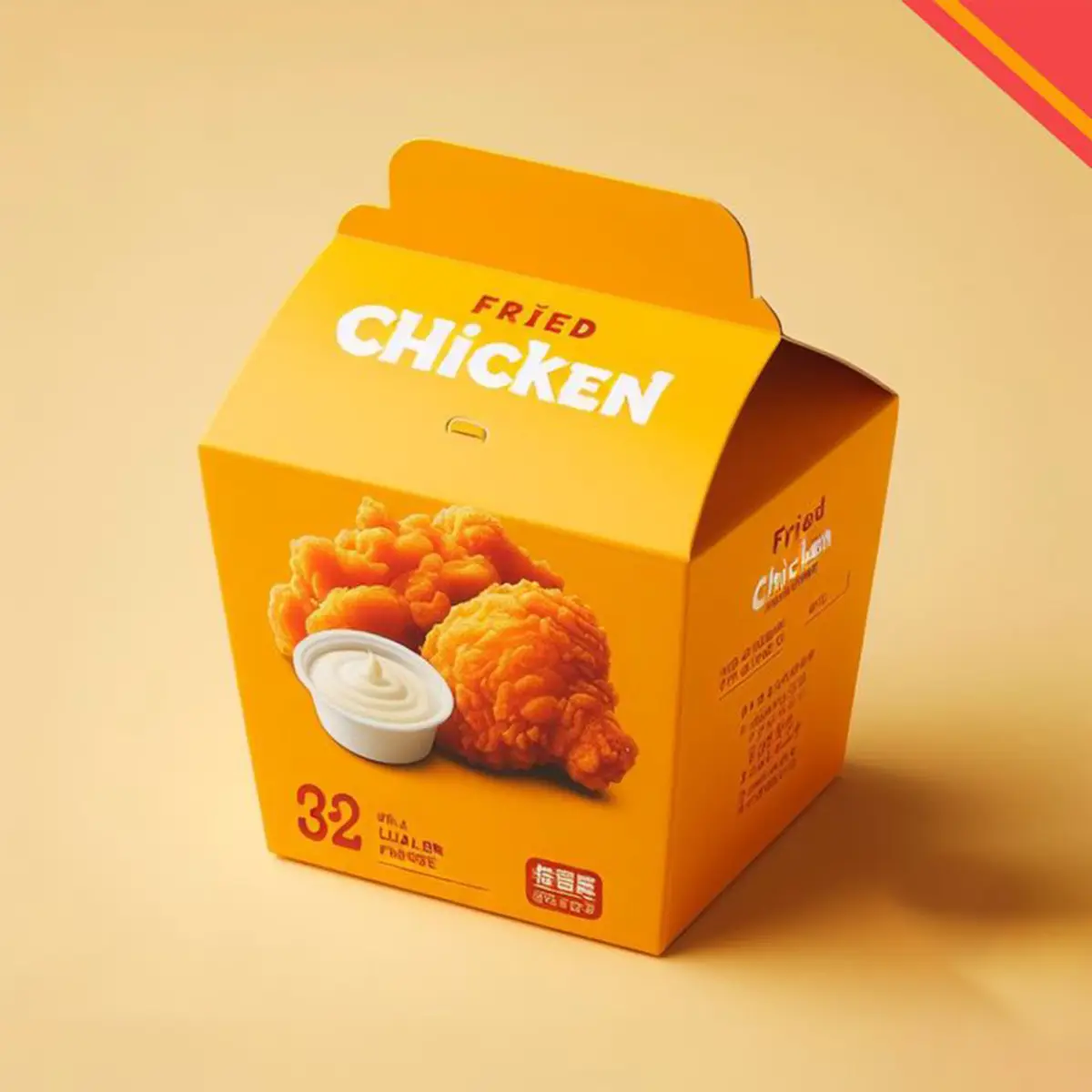
Vented boxes in heavy board for bone-in chicken and full meals.
Specification & quote