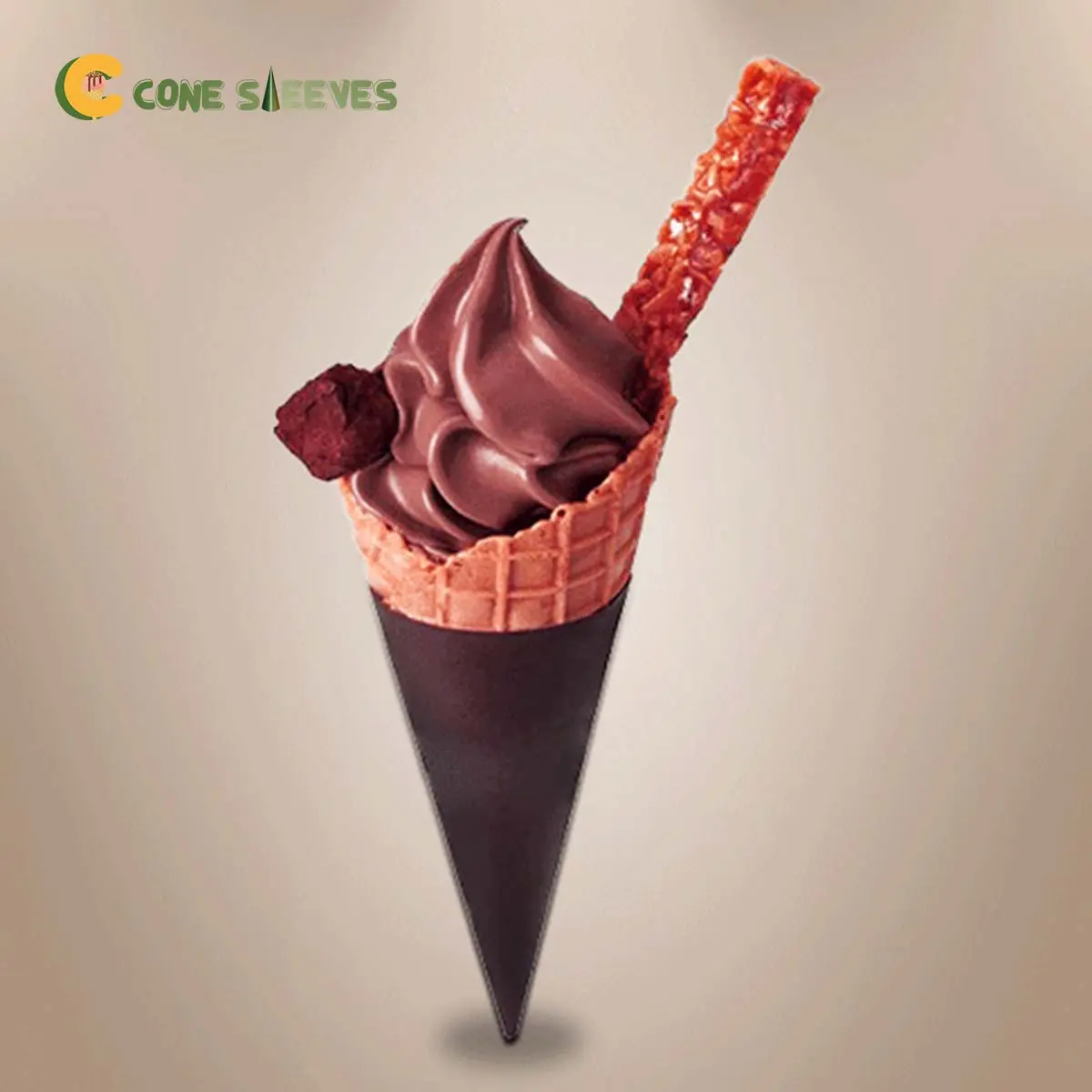
Custom Waffle Cone Sleeves
Sleeves cut to the wide taper of a waffle cone.
Specification & quote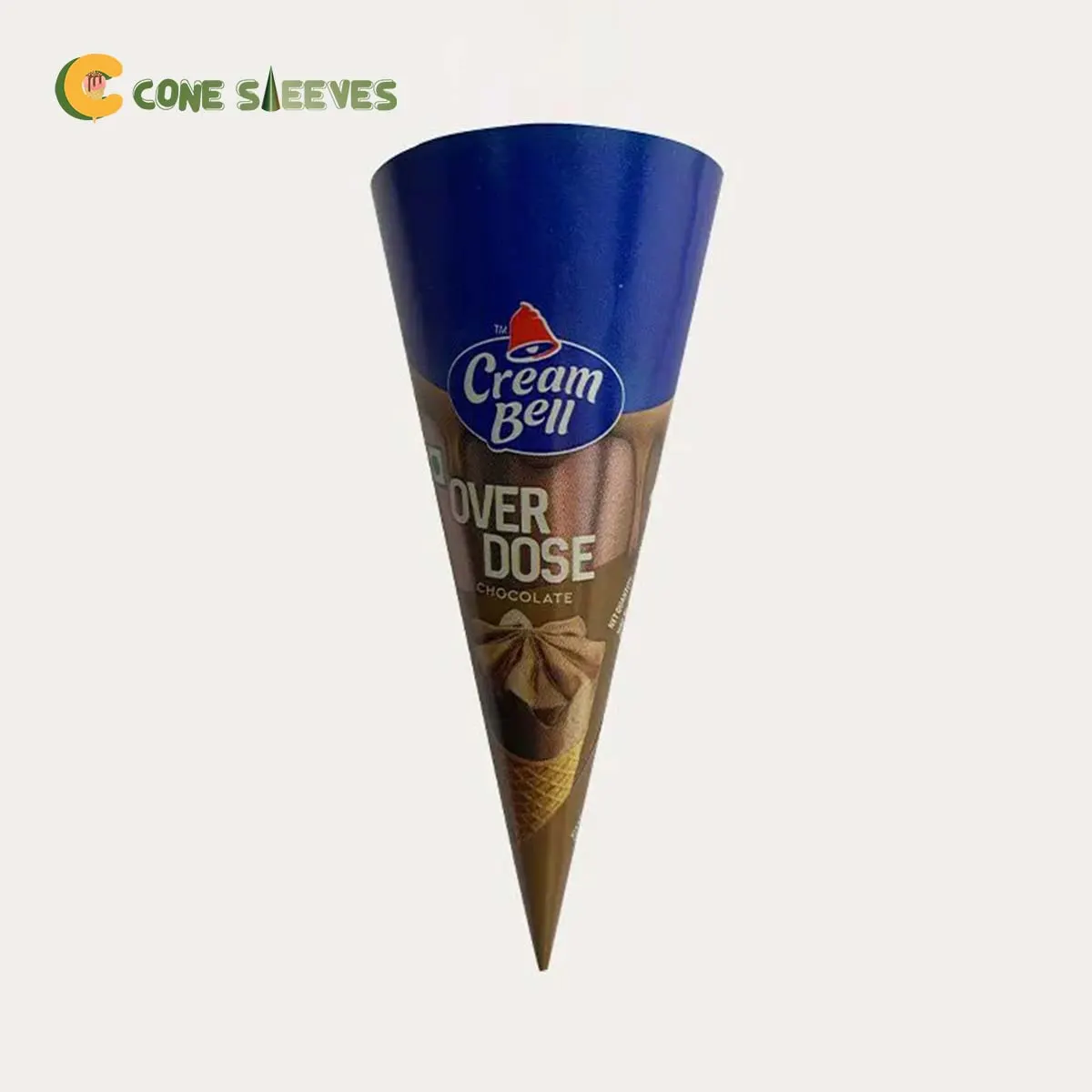
Cone Sleeves
The sleeve is the last thing you hand over and the first thing a customer photographs. On a busy seafront or a Saturday high street, a hundred printed sleeves an hour do more visible advertising than most independents pay for anywhere else.
These are full-colour sleeves cut to your own cone shape. Nothing here is a stock size — the die is set from the cone you already buy, so the wrap finishes exactly where you want it against the scoop.
From £0.30 per sleeveIndicative starting price, excluding VAT and delivery. Your unit cost moves with quantity, board, colour count and finish, and the figure that binds is the one written on your quotation.
Short enquiry
Tell us the quantity and any date you are working to. We reply with the board, print and finish, plus the minimum order quantity and lead time.
Design Your Own
Pick a colour, put your name on it, and see how the idea reads before you ask anyone for a price. It is a sketch rather than a manufacturing proof — the real shape is cut from the product you already serve.
Sleeve colour
Finish
Leave two or three centimetres of wafer showing. Customers read a visible cone as freshly made, and the sleeve still catches the first drips.
Carry this into the full designerThe full page adds the size, board, print and quantity, then sends the whole specification over in one go. Nothing is committed to at any point.
A cone sleeve is gripped hard, twisted while the customer eats around the scoop, and sits in a warm hand for ten minutes. Ink on an unprotected surface scuffs along the seam long before the ice cream is finished.
Lamination is the usual answer on saturated designs, and it also stops the board going limp when a drip runs down the outside. Lighter designs on kraft can go unlaminated and often look better for it.
| Cone types | Waffle, sugar, cake and rolled — sized individually |
|---|---|
| Board | Coated white board, kraft, or greaseproof-lined |
| Full-colour CMYK, with spot colours where a brand needs an exact match | |
| Printed faces | Outside as standard; inside available where the inner wrap shows |
| Finish | Matt lamination, gloss lamination or unlaminated |
| Supply | Die-cut flat, assembled at the counter |
| Sizing | From a sample cone or from measured diameter and slant height |
Minimum quantity, lead time and unit price depend on board, print method and run length, and are confirmed in writing on your quote.
A cone sleeve is a curved surface cut from a flat arc, which catches out designs made for a rectangle:
Our note on setting up artwork on a cone-shaped die line covers the arc geometry with a worked example.
Two or three sample cones, or the top diameter and slant height, plus the run length you have in mind.
Board, finish, printed faces and whether you need a printed sample. We confirm lead time and minimum quantity here.
We send a template cut to your cone. Artwork is placed on it rather than resized to fit afterwards.
A digital proof shows the layout on the die. Once signed off, the run is scheduled.
Send us two or three of the cones you use, or the top diameter and slant height. We reply with a written specification, the minimum order quantity and the lead time for your job.
We supply a die template cut to your cone before design work starts. Full file requirements are set out in our artwork guidelines.
Lead times depend on the print method, run length and press schedule, so we confirm yours on the quote rather than publishing a single figure.
Orders are dispatched on national carriers to any UK address. Seedelivery information for how dates are given.
That is the normal route. Send two or three of the cones you use and the die is cut to their shape, so the new sleeves work with the stock already in your freezer rather than requiring you to change supplier.
Most parlours stop the sleeve two to three centimetres below the rim so the wafer is visible at the top. Covering to the rim protects better but hides the cone, which is part of what customers are buying.
The opposite, usually. The extra layer gives a drier grip and keeps warm fingers off the wafer, which is the main reason parlours introduce them in the first place.
Most people are fluent after twenty or thirty sleeves. They arrive flat, and the motion is a roll and a tuck. It is worth having whoever works the counter try a box before a busy weekend rather than during one.
Yes, provided it sits where a right-handed grip does not cover it and it is printed large enough to scan from a phone at arm's length. Test a printed sample rather than a screen mock-up.
Yes, as an editable vector file with the cut line, the fold, the overlap and the safe area on separate layers. Ask for it before design work starts rather than after.
We will tell you before printing rather than after. Anything under 300 dpi at final size shows softness on board, and a logo pulled from a website is usually well below that.
On digital printing, yes, and the cost depends on how the quantity splits between them. On a longer conventional run each design carries its own setup, which changes the arithmetic.
Flat, dry and off the floor. Board takes up moisture from a damp store room, and a pallet left against an outside wall can soften before it reaches the counter.
Not on a properly cured print. If ink transfers, that is a fault worth reporting immediately with the batch details so it can be traced to a specific run.
Sizing questions are usually quicker on the phone, especially if you have the product in front of you.
Sleeves cut to the wide taper of a waffle cone.
Specification & quote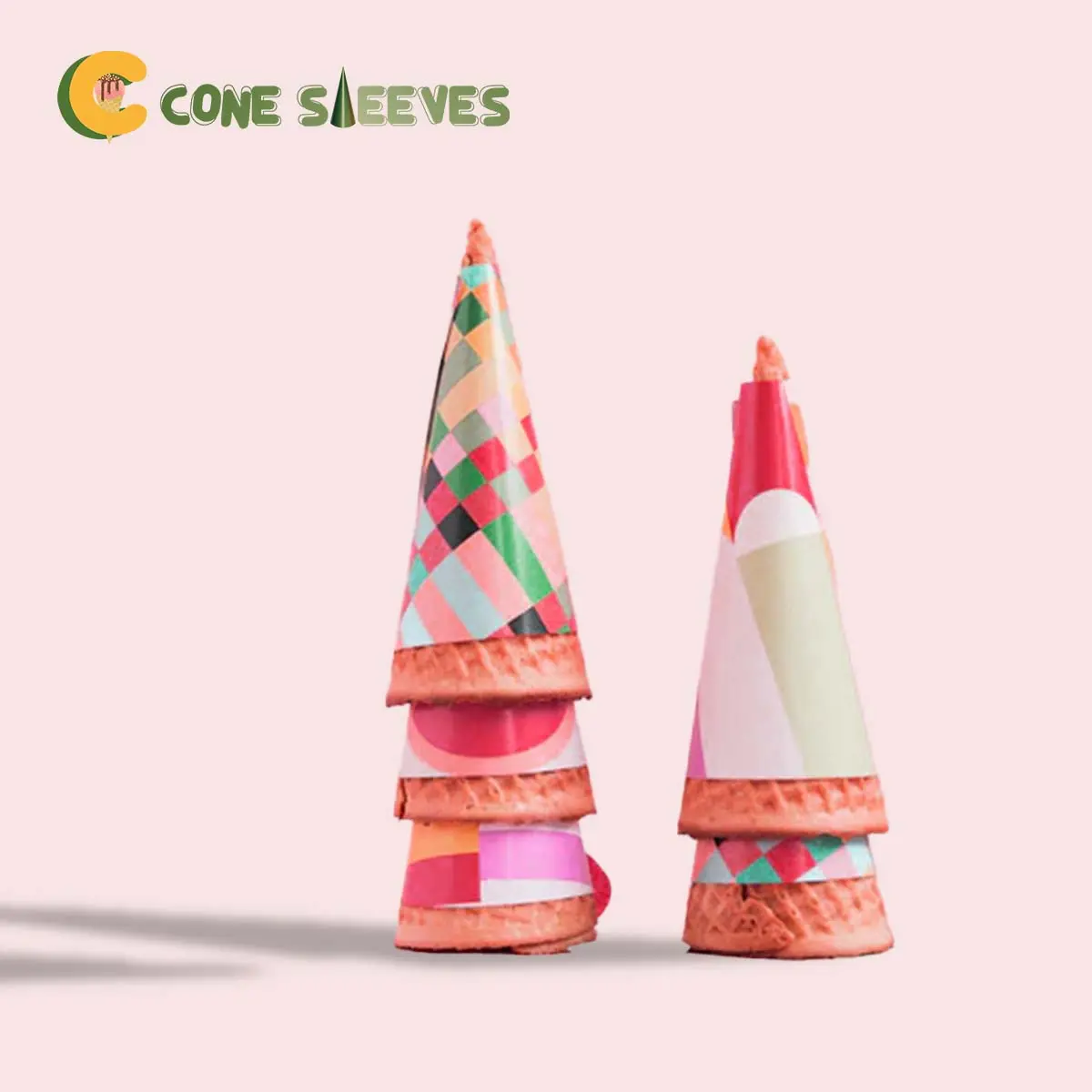
Deeper wraps covering most of the wafer, plain or lightly printed.
Specification & quote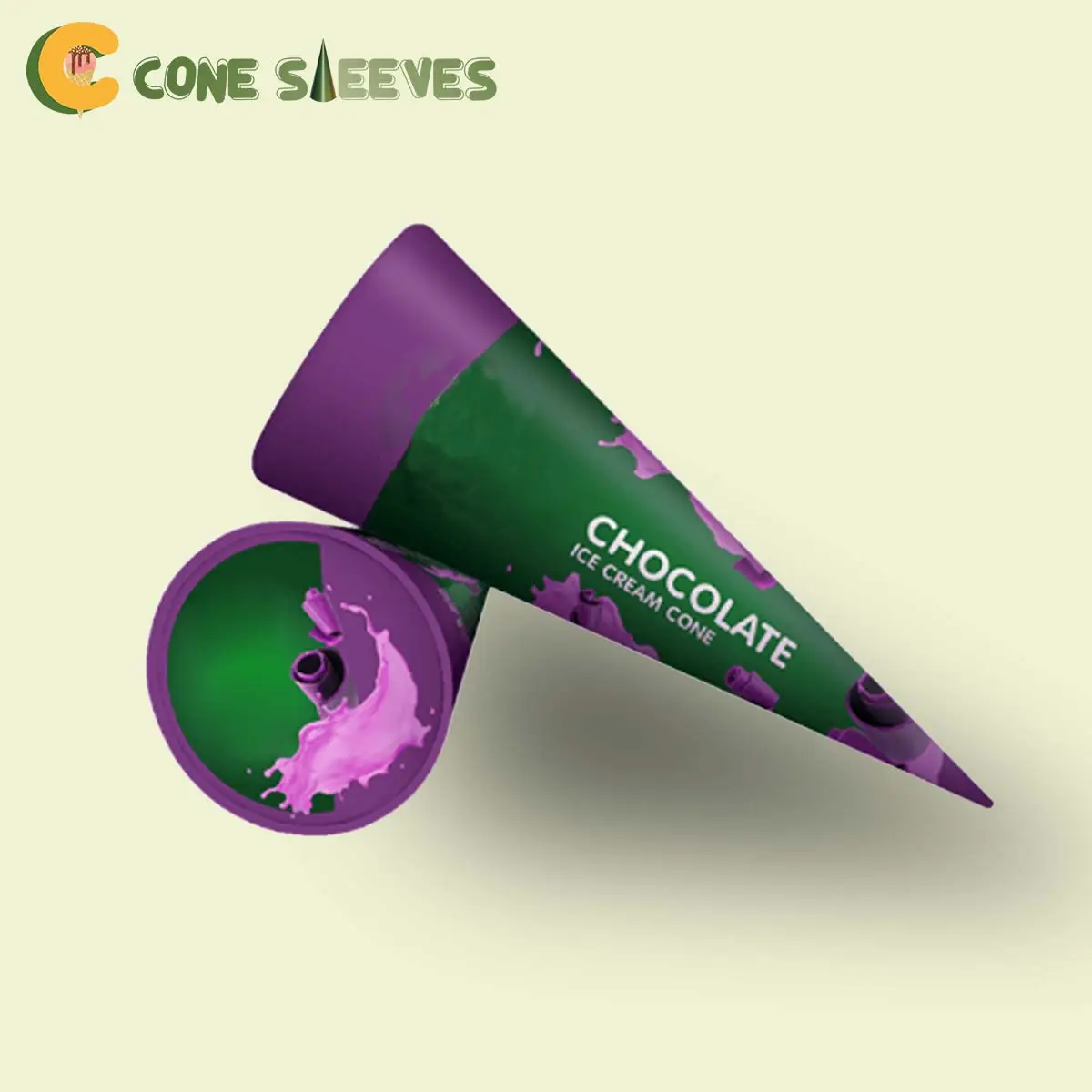
Spot-colour printing in two inks, for accurate brand colour at lower cost.
Specification & quote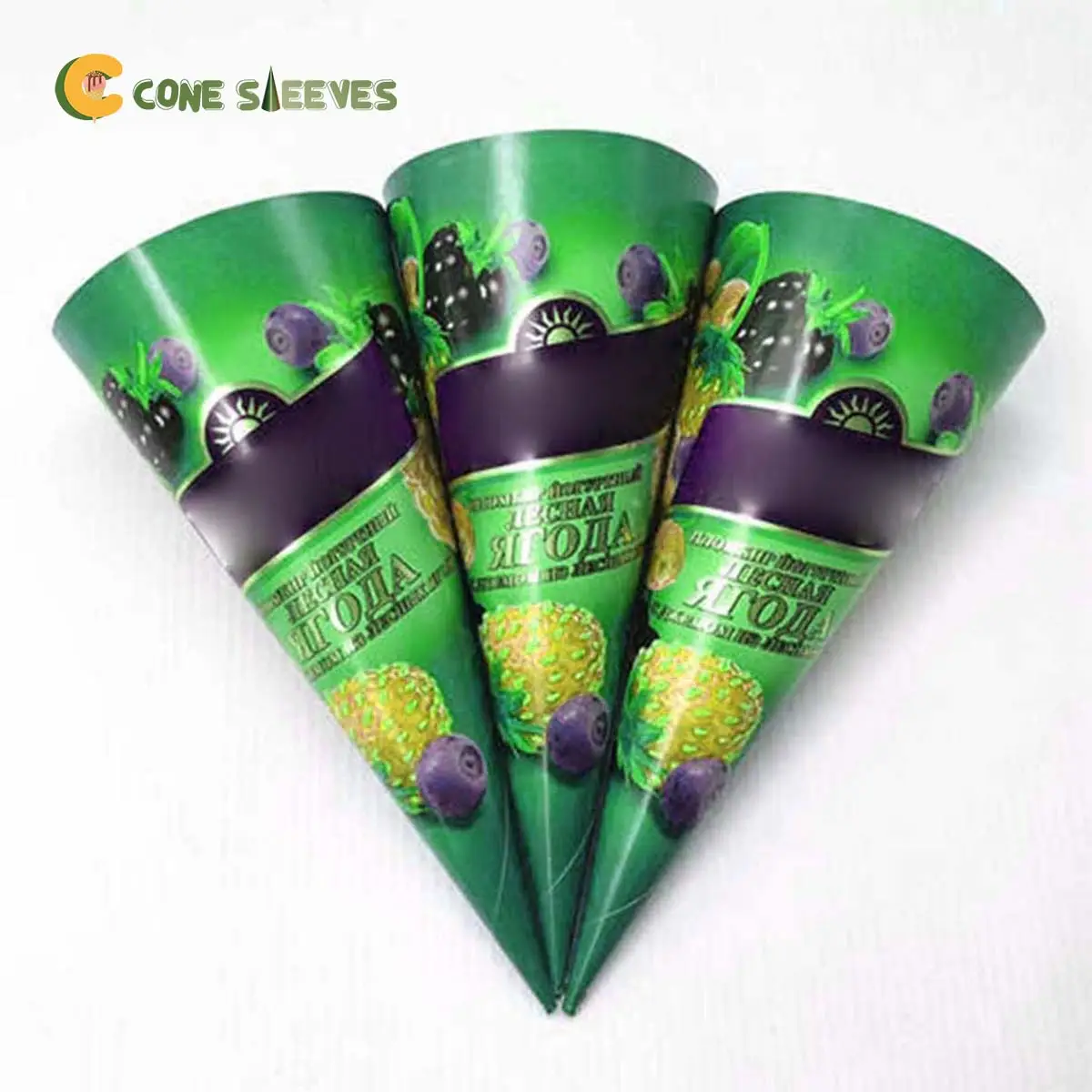
Unlaminated board sleeves specified for recyclability, without overclaiming.
Specification & quote