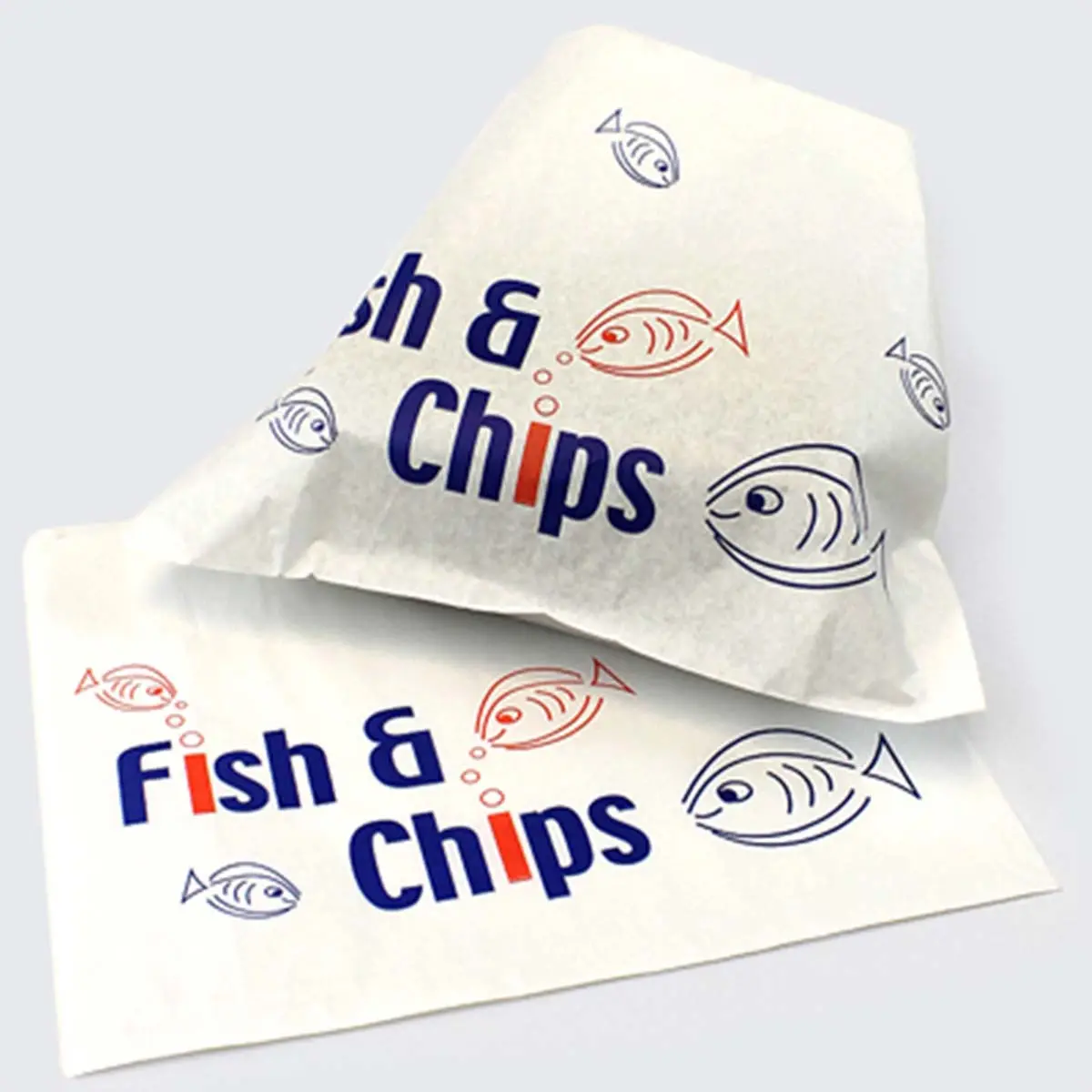
Custom Fish & Chip Paper
Traditional two-layer chip shop wrap, sized for a full portion.
Specification & quote
Printed Food Papers
Greaseproof is the default food paper in British kitchens, and it resists oil for a physical reason rather than a chemical one — the fibres are beaten until the sheet is dense enough that fat cannot travel through it.
That makes it the sheet to reach for whenever hot or oily food touches paper.
From £0.30 per unitIndicative starting price, excluding VAT and delivery. Your unit cost moves with quantity, board, colour count and finish, and the figure that binds is the one written on your quotation.
Short enquiry
Tell us the quantity and any date you are working to. We reply with the board, print and finish, plus the minimum order quantity and lead time.
Design Your Own
Pick a colour, put your name on it, and see how the idea reads before you ask anyone for a price. It is a sketch rather than a manufacturing proof — the real shape is cut from the product you already serve.
Sleeve colour
Finish
On unbleached board every colour prints warmer than it looks here. Two inks chosen for kraft beat four fighting the brown.
Carry this into the full designerThe full page adds the size, board, print and quantity, then sends the whole specification over in one go. Nothing is committed to at any point.
A sheet exactly the size of a burger wraps nothing. You need enough paper to fold under, tuck at the sides and hold closed.
Measure the item, then add the fold on each side. Ordering a common size and hoping it wraps is the usual reason a first order is replaced.
If you are not sure greaseproof is the right grade, how the paper types compare for different food sets out the alternatives.
One sheet size and one printed design covers most of these uses in a single kitchen.
| Grade | Greaseproof, weight confirmed against your application |
|---|---|
| Sheet size | Cut to your item plus the fold allowance |
| One or two colours; heavy coverage is rarely worth the cost | |
| Ink | Specified for direct food contact |
| Supply | Flat sheets or reams; interleaved options available |
Paper weights and ink systems are confirmed in writing per enquiry.
Measure the item, then add enough on each side to fold and tuck. We reply with a written specification, the minimum order quantity and the lead time for your job.
One or two colours reproduce most reliably on an absorbent stock. Full file requirements are set out in our artwork guidelines.
Lead times depend on the print method, run length and press schedule, so we confirm yours on the quote rather than publishing a single figure.
Orders are dispatched on national carriers to any UK address. Seedelivery information for how dates are given.
Measure your item at its widest, then add enough on each side to fold under and tuck. For a burger that usually means a sheet noticeably larger than the burger looks.
It can, though a full flood of ink looks patchy on an absorbent surface and adds real cost to a product bought for its low unit price. A repeated one or two colour design usually looks better.
When both the paper grade and the ink system are specified for direct contact, yes. Tell us what the paper touches and how hot it is, and we confirm the specification on your quote.
One or two reproduce reliably. More is technically possible but adds cost quickly on a product bought for its low unit price.
Slightly, because paper is absorbent. Fine lines thicken and small reversed-out type can close up, so designs stay simple.
It depends on what the sheet holds and for how long. Tell us the food and the holding time and we will specify a grade.
Yes, and lining a tray so it can be wiped rather than binned is one of the most common uses alongside wrapping.
It is designed for it. Where paper also sees oven heat, parchment is the grade rather than greaseproof.
Flat sheets or reams, with interleaved options where staff need to take one at a time during service.
Not with a food-contact ink system, which we confirm on the quote rather than assuming from the paper grade alone.
Sizing questions are usually quicker on the phone, especially if you have the product in front of you.
Traditional two-layer chip shop wrap, sized for a full portion.
Specification & quote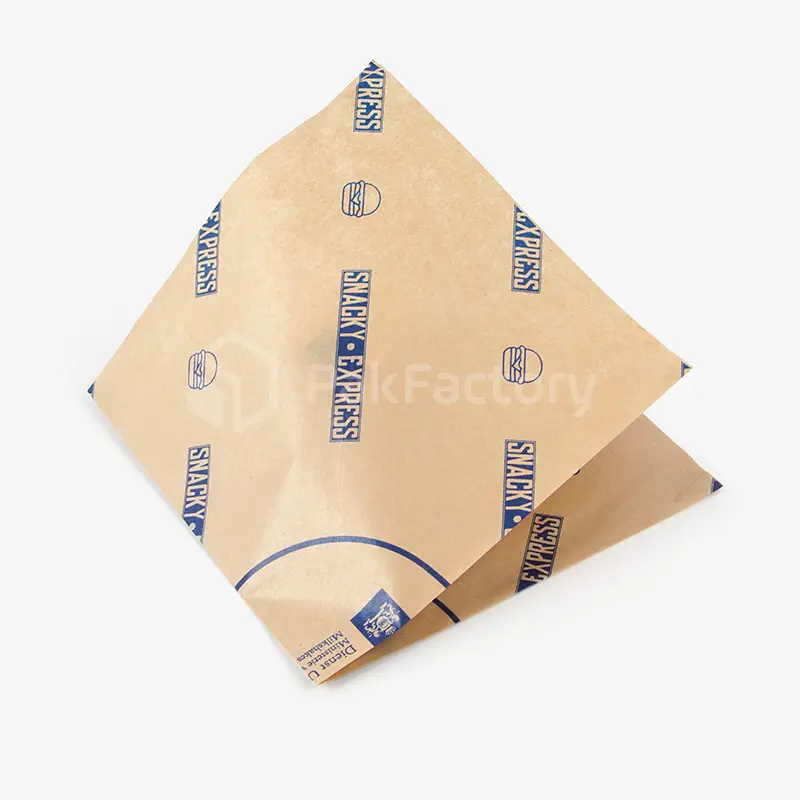
Lightweight counter sheets for picking up and wrapping cold goods.
Specification & quote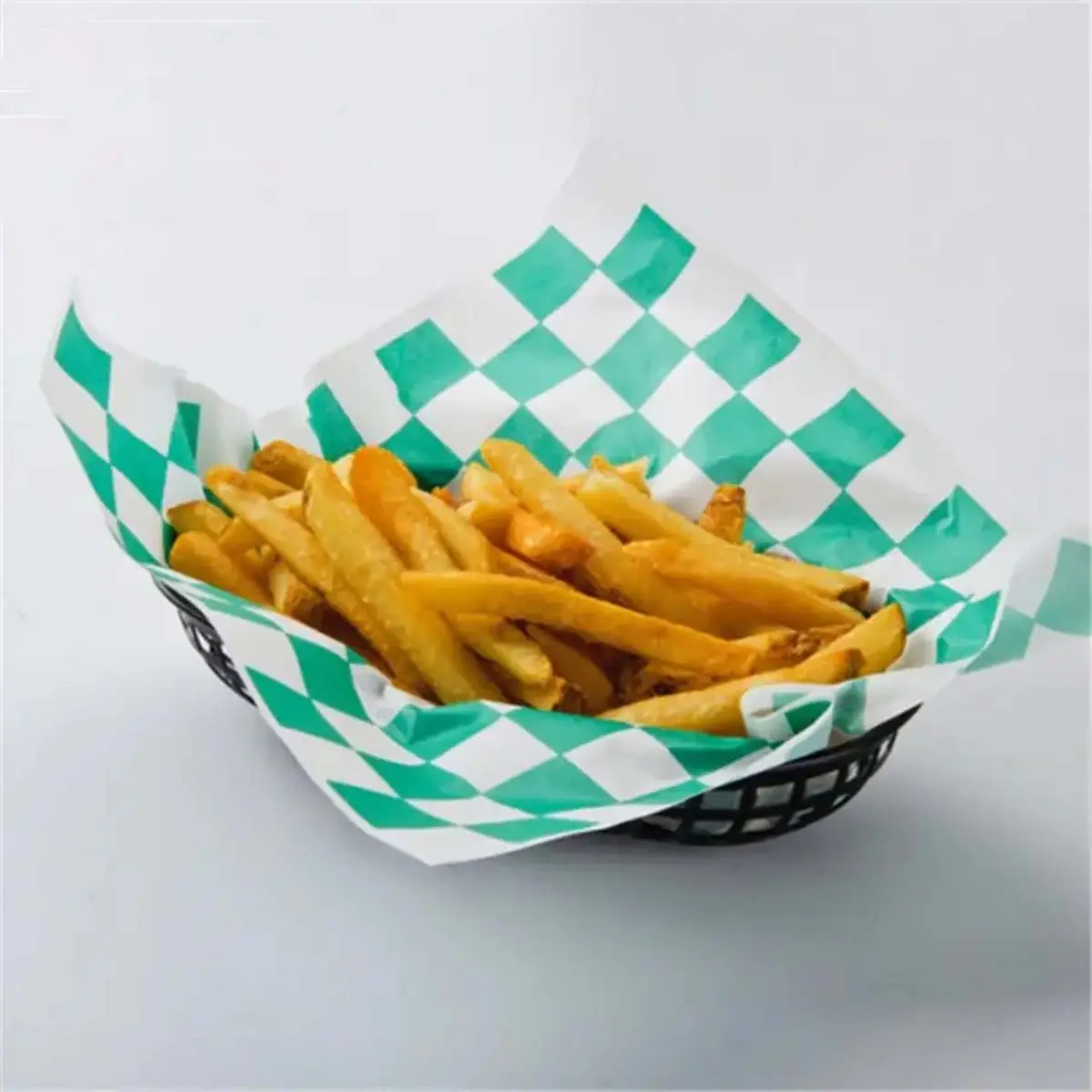
Liner sheets for baskets and boxes serving chips and fried food.
Specification & quote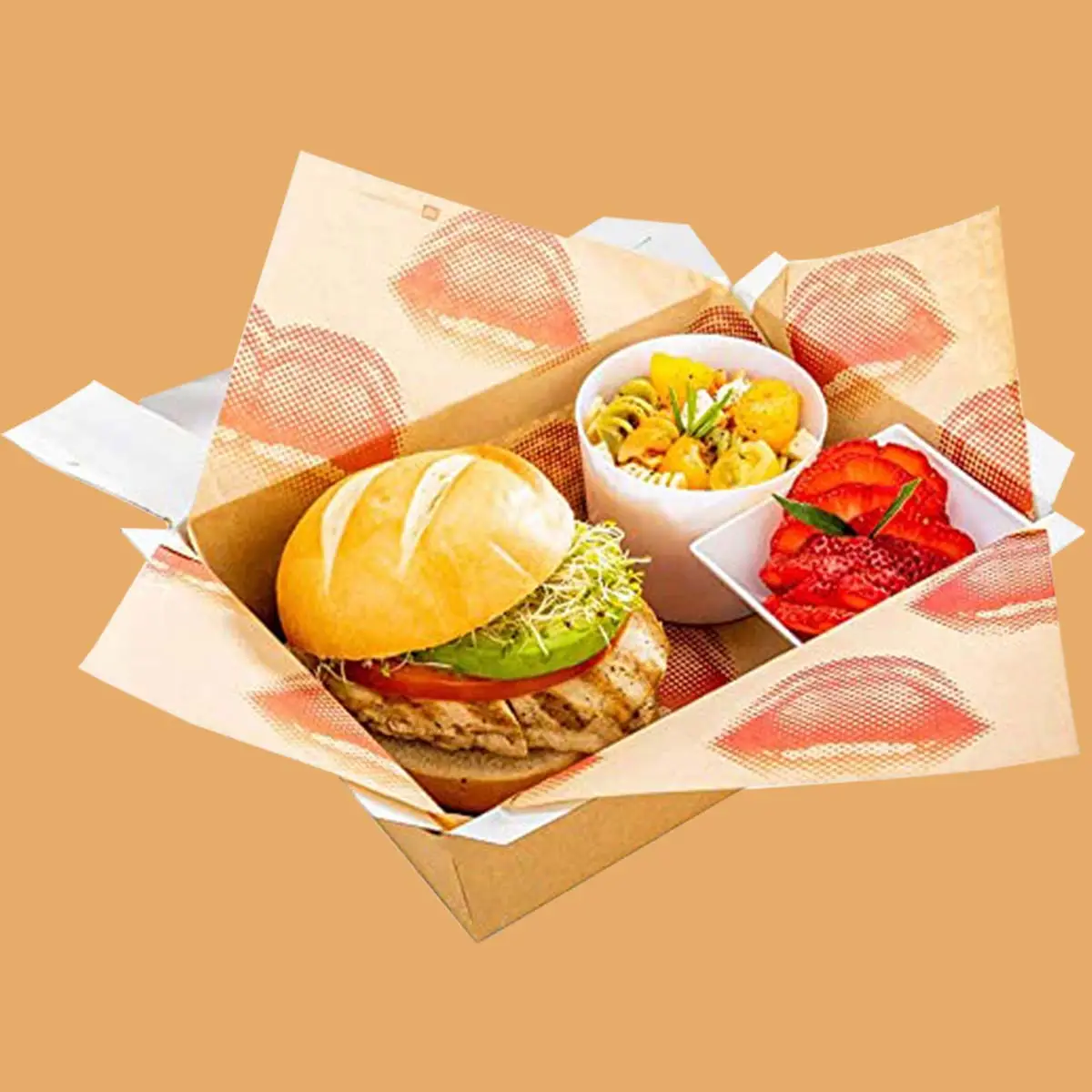
Liners cut to the footprint of your own serving baskets.
Specification & quote