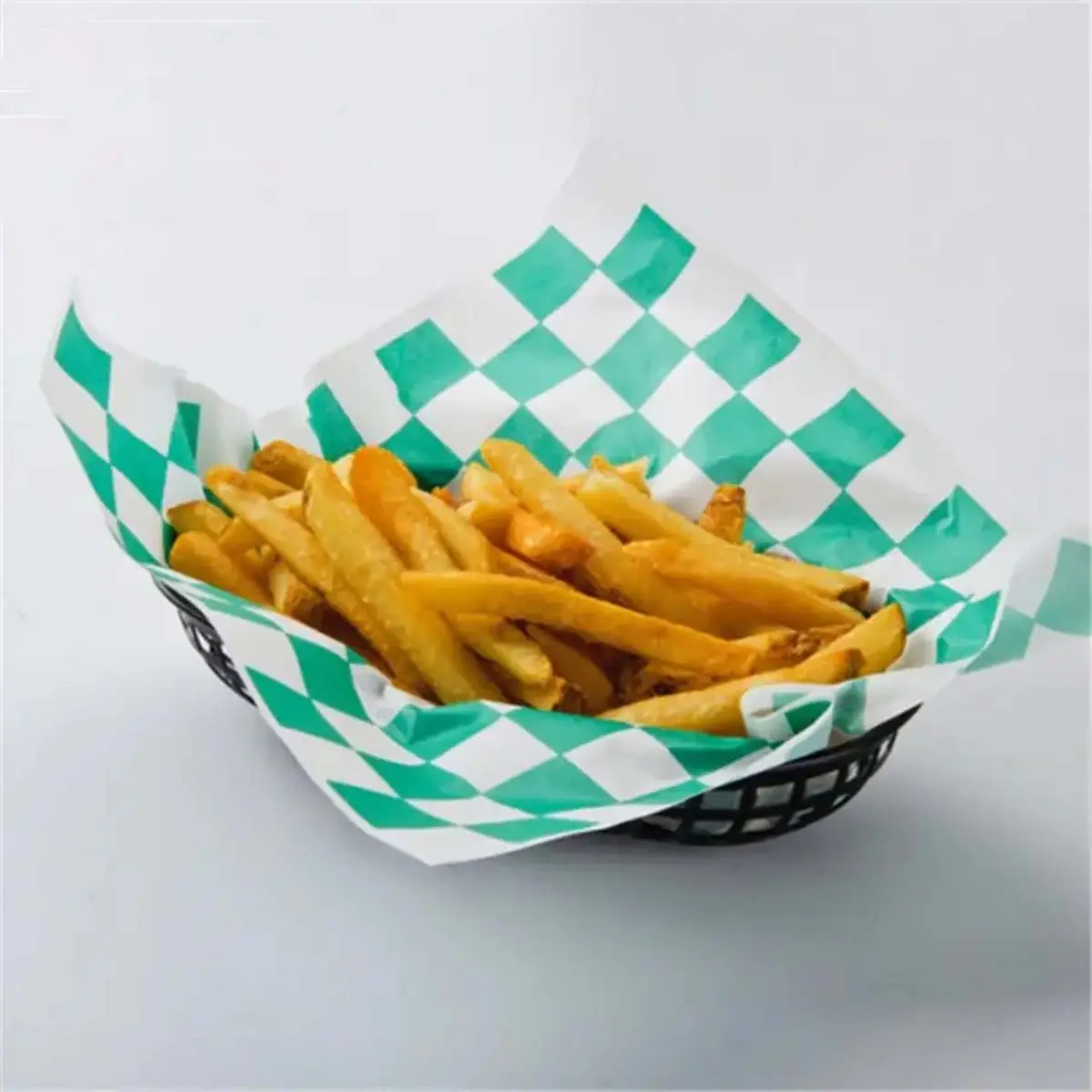
Custom Printed Fry Paper
Liner sheets for baskets and boxes serving chips and fried food.
Specification & quote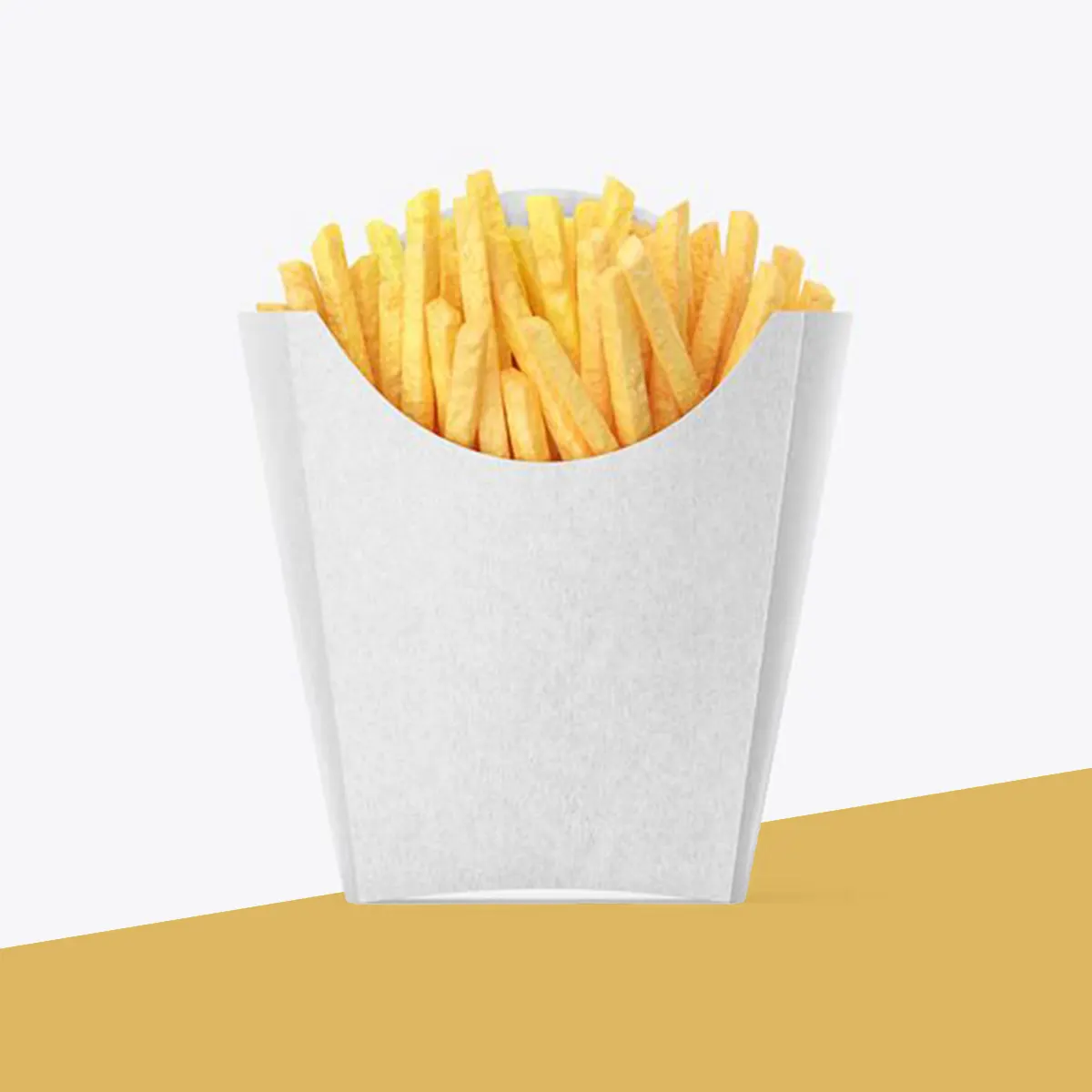
Food Boxes
Before boxes and cones, chips came in paper, and plenty of shops have gone back to it. A folded sheet costs a fraction of a formed container and takes almost no storage.
The trade-off is that it needs a member of staff who can fold one quickly.
From £0.30 per boxIndicative starting price, excluding VAT and delivery. Your unit cost moves with quantity, board, colour count and finish, and the figure that binds is the one written on your quotation.
Short enquiry
Tell us the quantity and any date you are working to. We reply with the board, print and finish, plus the minimum order quantity and lead time.
Design Your Own
Pick a colour, put your name on it, and see how the idea reads before you ask anyone for a price. It is a sketch rather than a manufacturing proof — the real shape is cut from the product you already serve.
Sleeve colour
Finish
Put the branding on the face that points upwards. That is the one a customer looks at while carrying the tray back to a table.
Carry this into the full designerThe full page adds the size, board, print and quantity, then sends the whole specification over in one go. Nothing is committed to at any point.
| Folded paper | Formed box | |
|---|---|---|
| Unit cost | Considerably lower | Higher |
| Storage | Almost none | Significant |
| Service speed | Depends on staff skill | Consistent |
| Portion consistency | Varies with the fold | Fixed |
| Presentation | Traditional, informal | Neater, more branded |
Busy shops with settled staff do well on paper; high-turnover teams usually prefer a box.
A paper stiff enough to resist oil completely is also stiff enough to be awkward to fold at speed. There is a genuine balance to strike.
Greaseproof at a moderate weight folds cleanly and holds up for the length of a walk home, which is what most chip shops actually need.
Shops using a box as well often line it with printed fry papers used as a liner for the same look.
Weigh a typical portion on your own scales and send us the figure. We reply with a written specification, the minimum order quantity and the lead time for your job.
Simple, high-contrast artwork survives grease and handling best on these. Full file requirements are set out in our artwork guidelines.
Lead times depend on the print method, run length and press schedule, so we confirm yours on the quote rather than publishing a single figure.
Orders are dispatched on national carriers to any UK address. Seedelivery information for how dates are given.
For the length of a short journey, generally yes, with a greaseproof grade. For a long walk on a wet evening, a box holds its shape better and paper starts to sag.
Enough to matter for portion consistency. Shops that care about exact portions tend to move to a formed container; shops that value the traditional look accept the variation.
A moderate weight. Heavy stock resists oil better and is awkward to fold at speed, which is the balance to strike.
Almost none, which is their main advantage. A case of sheets replaces a pallet of formed containers.
One or two colours reproduces reliably and suits the price point. Heavy coverage on an absorbent sheet looks patchy and costs more.
They are exactly what a traditional shop used before formed containers, and plenty have gone back to them for the look and the cost.
Enough to fold around your portion with an overlap. Wrap a real portion with a test sheet before settling on a size.
Yes, and many shops do both — a folded holder for takeaway and the same printed sheet lining a box for eat-in.
Yes, and most pick it up within a shift. The variation between staff is what pushes some shops towards a formed container.
Poorly. A folded paper holder is a counter product; a courier bag needs something that holds its shape when tipped.
Sizing questions are usually quicker on the phone, especially if you have the product in front of you.
Liner sheets for baskets and boxes serving chips and fried food.
Specification & quote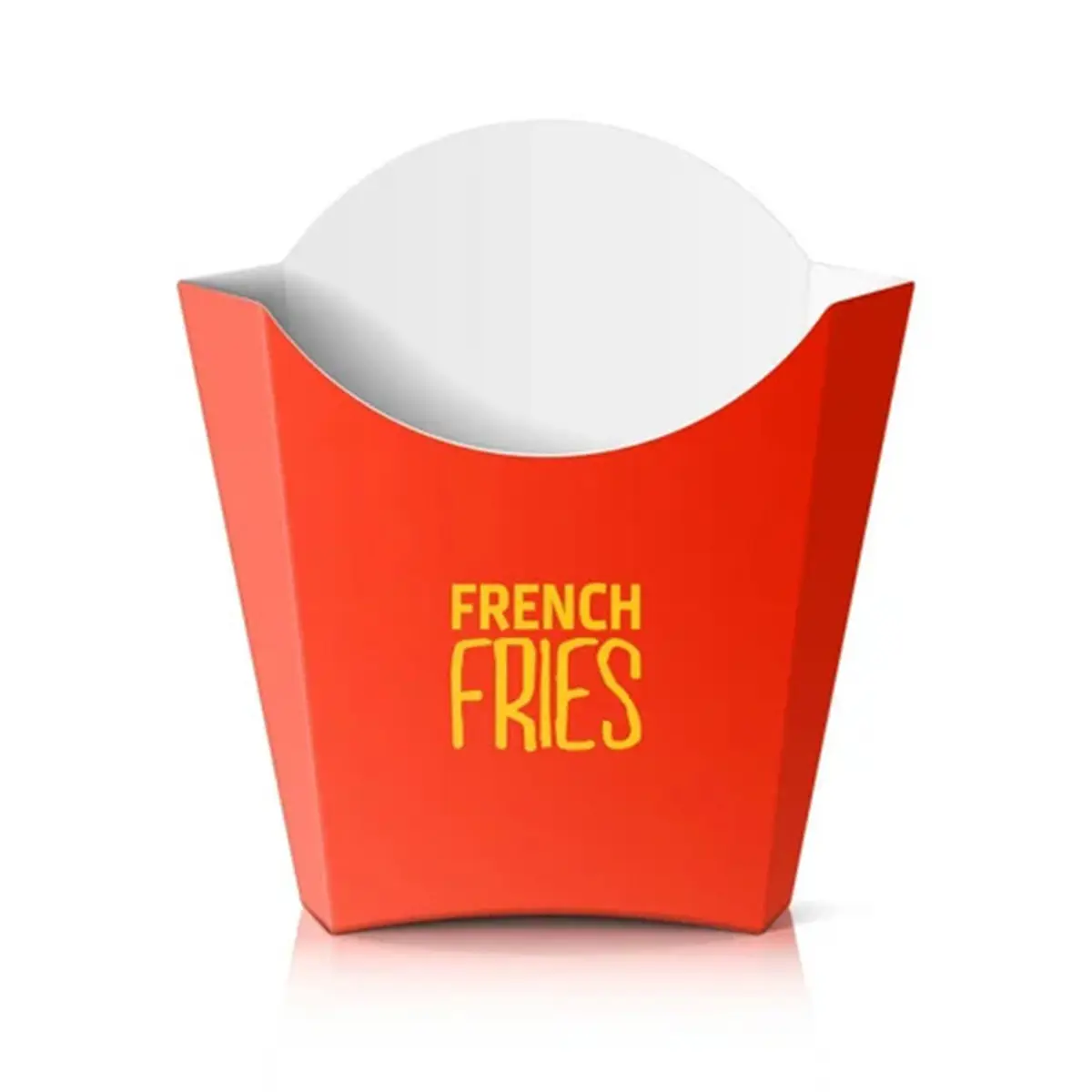
Scoops and cartons for chip portions, sized by weight rather than by name.
Specification & quote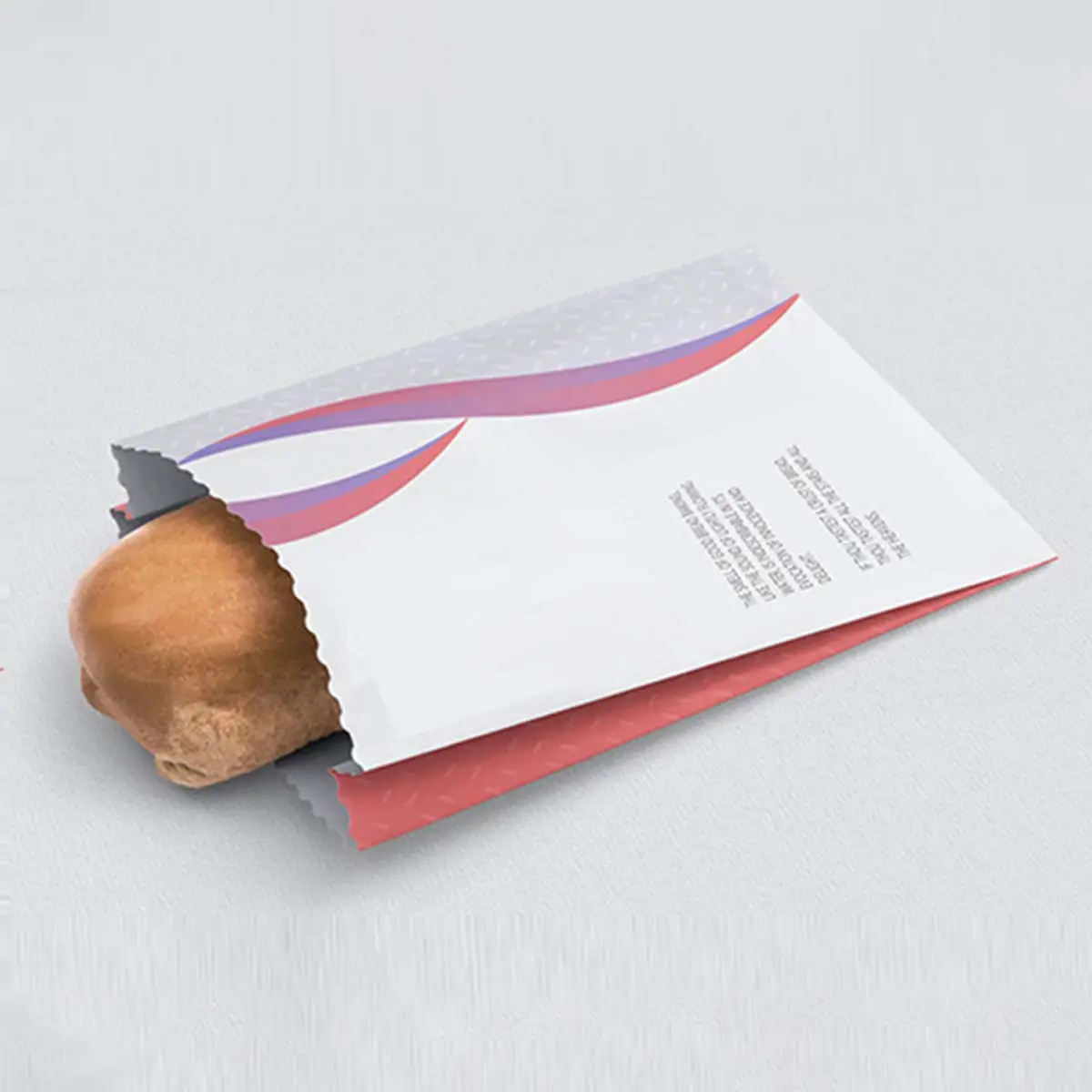
The workhorse sheet for burgers, hot food and counter wrapping.
Specification & quote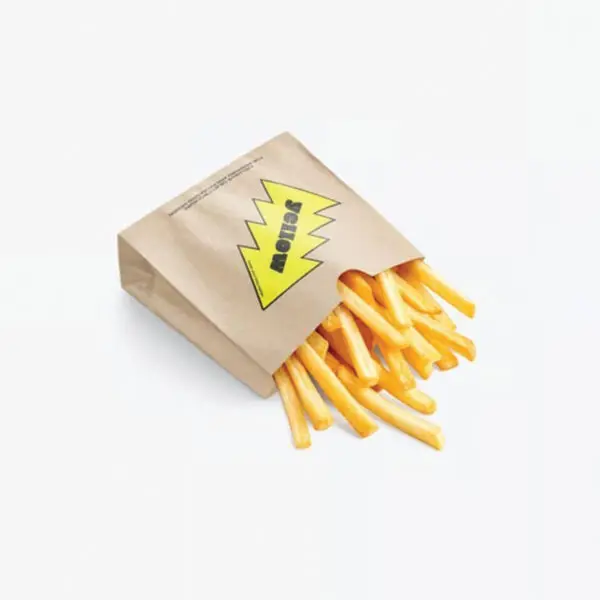
Grease-resistant bags with an open top so chips vent.
Specification & quote