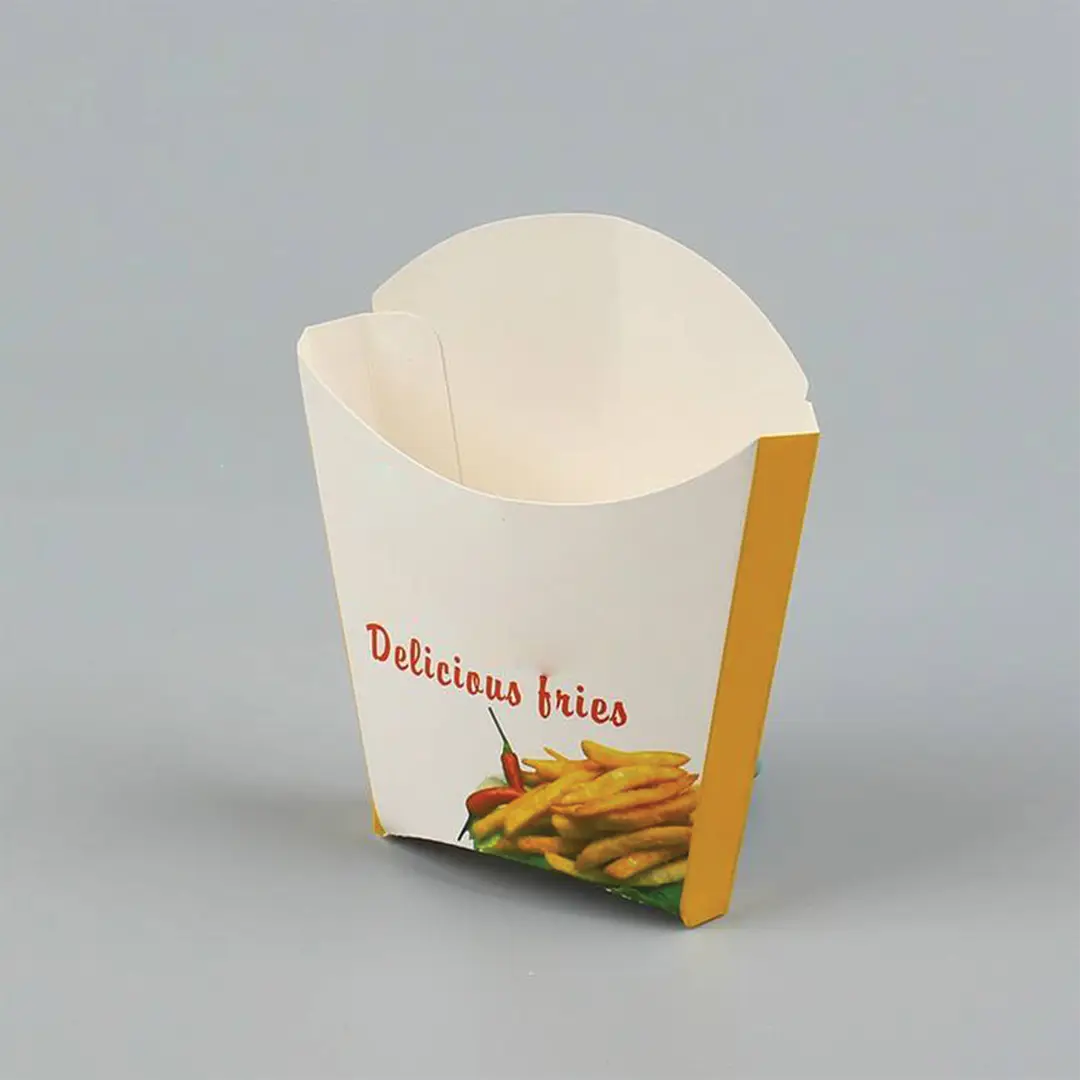
Custom Fries Sleeves
Open-topped chip sleeves in grease-resistant board.
Specification & quote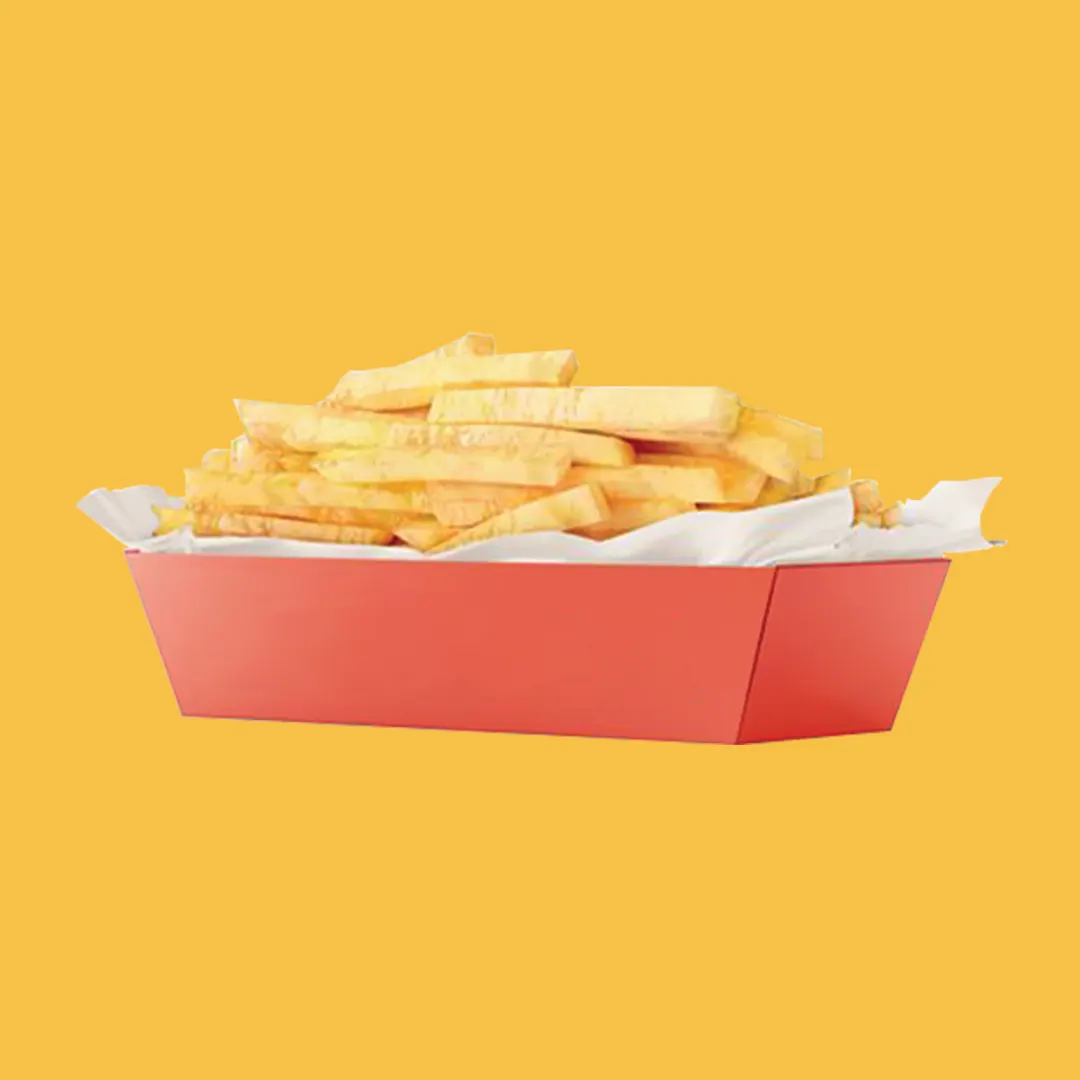
Food Trays
Plain chips go in a sleeve or a scoop. Loaded fries — cheese, sauce, pulled meat piled on top — need walls, because the topping moves and the whole thing is far heavier.
The tray becomes structural at that point rather than presentational.
From £0.30 per trayIndicative starting price, excluding VAT and delivery. Your unit cost moves with quantity, board, colour count and finish, and the figure that binds is the one written on your quotation.
Short enquiry
Tell us the quantity and any date you are working to. We reply with the board, print and finish, plus the minimum order quantity and lead time.
Design Your Own
Pick a colour, put your name on it, and see how the idea reads before you ask anyone for a price. It is a sketch rather than a manufacturing proof — the real shape is cut from the product you already serve.
Sleeve colour
Finish
Put the branding on the face that points upwards. That is the one a customer looks at while carrying the tray back to a table.
Carry this into the full designerThe full page adds the size, board, print and quantity, then sends the whole specification over in one go. Nothing is committed to at any point.
Melted cheese and sauce find every seam. A tray assembled from a flat blank has corners where liquid collects, and a light board goes soft there first.
A lined board with a well-formed corner handles it; an unlined one leaks within a few minutes of serving.
Weigh a loaded portion and send us the figure — it is the only reliable basis for sizing.
A loaded tray in a courier bag tips and the topping ends up on one side. If a share of your orders are delivered, a lidded container is a more honest answer than a deeper tray.
Tell us the internal size you need and what the tray has to carry. We reply with a written specification, the minimum order quantity and the lead time for your job.
Artwork sits on the rim and outer faces; the base is covered by food. Full file requirements are set out in our artwork guidelines.
Lead times depend on the print method, run length and press schedule, so we confirm yours on the quote rather than publishing a single figure.
Orders are dispatched on national carriers to any UK address. Seedelivery information for how dates are given.
Rarely. A sleeve has no walls to contain a topping and no base area to spread the weight, so loaded portions tip out. Once you add toppings, a tray is the right format.
Deep enough that the topping sits below the rim, which is usually more than people expect. Measure a made-up portion rather than working from the chip volume alone.
Because an assembled tray has seams there, and melted cheese finds them. A lined board with a well-formed corner holds; an unlined one does not.
A grease-resistant lining. Cheese oil is more demanding than chip oil, and it sits on the food for the whole time it is being eaten.
Weigh one on your own scales and send the figure. Volume descriptions are unreliable once toppings are involved.
Not with a wide enough base. A tall narrow tray with a heavy topping is the combination that tips.
Poorly on their own. A loaded tray tips in a courier bag, so a lidded container is a more honest answer where delivery is a large share.
You can, though food covers most of it. The rim and outer faces are what the customer actually sees.
A lined board and a wall height that keeps hot topping off the rim. Softening usually starts where sauce sits against an unlined seam.
Yes, and on a multi-item counter it saves staff checking. Digital printing makes several names in one run affordable.
Sizing questions are usually quicker on the phone, especially if you have the product in front of you.
Open-topped chip sleeves in grease-resistant board.
Specification & quote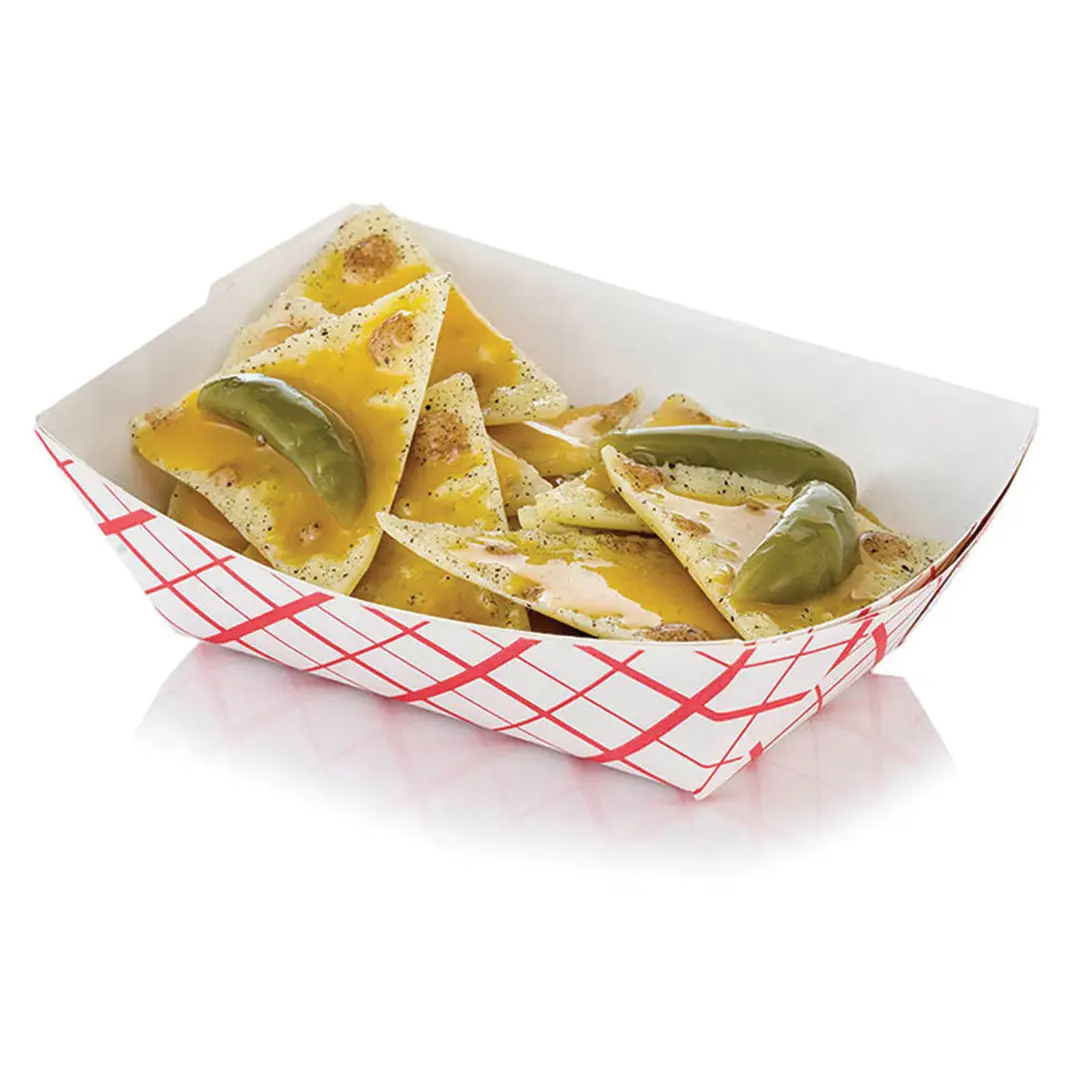
Trays with a separate dip well for cheese and salsa.
Specification & quote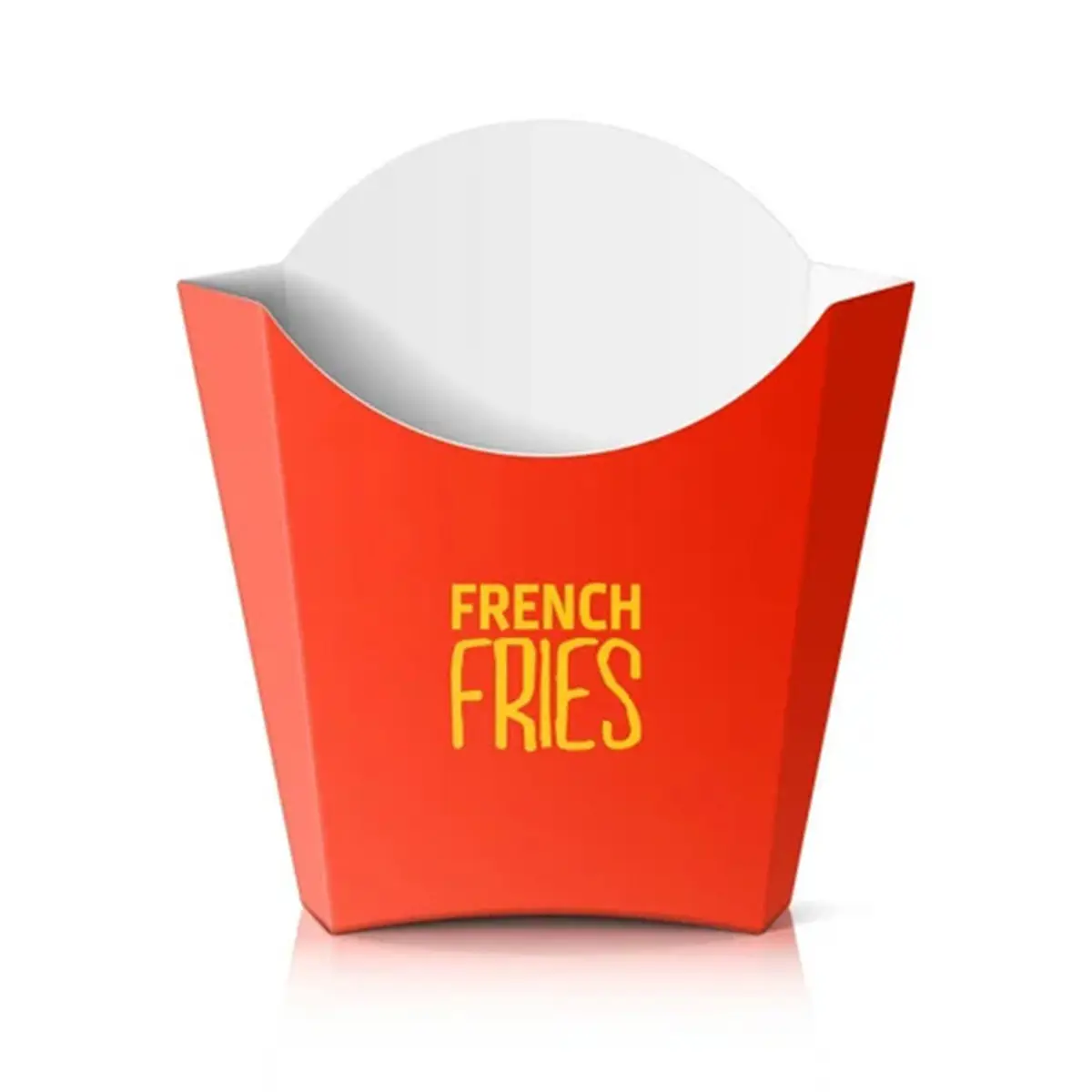
Scoops and cartons for chip portions, sized by weight rather than by name.
Specification & quote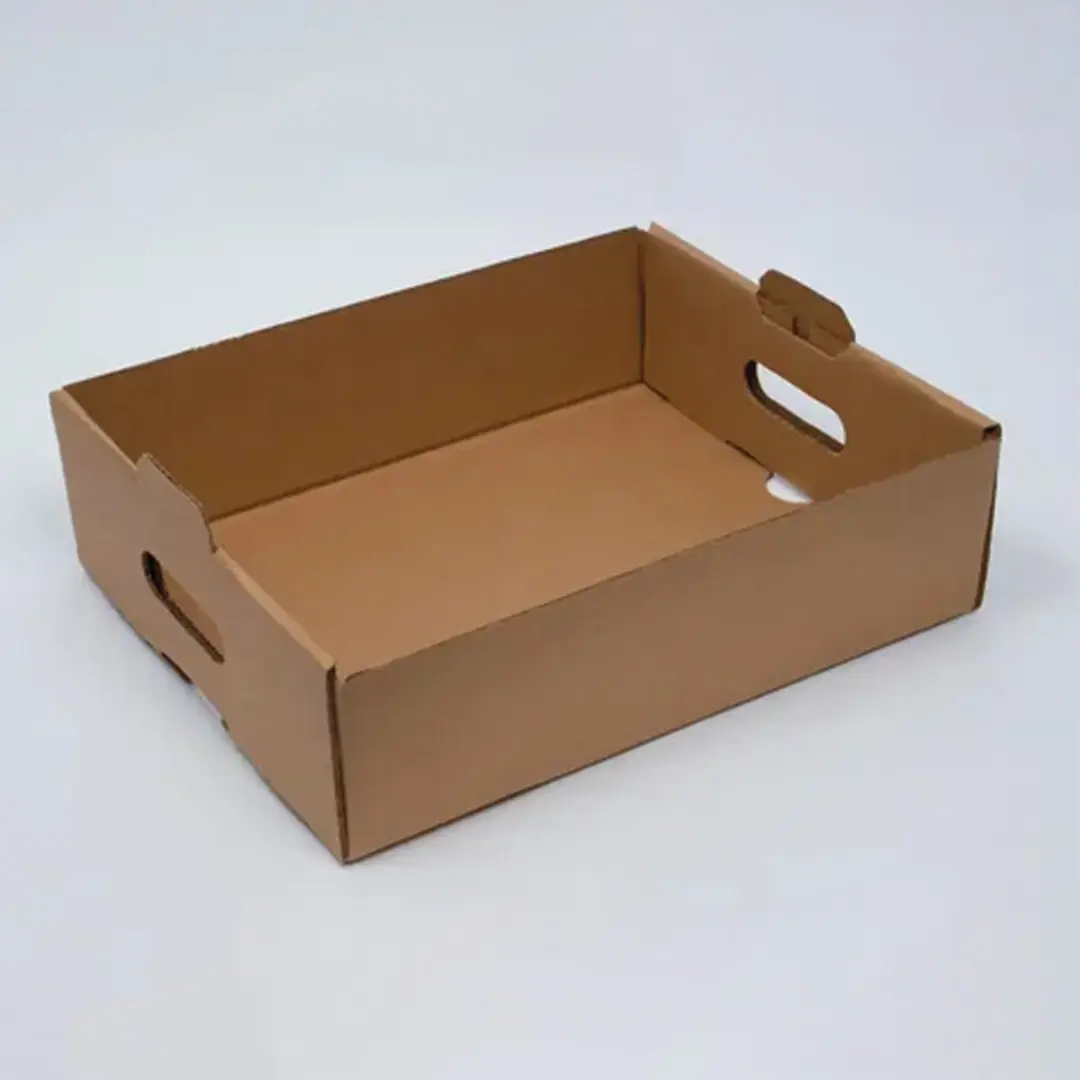
Compartment trays keeping a main, a side and a dip apart.
Specification & quote