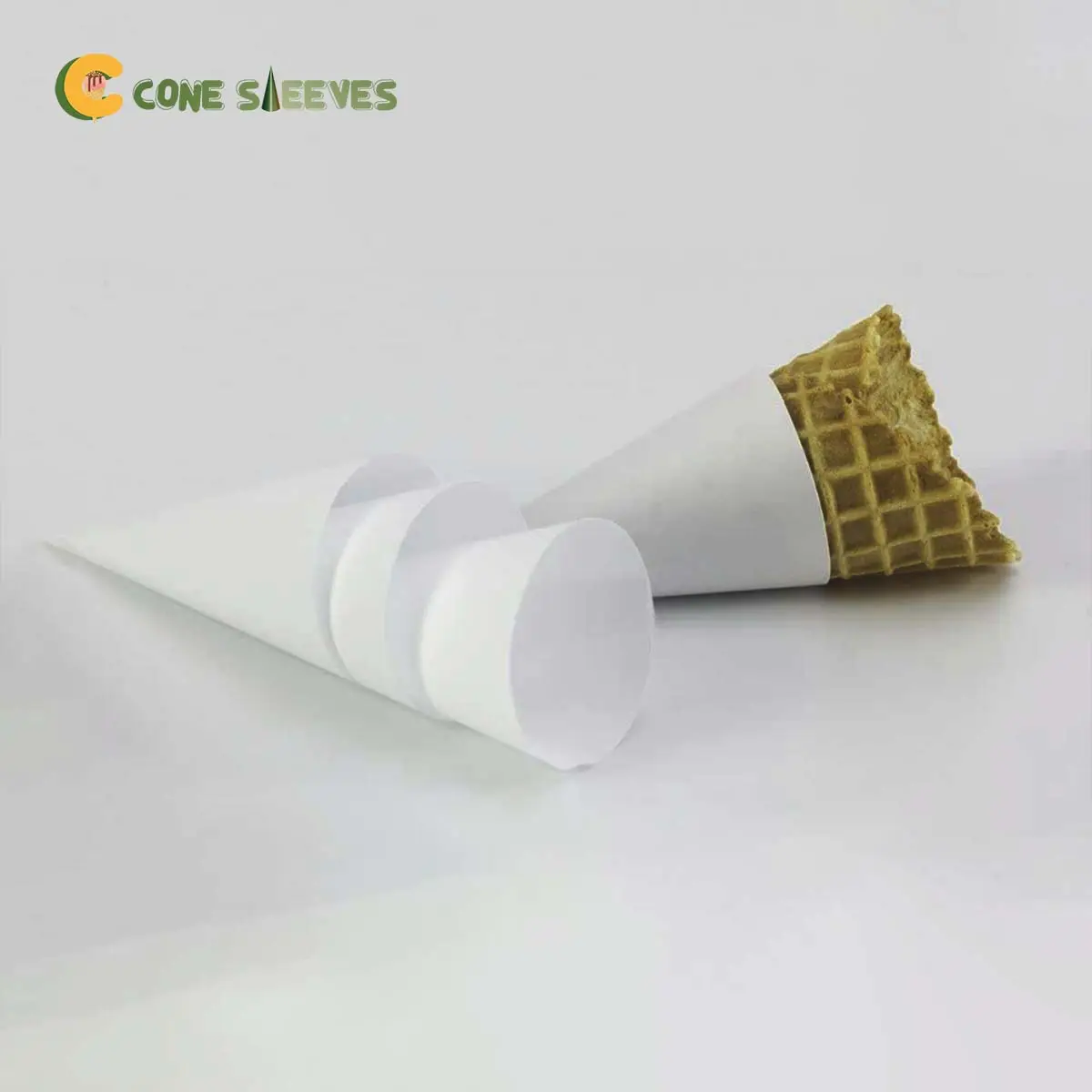
Custom White Cone Sleeves
Clean white wraps, plain or printed with a simple logo.
Specification & quote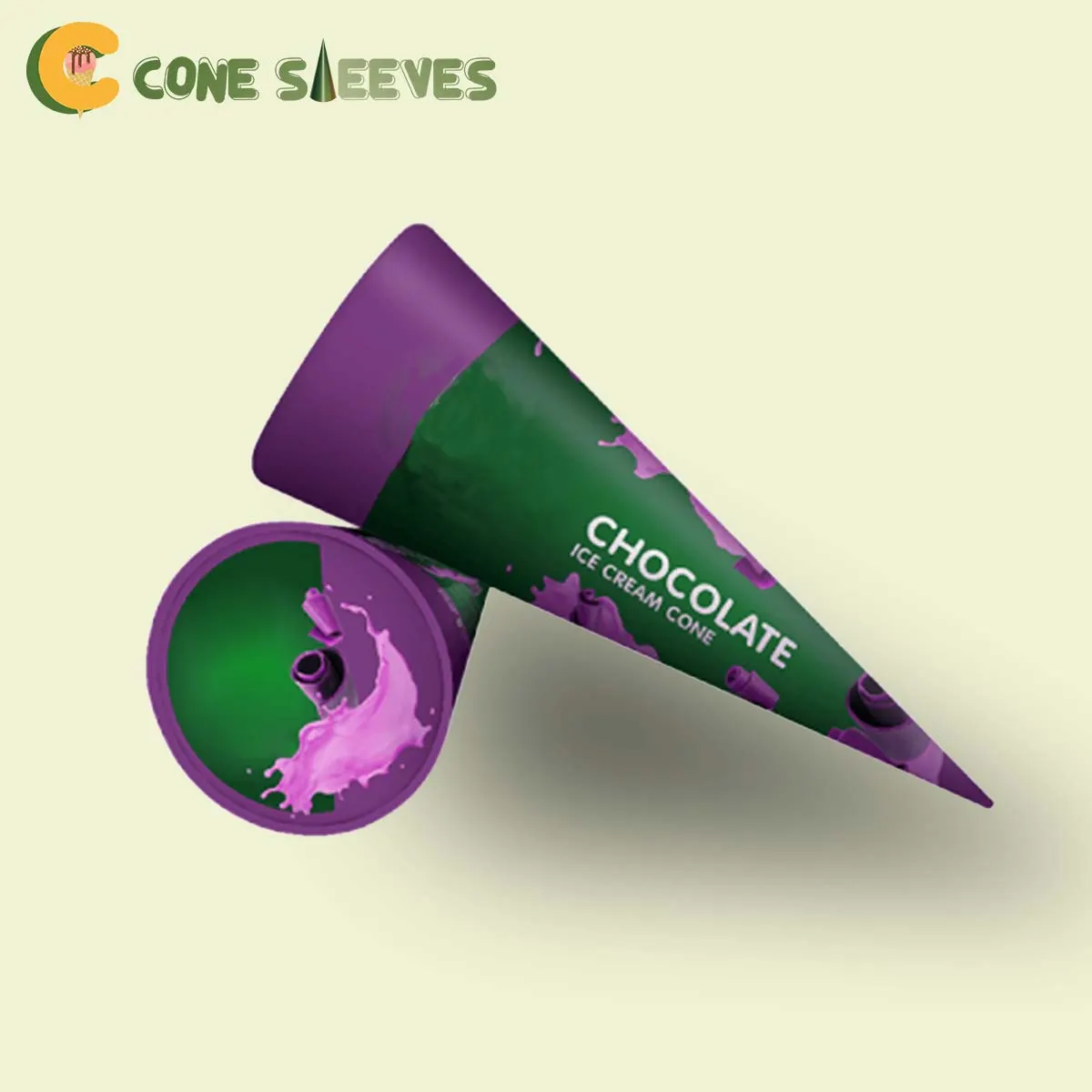
Cone Sleeves
Most brand marks are one or two colours. Printing them in full CMYK means building those colours from four inks, which costs more and holds less accurately across a run than printing them directly.
Two-colour spot printing gives a closer match for less money, provided the design suits it.
From £0.30 per sleeveIndicative starting price, excluding VAT and delivery. Your unit cost moves with quantity, board, colour count and finish, and the figure that binds is the one written on your quotation.
Short enquiry
Tell us the quantity and any date you are working to. We reply with the board, print and finish, plus the minimum order quantity and lead time.
Design Your Own
Pick a colour, put your name on it, and see how the idea reads before you ask anyone for a price. It is a sketch rather than a manufacturing proof — the real shape is cut from the product you already serve.
Sleeve colour
Finish
Leave two or three centimetres of wafer showing. Customers read a visible cone as freshly made, and the sleeve still catches the first drips.
Carry this into the full designerThe full page adds the size, board, print and quantity, then sends the whole specification over in one go. Nothing is committed to at any point.
Which is cheaper depends entirely on the artwork.
| Two spot colours | Full CMYK | |
|---|---|---|
| Colour accuracy | Very close to a Pantone reference | Approximated from four inks; shifts across a run |
| Cost on long runs | Lower — two inks instead of four | Higher |
| Photographs | Cannot reproduce them | Reproduces them well |
| Gradients | Limited to tints of the two inks | Full range available |
| Suits | Logos, flat colour, line illustration, pattern | Photography, illustration with many colours |
A logo and a background colour is the classic two-colour job, and it is where the saving is largest.
Tints extend the palette considerably. A solid colour at 100 per cent, the same ink at 40 per cent, and the two inks overprinted give five distinct tones from two plates.
Designers used to working in CMYK sometimes forget this. It is worth asking yours to work in spot from the start rather than converting afterwards.
Everything we need is set out in our artwork specification for print-ready files, including file formats and colour naming.
Send us two or three of the cones you use, or the top diameter and slant height. We reply with a written specification, the minimum order quantity and the lead time for your job.
We supply a die template cut to your cone before design work starts. Full file requirements are set out in our artwork guidelines.
Lead times depend on the print method, run length and press schedule, so we confirm yours on the quote rather than publishing a single figure.
Orders are dispatched on national carriers to any UK address. Seedelivery information for how dates are given.
On longer runs, usually. On short digital runs the difference narrows or disappears, because digital presses lay down all colours in one pass. Ask for both prices when the quantity is modest.
It becomes a different job rather than an adjustment, since each ink is a separate plate on a conventional press. If a third colour is likely, it is worth pricing the three-colour version now.
Count the flat colours in it. If it is a mark and a background with no photographs or soft gradients, it suits spot printing and will usually cost less than full colour.
Yes. Each ink at full strength, each at a lighter tint, and the two overprinted gives five distinct tones from two plates, which surprises most people the first time.
Then price the three-colour version as well as a two-colour simplification. On a conventional press each ink is a separate plate, so the third one is a real cost rather than a rounding.
For spot printing, yes. A CMYK build or a hex code describes a colour approximately; a Pantone reference describes a specific mixed ink, which is the point of the process.
Far more closely than a process build, because the ink is mixed to a recipe rather than assembled from four separates. That consistency is the main reason to choose spot.
Not to a two-colour job. Photographs need process printing, so adding one converts the whole design and changes the price. Decide before the artwork is built.
Often not. Digital presses lay all colours in one pass, so the saving comes on longer conventional runs. Ask for both prices when the quantity is modest.
Our die template, and an instruction to work in two named Pantone colours rather than CMYK. Converting a CMYK file to spot afterwards rarely produces a clean separation.
Sizing questions are usually quicker on the phone, especially if you have the product in front of you.
Clean white wraps, plain or printed with a simple logo.
Specification & quote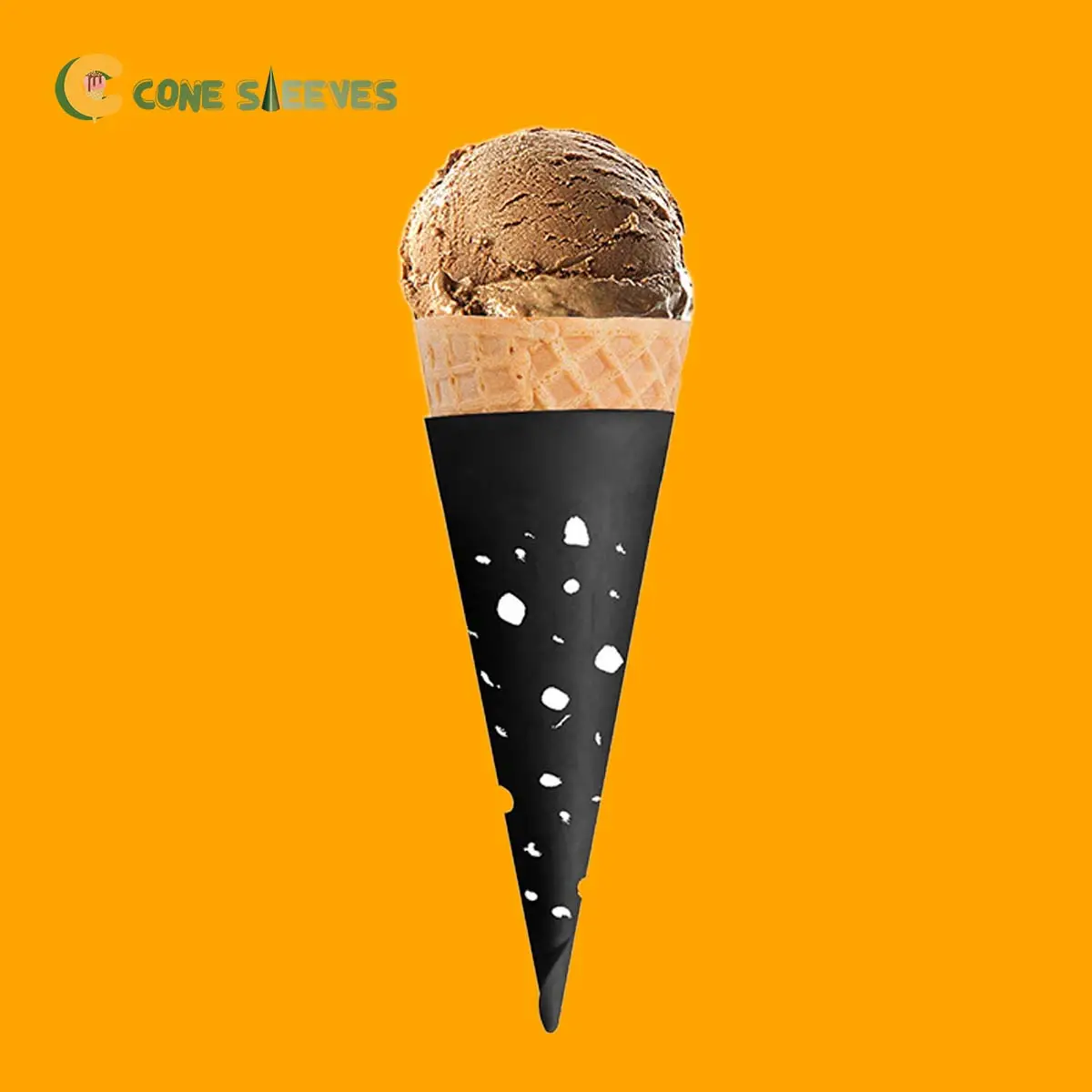
Solid black wraps with a matt finish for a dark counter look.
Specification & quote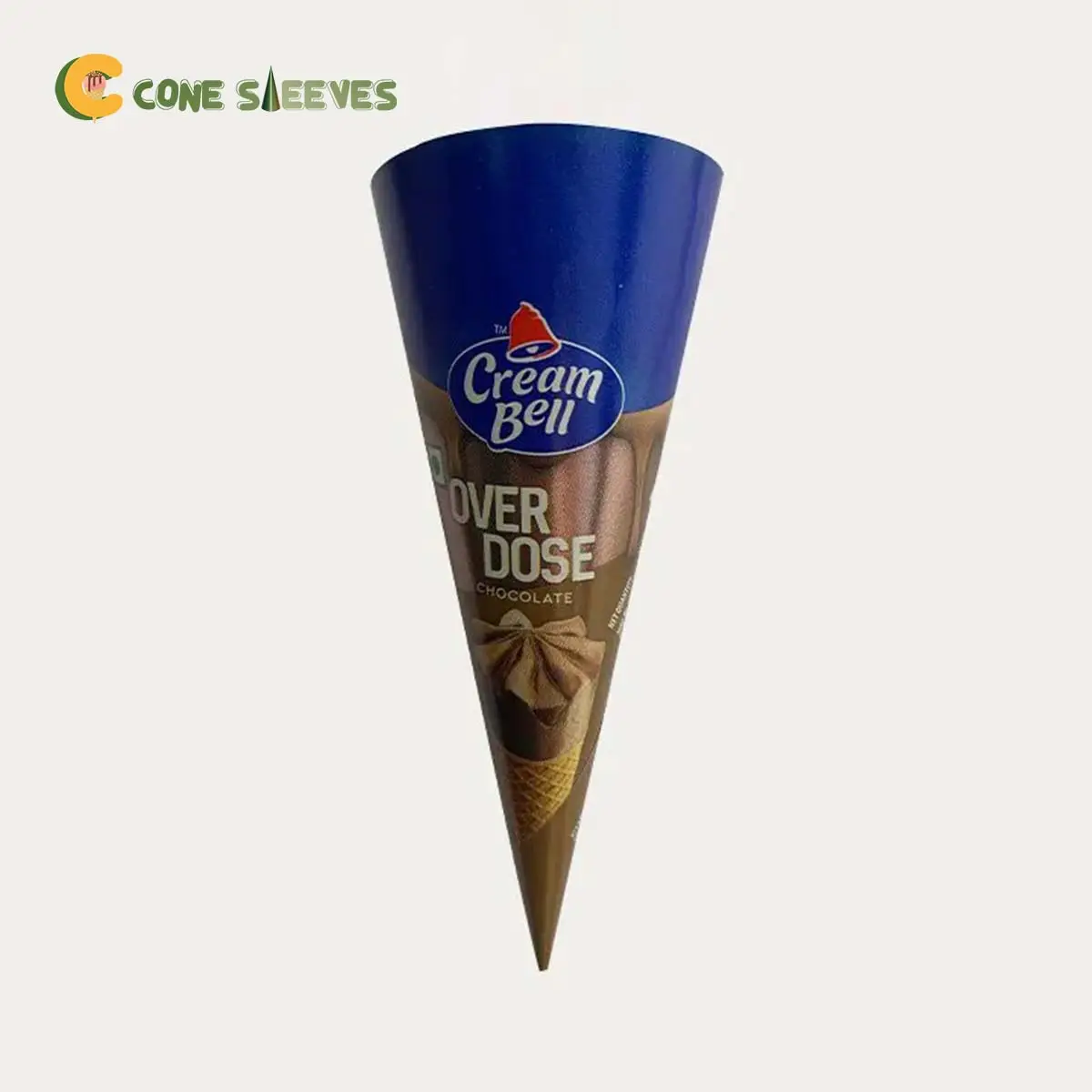
Full-colour printed sleeves cut to the cone you already serve.
Specification & quote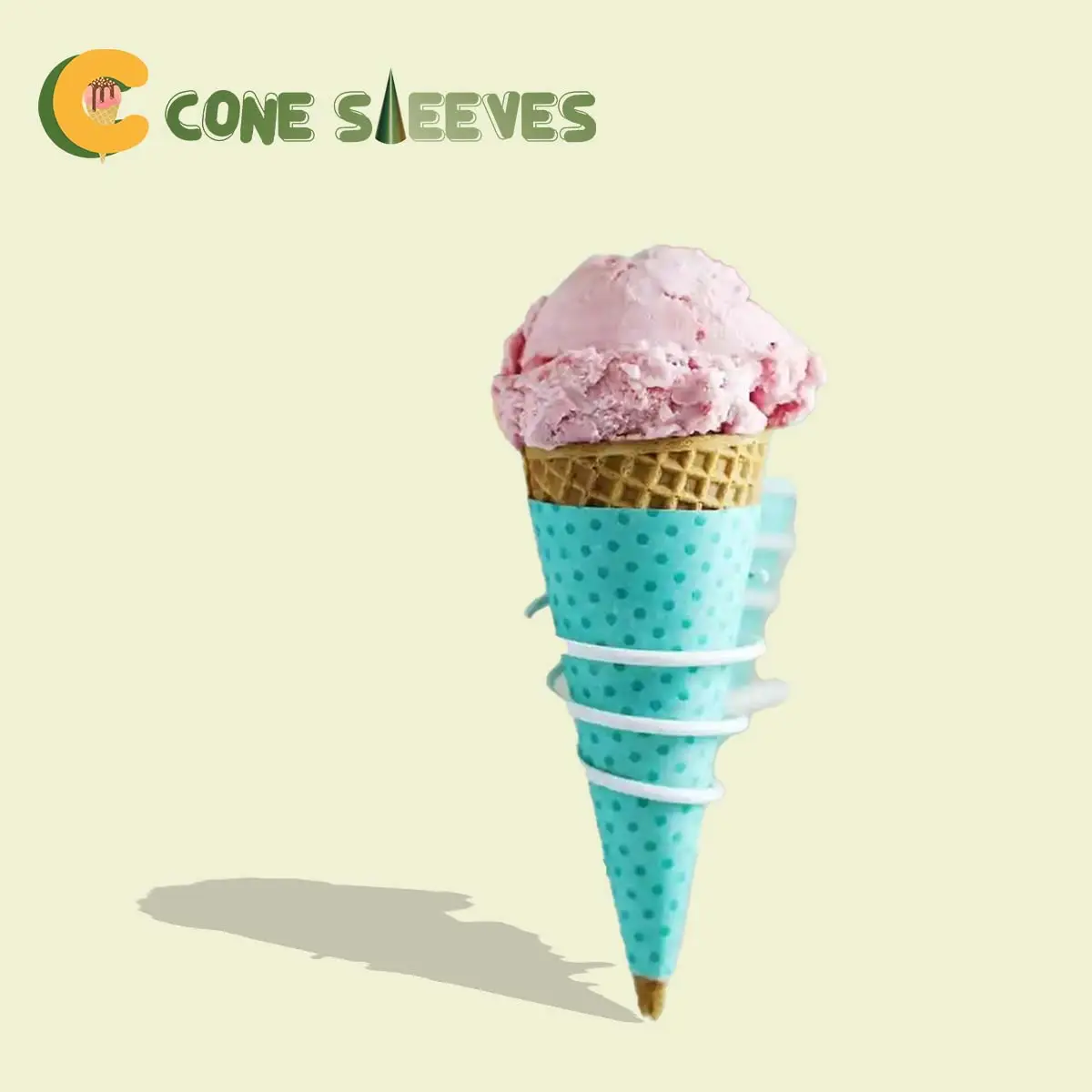
Repeating dot patterns in your own colours, readable from any angle.
Specification & quote