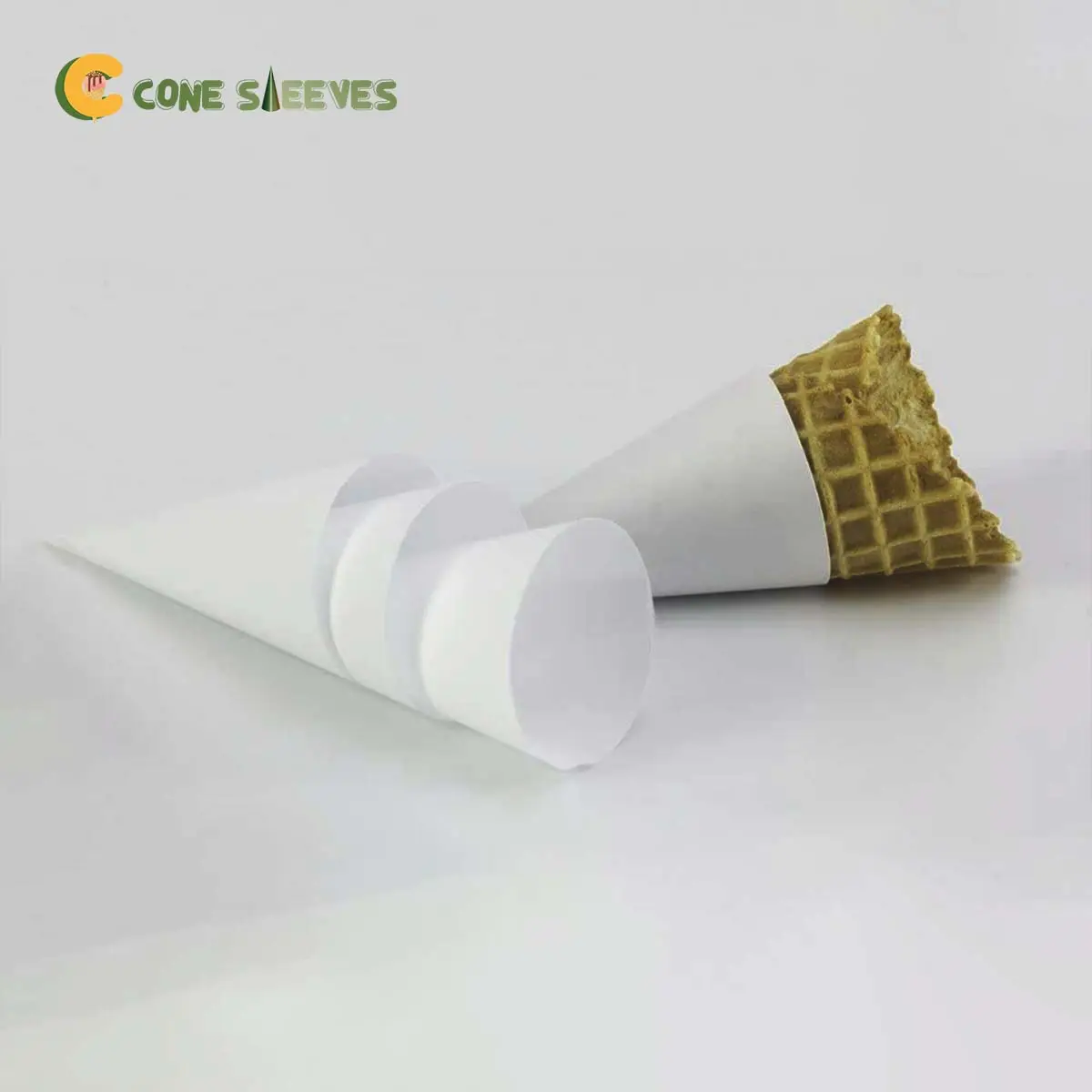
Custom White Cone Sleeves
Clean white wraps, plain or printed with a simple logo.
Specification & quote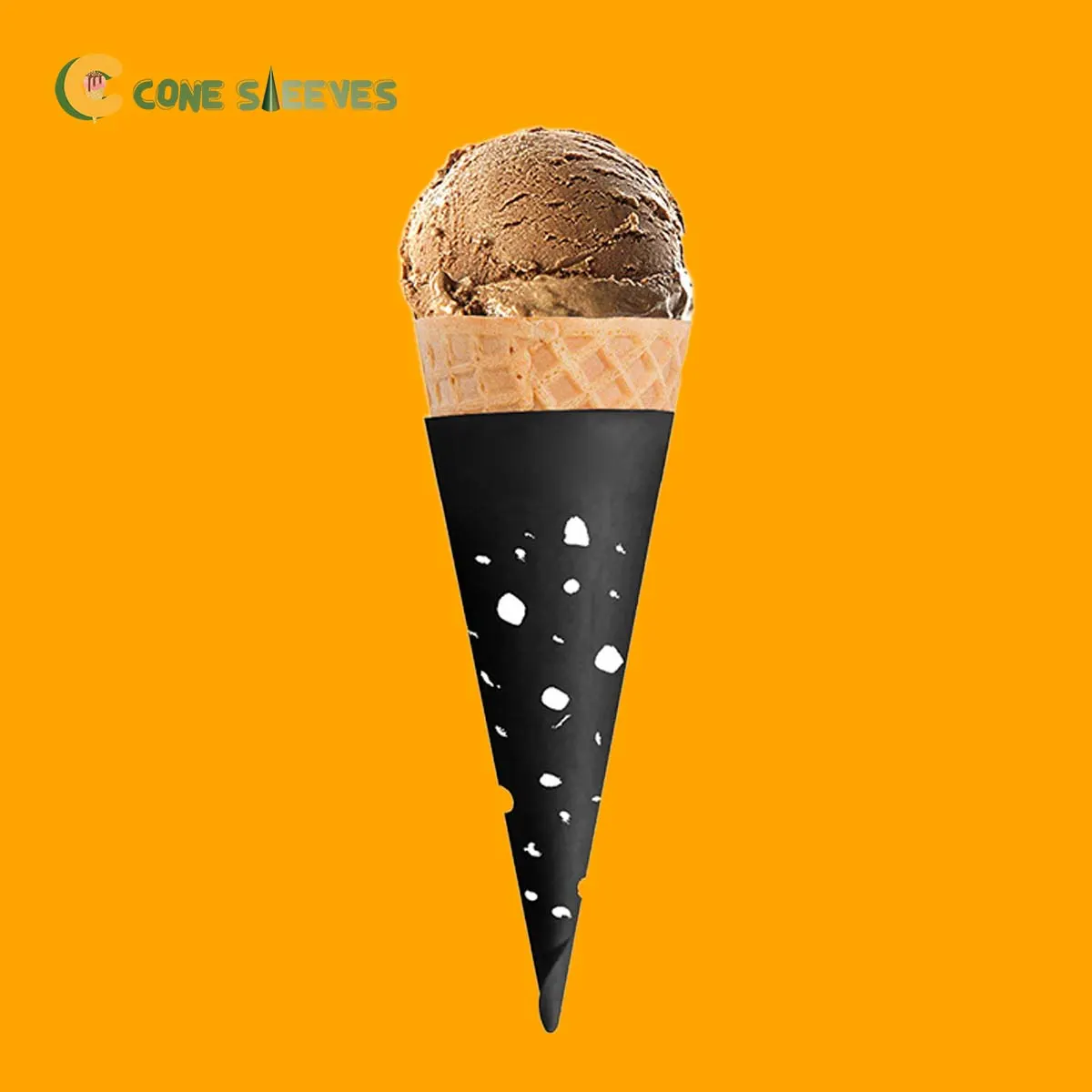
Cone Sleeves
A black sleeve makes ice cream look like the product rather than the packaging. Against a dark wrap the colour of the scoop is the only thing the eye goes to, which is why so many dessert bars have moved to it.
Solid black is also the hardest colour to print evenly, and worth understanding before ordering.
From £0.30 per sleeveIndicative starting price, excluding VAT and delivery. Your unit cost moves with quantity, board, colour count and finish, and the figure that binds is the one written on your quotation.
Short enquiry
Tell us the quantity and any date you are working to. We reply with the board, print and finish, plus the minimum order quantity and lead time.
Design Your Own
Pick a colour, put your name on it, and see how the idea reads before you ask anyone for a price. It is a sketch rather than a manufacturing proof — the real shape is cut from the product you already serve.
Sleeve colour
Finish
Leave two or three centimetres of wafer showing. Customers read a visible cone as freshly made, and the sleeve still catches the first drips.
Carry this into the full designerThe full page adds the size, board, print and quantity, then sends the whole specification over in one go. Nothing is committed to at any point.
A large flat black area shows every inconsistency. Ink density varies slightly across a press sheet, and on any other colour nobody notices — on black it reads as patchiness or a slight brown cast.
The usual fix is a rich black built from more than one ink rather than black alone, or a spot colour. Both cost a little more and hold far better across a long run.
Dark surfaces show fingerprints and scuffs in a way pale ones do not:
Almost every black sleeve we quote ends up matt laminated for these reasons.
| Black sleeve | White sleeve | |
|---|---|---|
| Product stands out | Strongly — the scoop is the only colour | Less so; white competes with pale ice cream |
| Print cost | Higher; full coverage plus a rich black build | Lower; the board is already white |
| Handling marks | Visible without a matt finish | Largely invisible |
| Logo reproduction | Reversed out, so fine type needs care | Printed positive, so fine type is easier |
| Feel | Premium, deliberate | Clean, neutral |
Send us two or three of the cones you use, or the top diameter and slant height. We reply with a written specification, the minimum order quantity and the lead time for your job.
We supply a die template cut to your cone before design work starts. Full file requirements are set out in our artwork guidelines.
Lead times depend on the print method, run length and press schedule, so we confirm yours on the quote rather than publishing a single figure.
Orders are dispatched on national carriers to any UK address. Seedelivery information for how dates are given.
Black built from a single ink can read warm when it is laid thinly. Building it from more than one ink, or using a spot black, gives a deeper and more consistent result across the run.
Yes, and reversing a mark out of solid black looks striking. Fine lines and small type need a little weight added, because ink spread closes up thin gaps on board.
Yes, because the colour is ink across the whole surface rather than only where a design sits, and a properly built black uses more than one ink to stay even.
Not on a cured, laminated print. Unlaminated heavy ink coverage can scuff along the seam during assembly, which is one reason black sleeves are usually laminated.
Spot finishing effects are quoted per job because availability depends on the print method. Tell us the effect you want and we will confirm what can be produced.
Less than white, which is one of its practical advantages. What it does show is fingerprints and scuffs, which is why matt lamination is the usual specification.
Not hard, but fine lines need slight weight added because ink spreads into board and closes small gaps. Send vector artwork and we will flag anything at risk.
Yes, and both can run in one job on digital printing. Tell us the split between them so the quantities are priced properly rather than assumed even.
Printed, in this range. A dyed black board behaves differently and is quoted separately, so tell us if the material itself needs to be black through the section.
More than on a pale sleeve, yes. Every printed sleeve leaves a small unprinted margin where it is cut and formed, and on solid black it reads as a thin light line.
Sizing questions are usually quicker on the phone, especially if you have the product in front of you.
Clean white wraps, plain or printed with a simple logo.
Specification & quote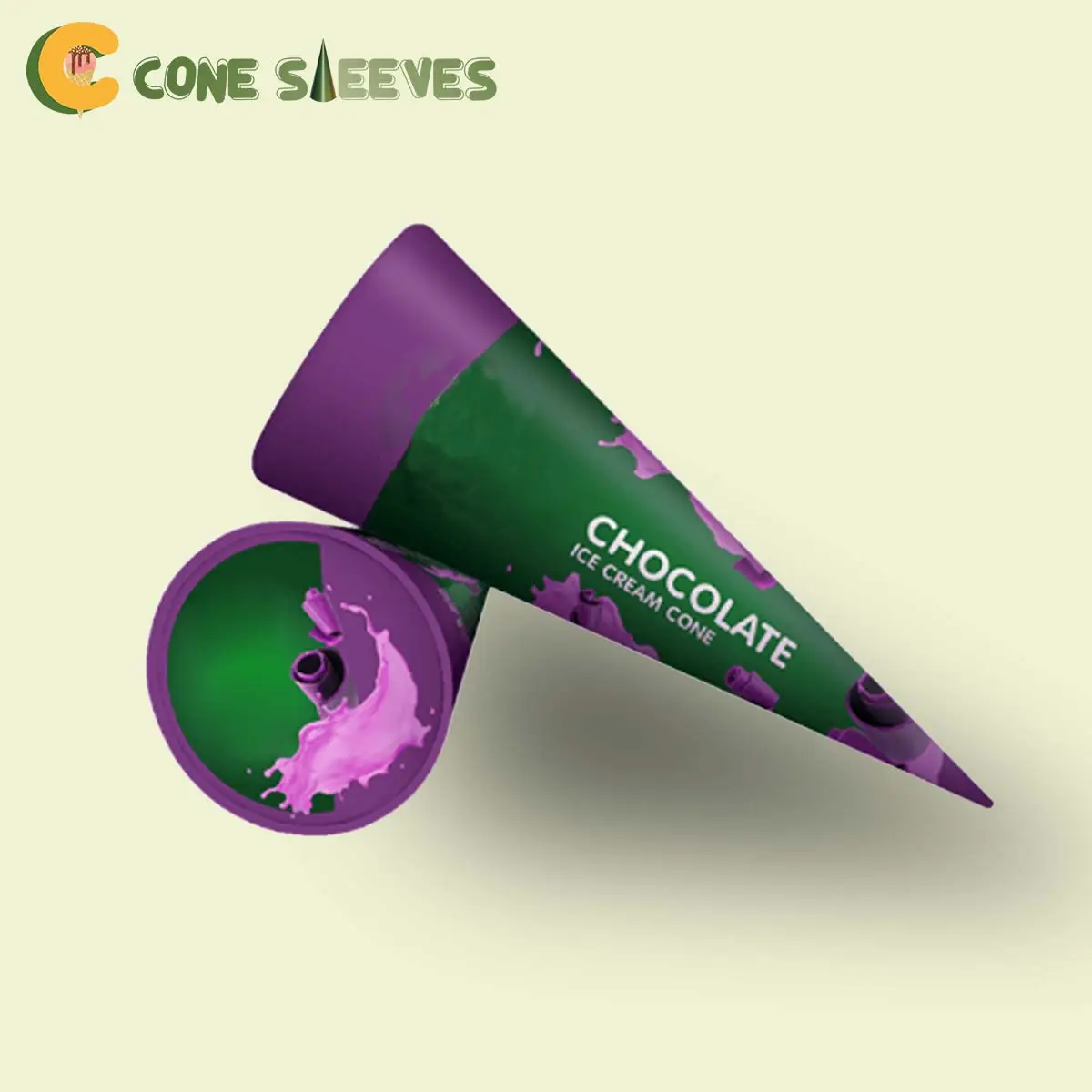
Spot-colour printing in two inks, for accurate brand colour at lower cost.
Specification & quote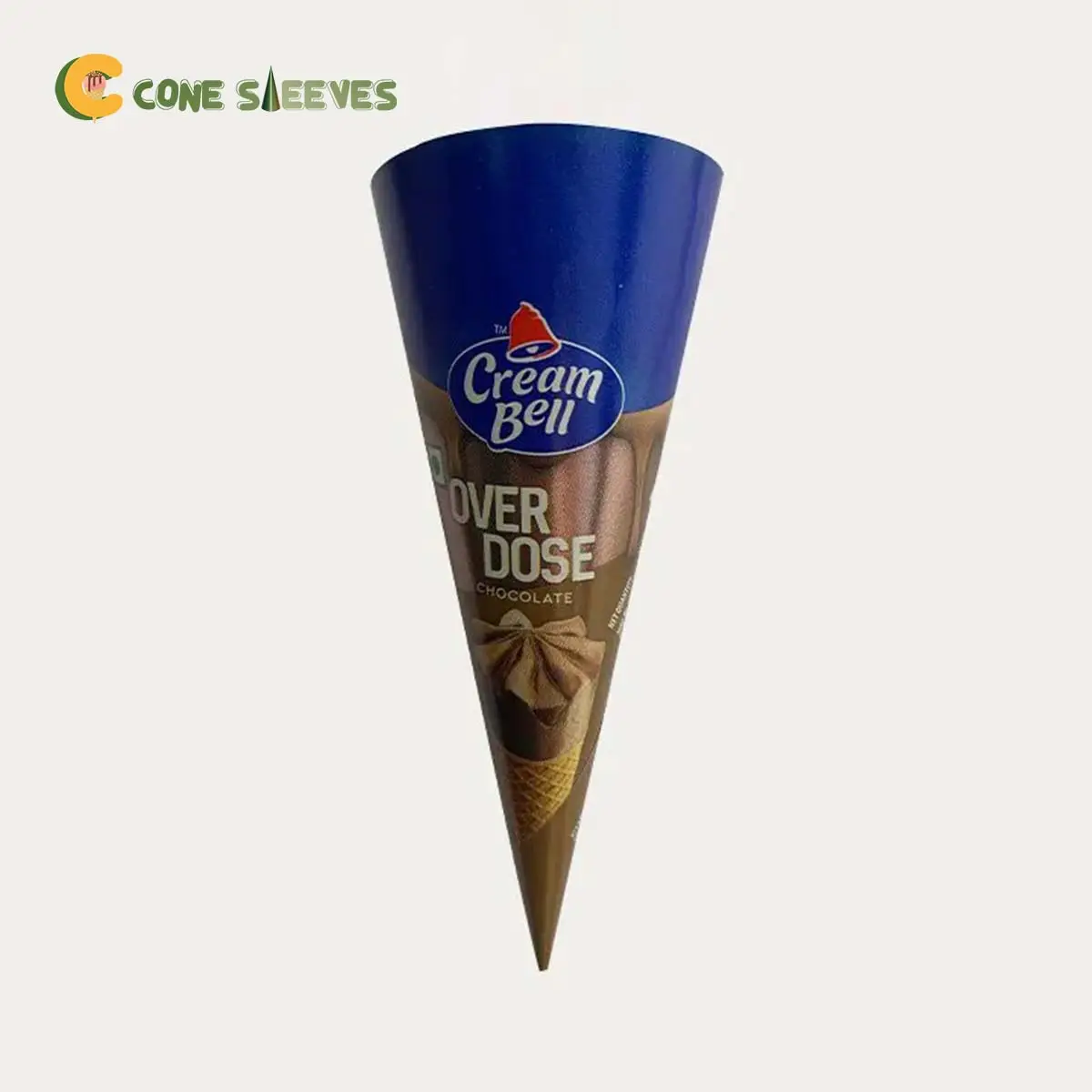
Full-colour printed sleeves cut to the cone you already serve.
Specification & quote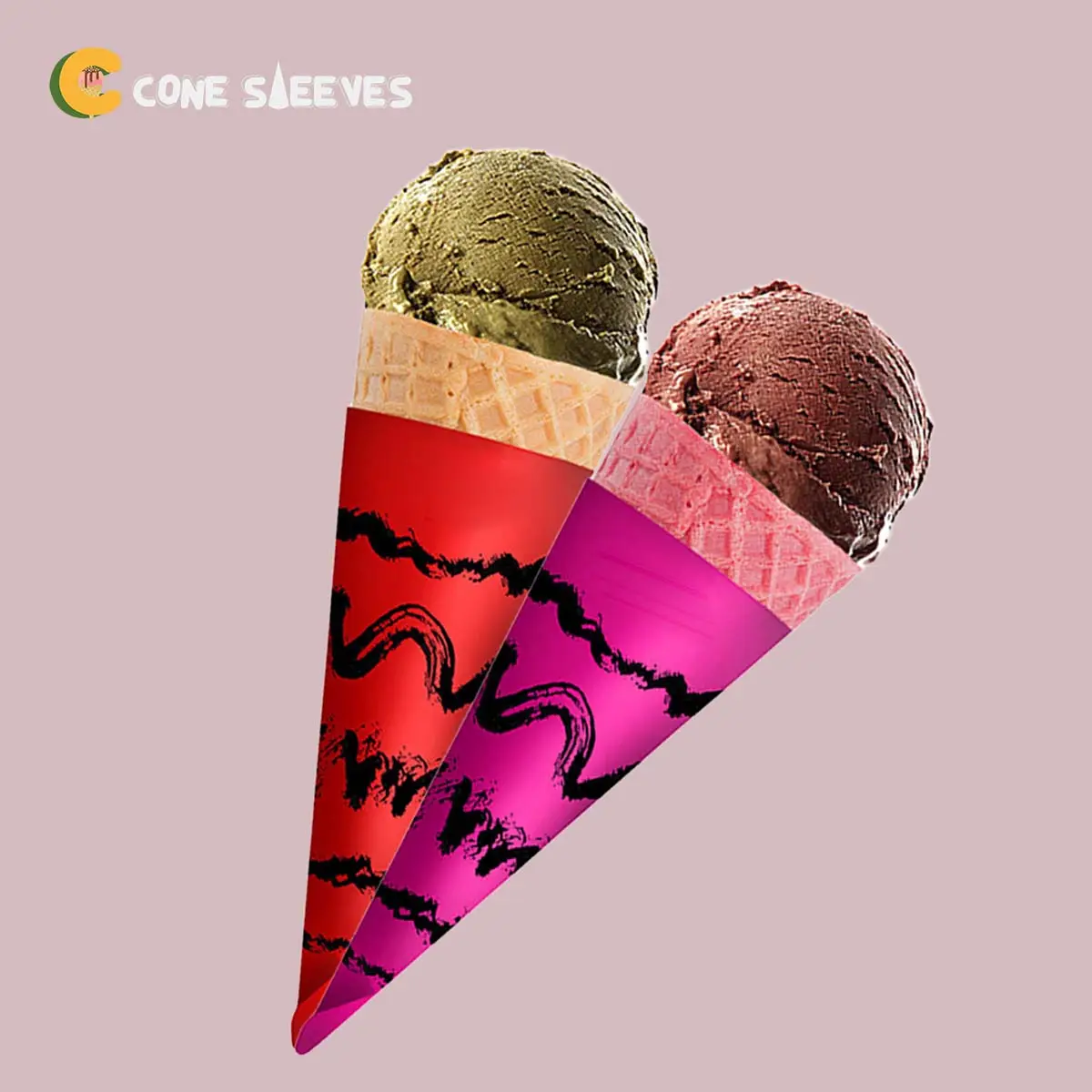
Illustrated and abstract artwork laid out for the cone shape.
Specification & quote