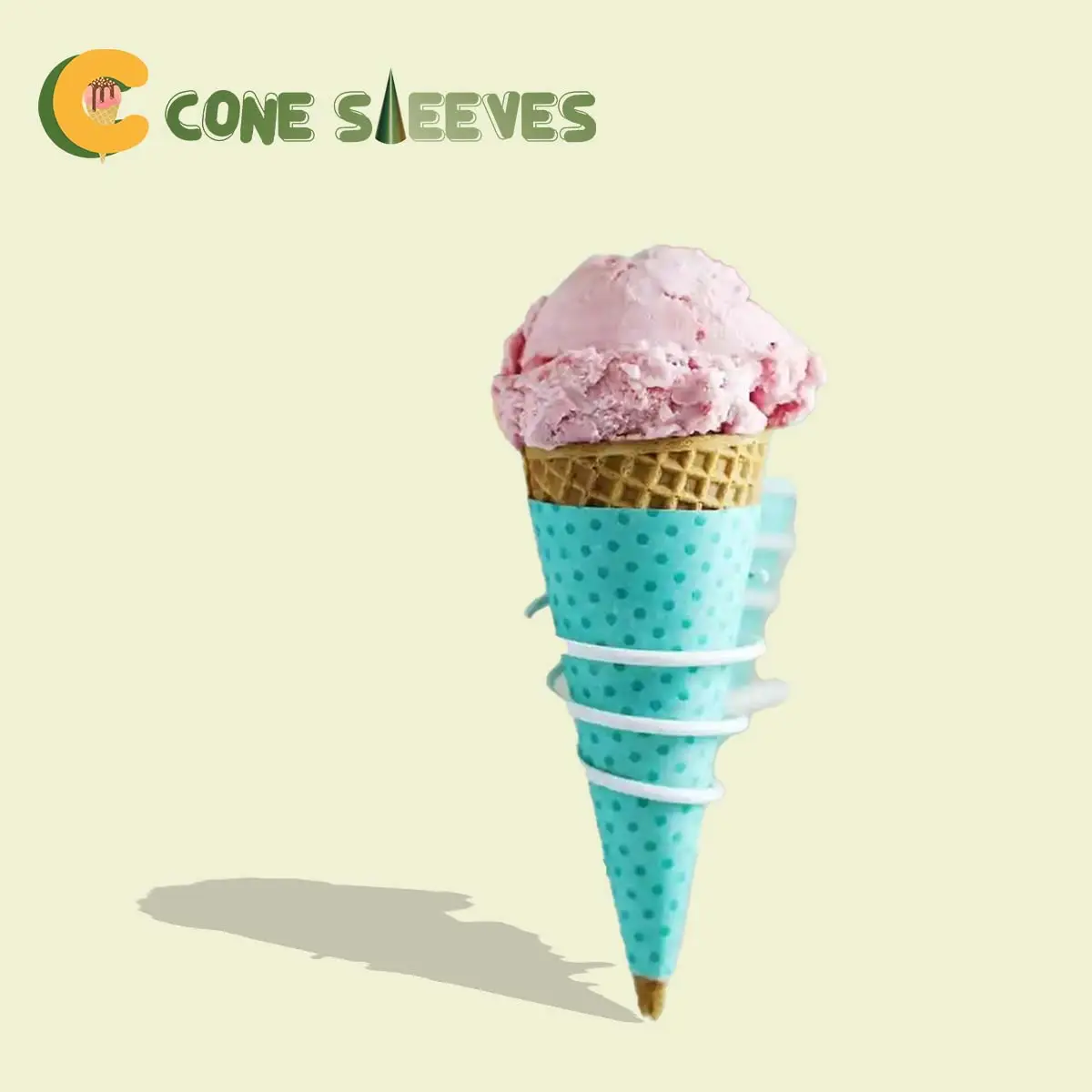
Polka Dot Ice Cream Cone Sleeves
Repeating dot patterns in your own colours, readable from any angle.
Specification & quote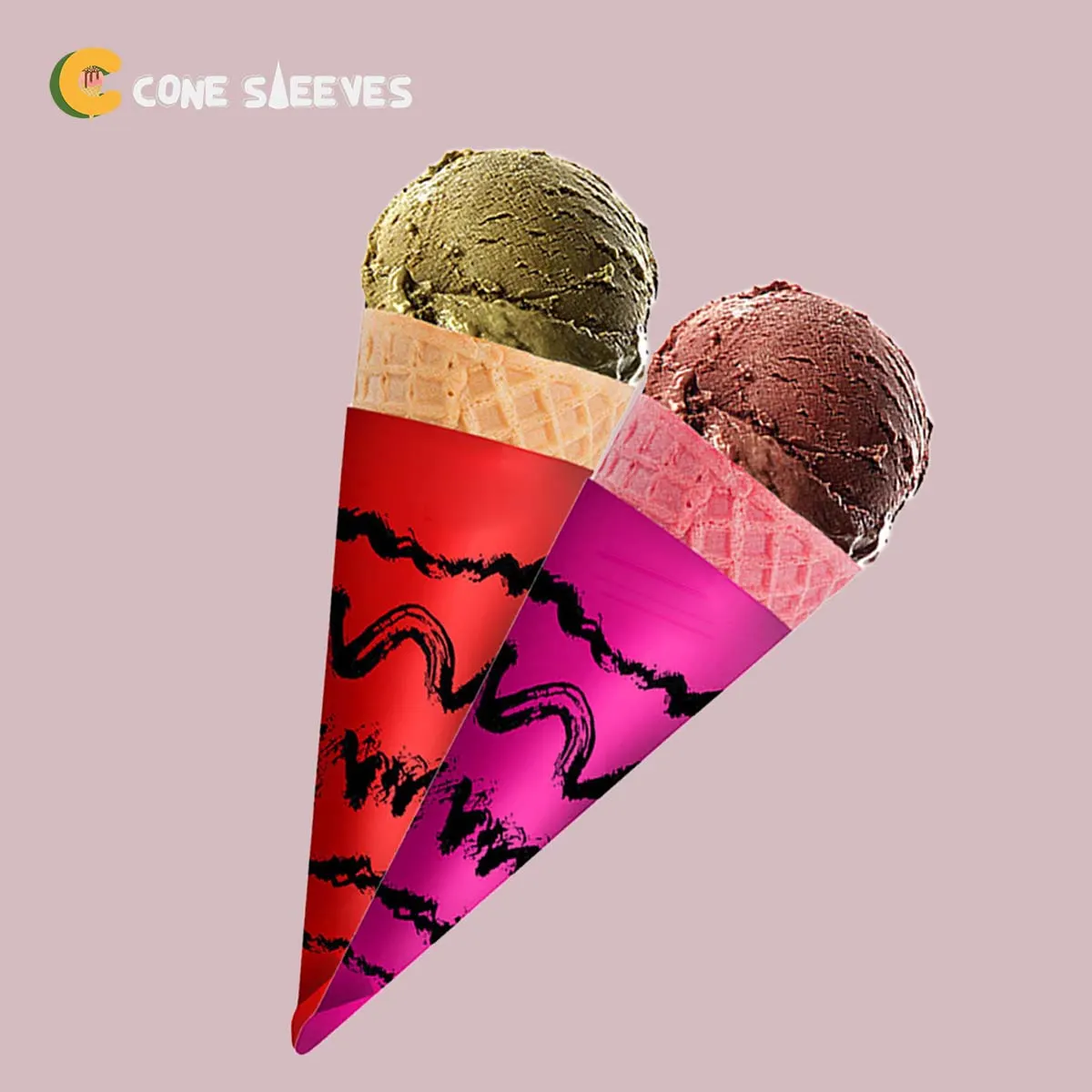
Cone Sleeves
Abstract artwork gives a cone sleeve a shelf presence that a logo alone cannot. It also gives a designer somewhere to put brand colours without printing a solid block of them.
The catch is that free-form artwork has to be built on the die line from the start. Laid out on a rectangle and wrapped afterwards, it distorts in ways that are obvious on the finished sleeve.
From £0.30 per sleeveIndicative starting price, excluding VAT and delivery. Your unit cost moves with quantity, board, colour count and finish, and the figure that binds is the one written on your quotation.
Short enquiry
Tell us the quantity and any date you are working to. We reply with the board, print and finish, plus the minimum order quantity and lead time.
Design Your Own
Pick a colour, put your name on it, and see how the idea reads before you ask anyone for a price. It is a sketch rather than a manufacturing proof — the real shape is cut from the product you already serve.
Sleeve colour
Finish
Leave two or three centimetres of wafer showing. Customers read a visible cone as freshly made, and the sleeve still catches the first drips.
Carry this into the full designerThe full page adds the size, board, print and quantity, then sends the whole specification over in one go. Nothing is committed to at any point.
The flat shape of a cone sleeve is a curved band, wider at one end. Straight lines drawn across it become curves once wrapped, and a horizontal band across the middle rises at both ends.
Designers who have not worked on cones before usually want the template before they start rather than after. We send it as an editable file at the beginning of the job.
We set out how the flat die line maps onto a wrapped cone with a diagram, which is worth passing to whoever designs your artwork.
| Full-colour CMYK; abstract work usually needs process printing | |
| Finish | Matt lamination protects heavy ink coverage |
| Artwork | Vector or high-resolution raster, supplied on our die template |
| Proofing | Digital proof on the die line before print |
Printed samples may be available depending on the print method quoted.
Send us two or three of the cones you use, or the top diameter and slant height. We reply with a written specification, the minimum order quantity and the lead time for your job.
We supply a die template cut to your cone before design work starts. Full file requirements are set out in our artwork guidelines.
Lead times depend on the print method, run length and press schedule, so we confirm yours on the quote rather than publishing a single figure.
Orders are dispatched on national carriers to any UK address. Seedelivery information for how dates are given.
Yes, and it is worth asking for it before design work starts. The template shows the cut line, the fold, the overlap and the safe area, which are the four things a rectangle-based layout gets wrong.
Not the coverage itself, but an unlaminated heavy print can scuff where the overlap is pressed together. Lamination removes the issue and is the usual specification on designs like these.
The die template, as an editable vector file. Everything else follows from it, and artwork built without it almost always needs rebuilding rather than adjusting.
No. A line drawn straight across the flat becomes a curve once wrapped, which is why designs for cones use organic shapes or lines set on the die's arc.
Yes, at 300 dpi or better at final size, printed in full colour. Bear in mind that a third of it is under a hand for the life of the cone.
Extend everything past the die line rather than stopping at it, and keep anything that matters inside the safe area. Both are marked on the template.
It benefits from it. Unlaminated saturated print scuffs where the overlap is pressed together during assembly, which shows immediately on a dark or detailed design.
Yes, a digital proof showing your artwork positioned on the die. It confirms layout, content and spelling; colour accuracy needs a printed sample rather than a screen.
Not on process printing, which builds everything from four inks. The practical limit is what reads at the size a customer actually sees it from.
It can, but it will be interrupted there on every assembled sleeve. Keep anything that has to read continuously away from the overlap.
Sizing questions are usually quicker on the phone, especially if you have the product in front of you.
Repeating dot patterns in your own colours, readable from any angle.
Specification & quote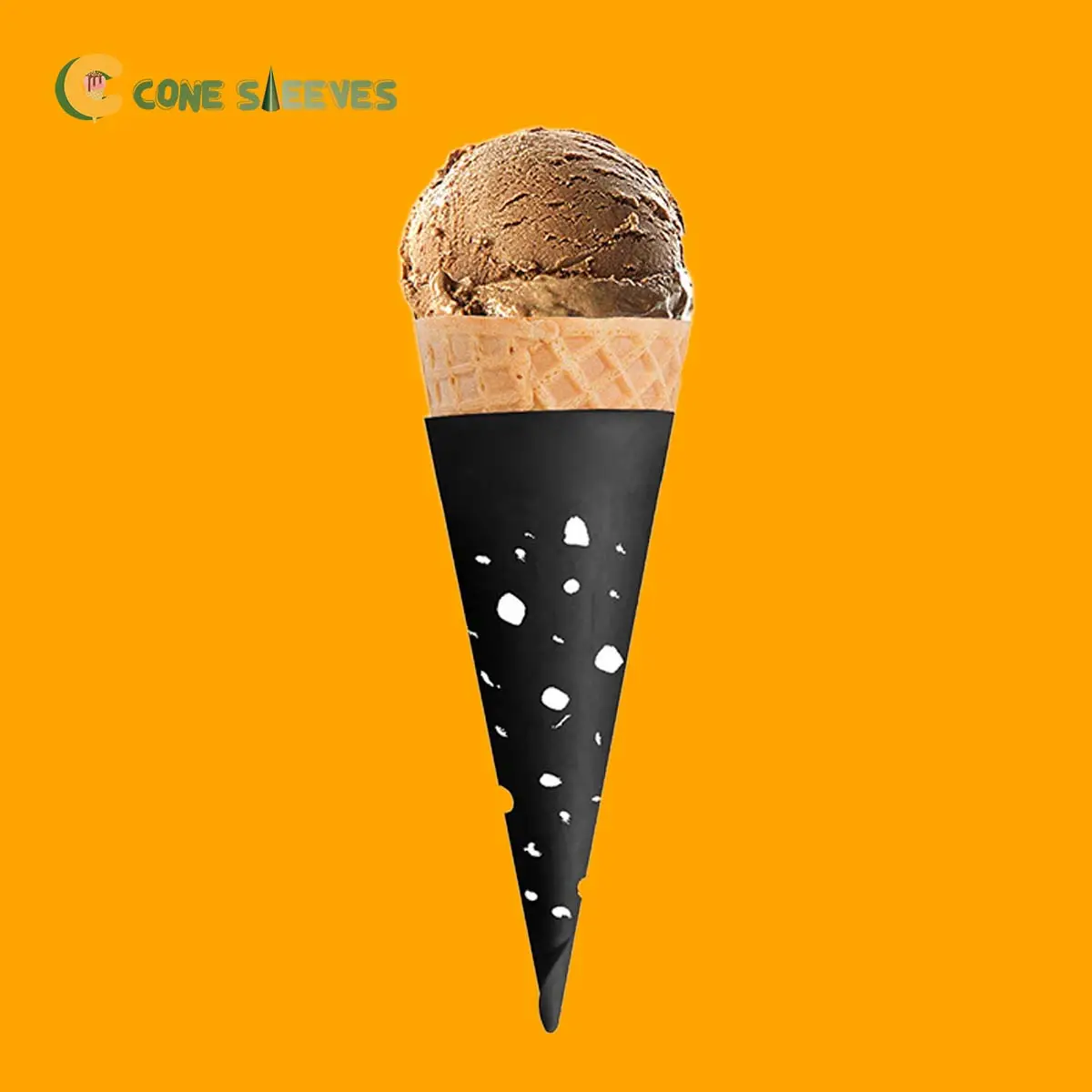
Solid black wraps with a matt finish for a dark counter look.
Specification & quote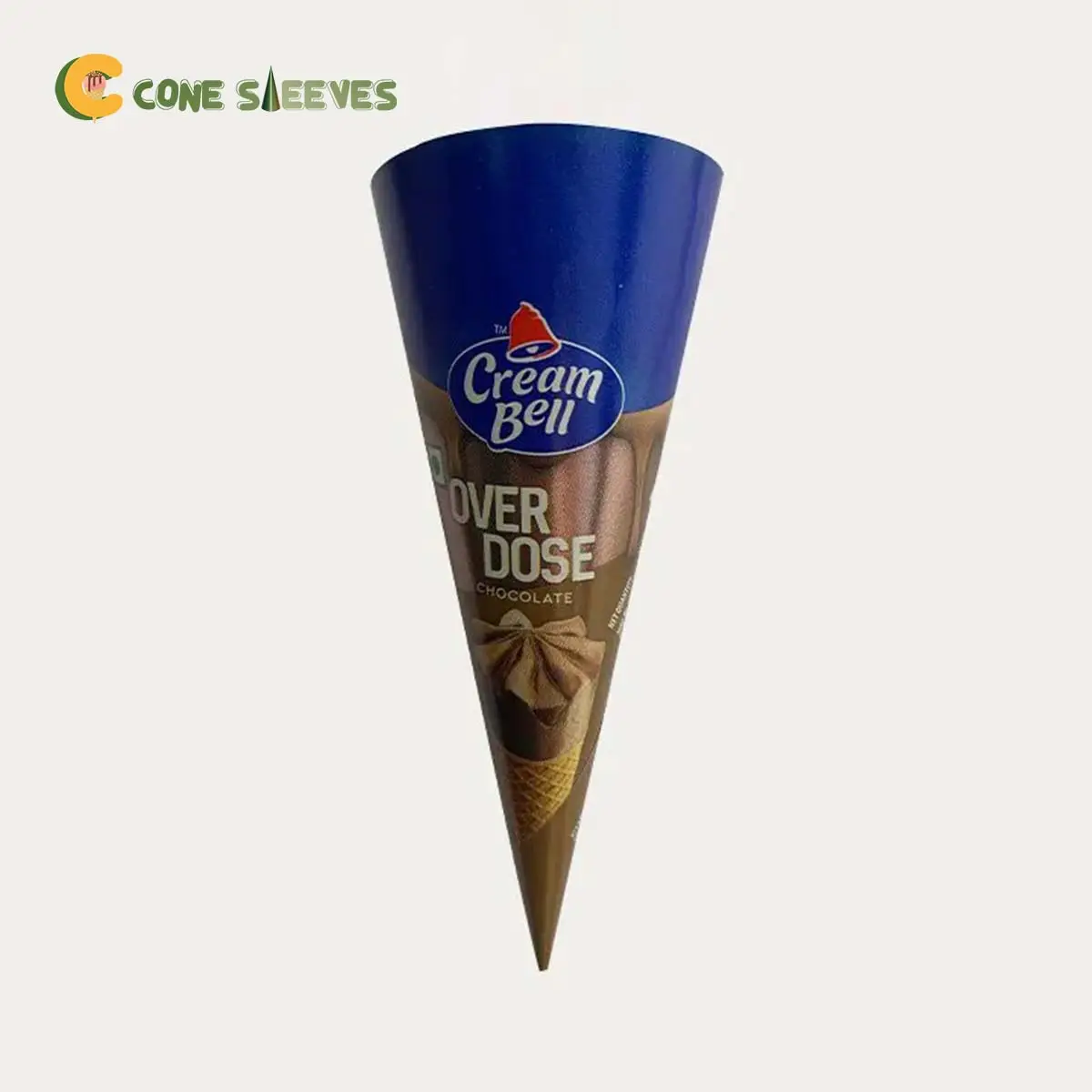
Full-colour printed sleeves cut to the cone you already serve.
Specification & quote
Sleeves cut to a shape of your own, including windows and contoured edges.
Specification & quote