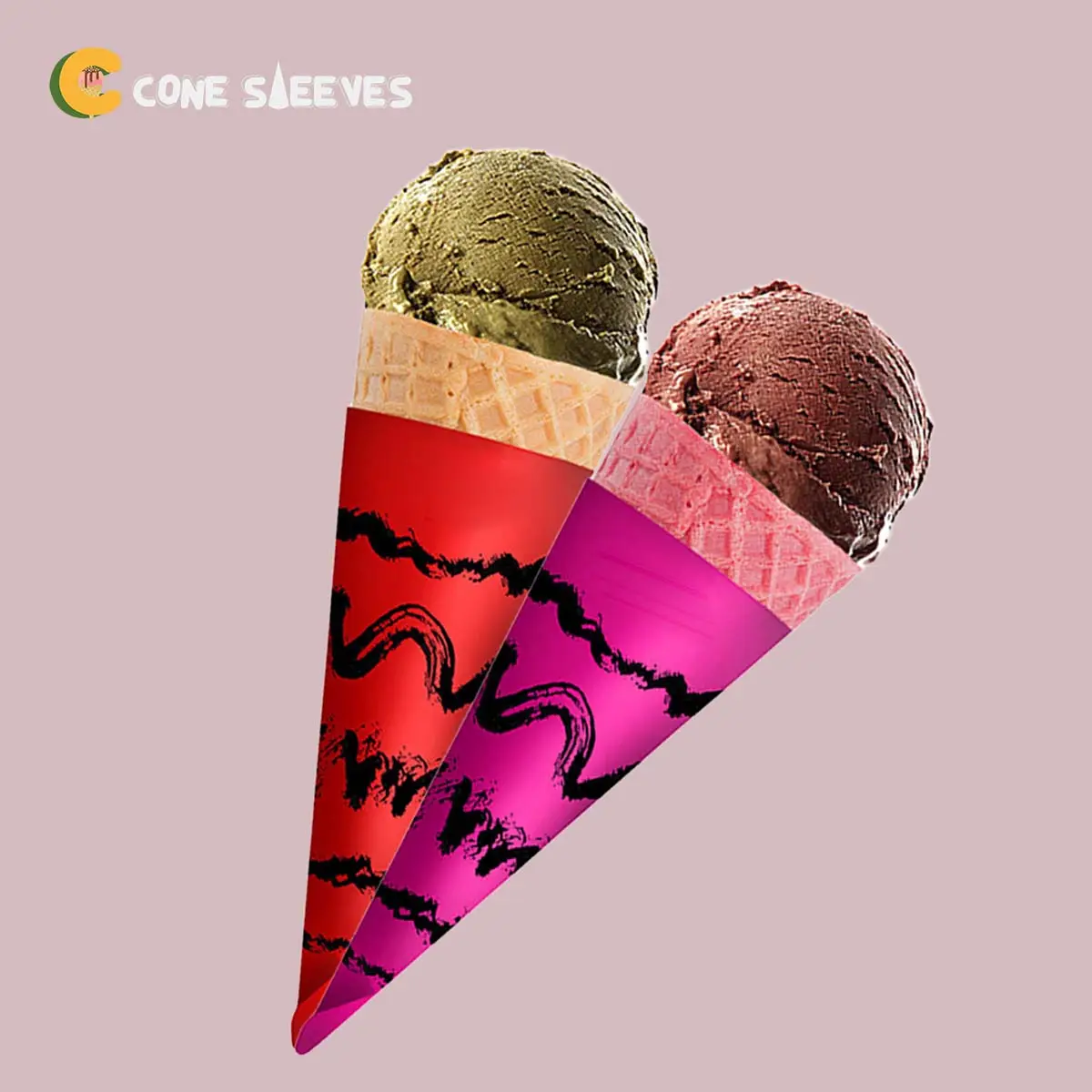
Abstract Design Ice Cream Cone Sleeves
Illustrated and abstract artwork laid out for the cone shape.
Specification & quote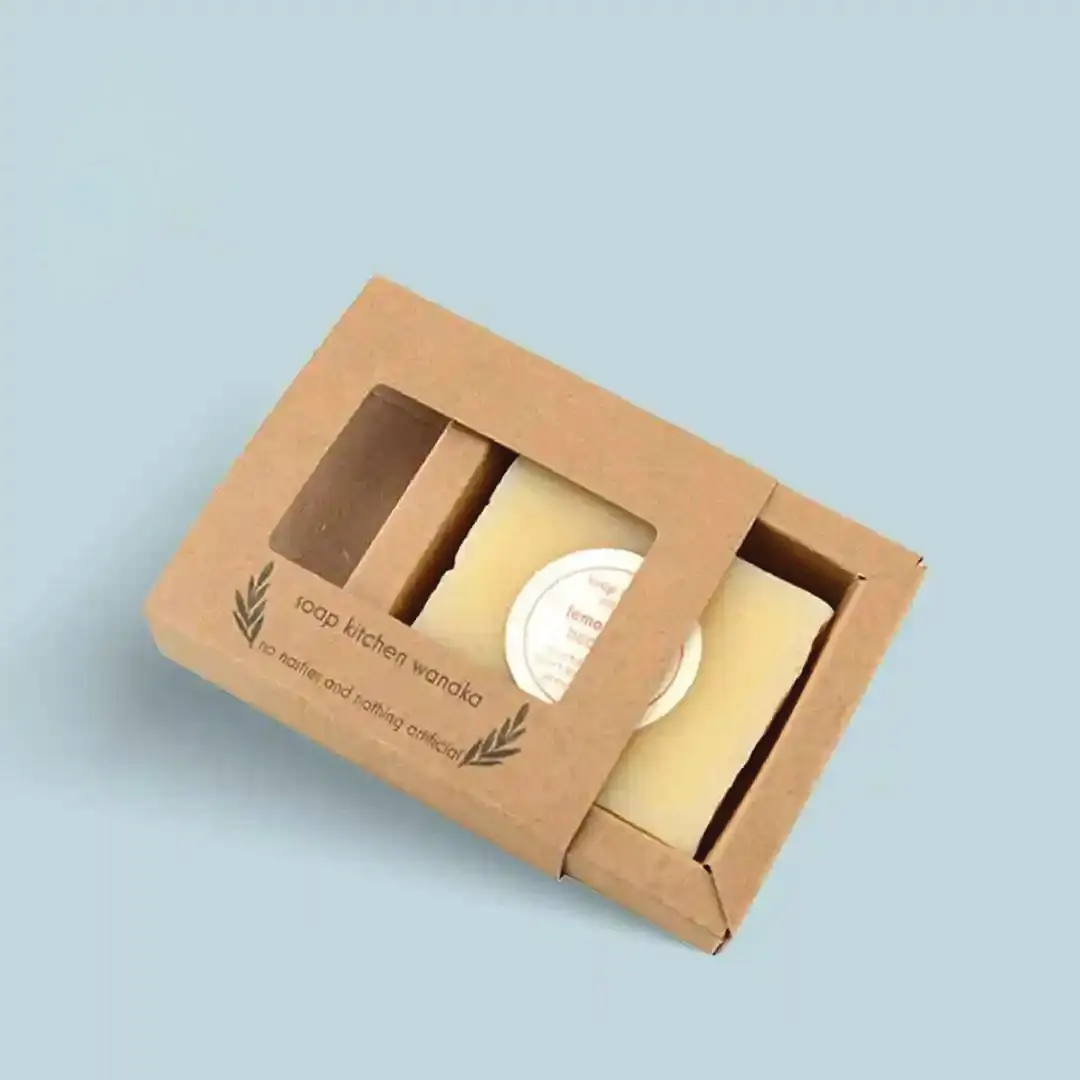
Cone Sleeves
Everything else in this range starts from a known shape. This page is for the jobs that do not — a sleeve with a window, a contoured top edge, an unusual product profile, or a shape nobody has cut before.
A bespoke die costs more up front and then costs nothing extra per unit, which changes how you should think about the quantity.
From £0.30 per sleeveIndicative starting price, excluding VAT and delivery. Your unit cost moves with quantity, board, colour count and finish, and the figure that binds is the one written on your quotation.
Short enquiry
Tell us the quantity and any date you are working to. We reply with the board, print and finish, plus the minimum order quantity and lead time.
Design Your Own
Pick a colour, put your name on it, and see how the idea reads before you ask anyone for a price. It is a sketch rather than a manufacturing proof — the real shape is cut from the product you already serve.
Sleeve colour
Finish
Leave two or three centimetres of wafer showing. Customers read a visible cone as freshly made, and the sleeve still catches the first drips.
Carry this into the full designerThe full page adds the size, board, print and quantity, then sends the whole specification over in one go. Nothing is committed to at any point.
A die is a physical cutting form. It is made once, paid for once, and used for every reorder afterwards.
That means the die cost spreads across everything you ever print from it. On a first order of a few thousand it looks expensive; across three years of reorders it usually is not.
Anything that can be drawn as a closed outline can generally be cut, within limits on very fine detail.
A sketch and the product's dimensions are enough to start. A physical sample is better.
A drawing showing cut, crease, overlap and safe area, which your designer works onto.
An unprinted sample cut on the die, wrapped around the real product. Changes are cheapest here.
Once the shape is signed off the artwork is placed and the run scheduled.
Our what we need in an artwork file covers the file formats and layers that make this stage quick.
Send us two or three of the cones you use, or the top diameter and slant height. We reply with a written specification, the minimum order quantity and the lead time for your job.
We supply a die template cut to your cone before design work starts. Full file requirements are set out in our artwork guidelines.
Lead times depend on the print method, run length and press schedule, so we confirm yours on the quote rather than publishing a single figure.
Orders are dispatched on national carriers to any UK address. Seedelivery information for how dates are given.
Ownership, storage and reuse terms are set out on your quote. It is a fair question to ask before committing, and we would rather put it in writing than leave it assumed.
Yes — an open cut-out with no film is common and avoids a mixed material. The trade-off is that the product is exposed at that point, which suits a wrapped item and not a loose one.
Fine detail is limited by the board thickness — a thick board cannot hold a sharp small feature cleanly. Send the shape and we will tell you what will and will not cut before you commit.
It is a separate step ahead of printing, and its lead time is confirmed with your quote. A first order needing a new die always runs longer than a reorder from the same die.
Anything that can be drawn as a closed outline, within limits on very fine detail. Board thickness sets how sharp a small feature can be, and we will tell you before you commit.
No. A sketch and the product's dimensions are enough to start, and a physical sample is better still. We produce the die line from that.
Yes, as an unprinted sample cut on the die. Wrapping that around the real product is the cheapest possible moment to change anything.
Yes, and it avoids a mixed material. The trade-off is that the product is exposed at that point, which suits a wrapped item more than a loose one.
Yes, and it removes the need for glue on some formats. It has to be designed into the shape rather than added later, so raise it early.
Storage and reuse terms are set out on your quote. It is a fair question to ask before committing, and we would rather put it in writing than leave it assumed.
Sizing questions are usually quicker on the phone, especially if you have the product in front of you.
Illustrated and abstract artwork laid out for the cone shape.
Specification & quote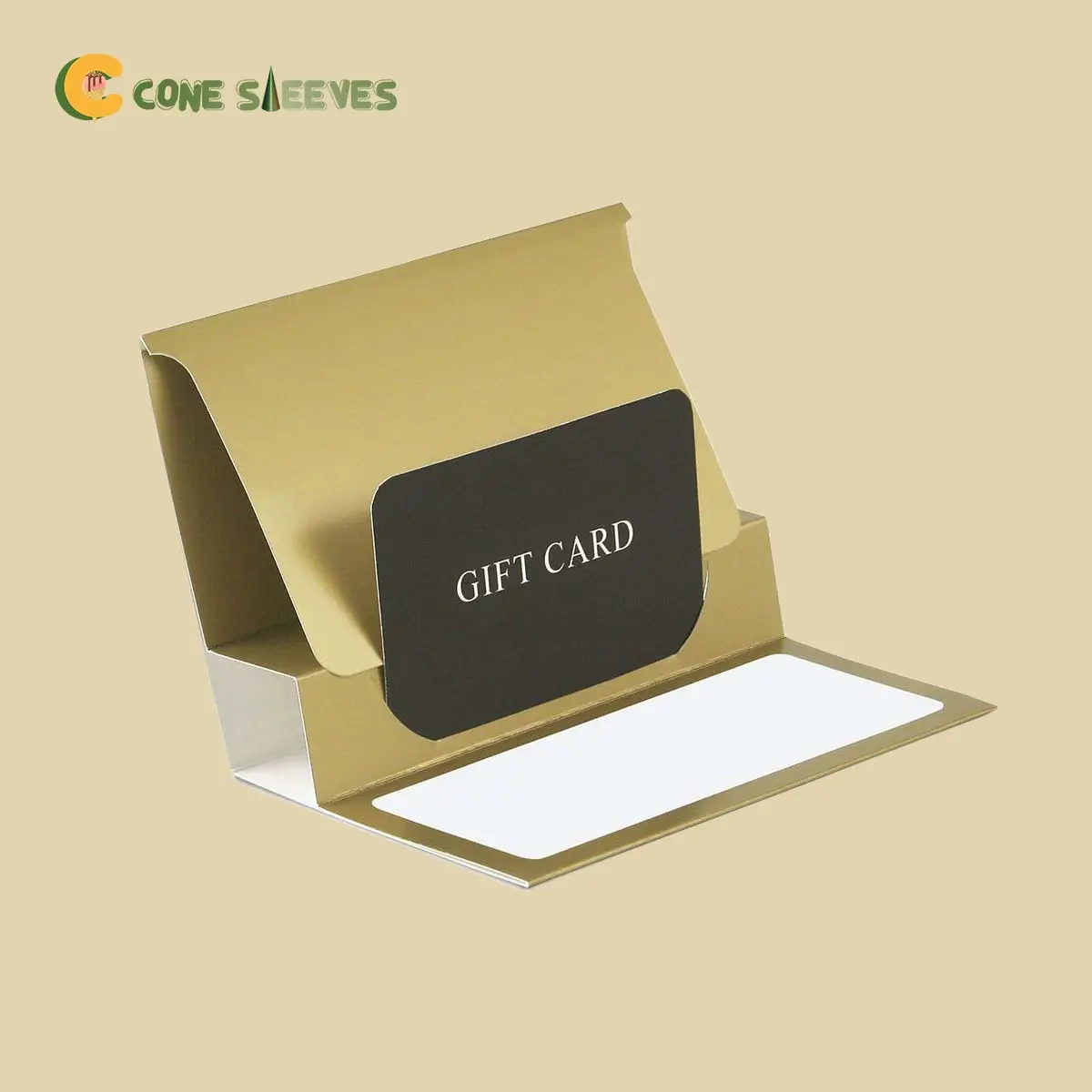
Printed holders for gift cards, with optional window and message area.
Specification & quote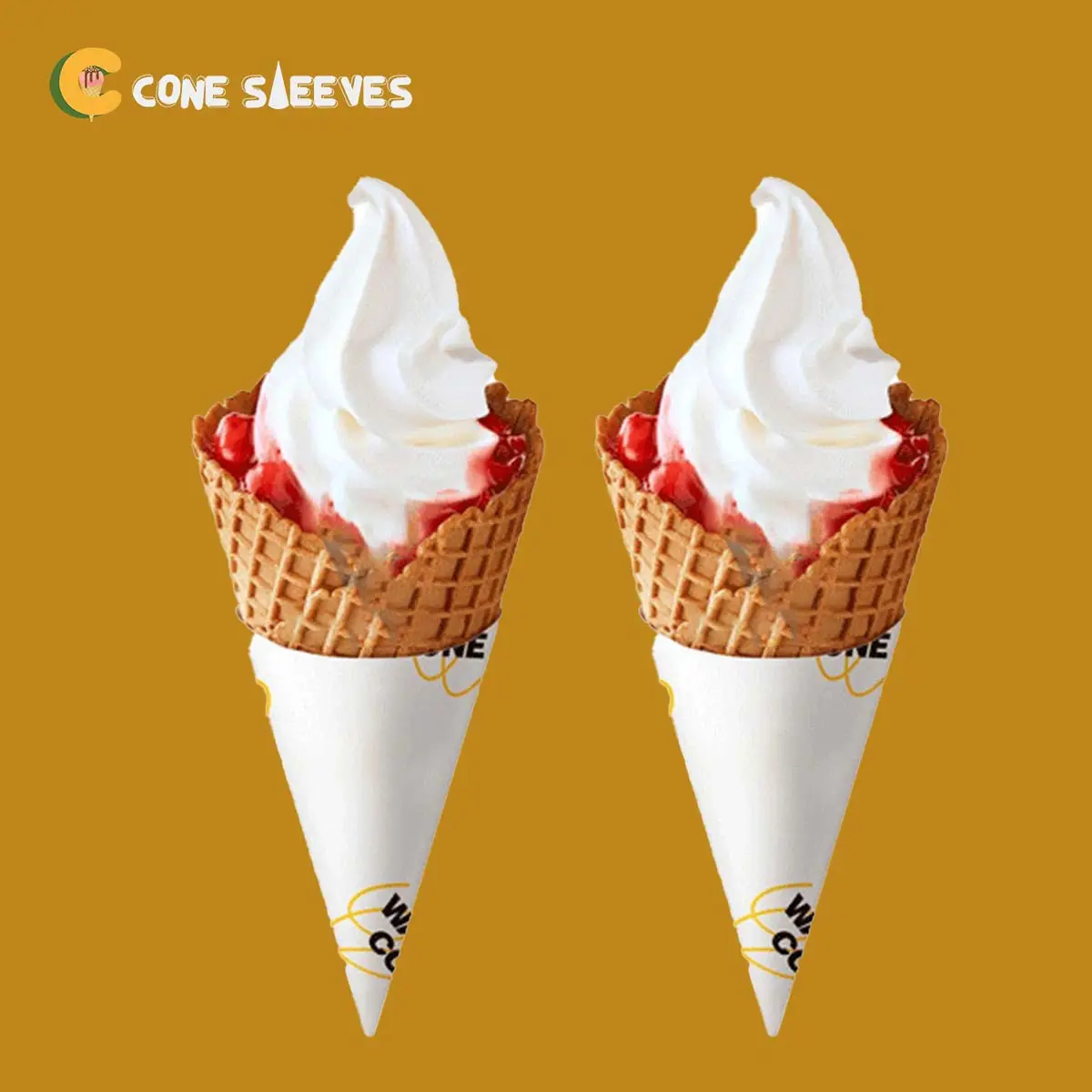
Compact wraps for mini cones, tasters and dessert platters.
Specification & quote
Full-colour printed sleeves cut to the cone you already serve.
Specification & quote