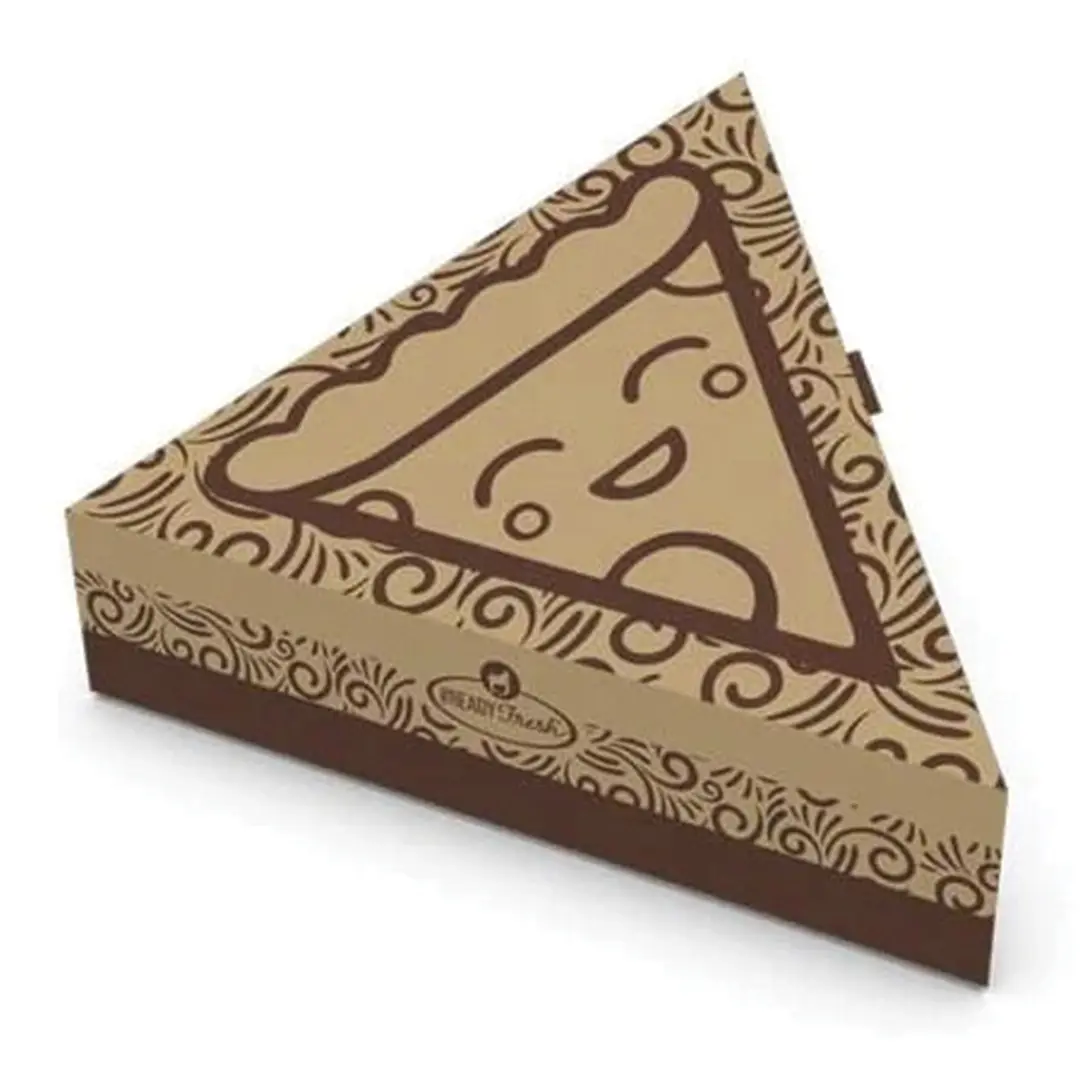
Custom Pizza Slice Trays
Wedge trays supporting a slice all the way to the tip.
Specification & quote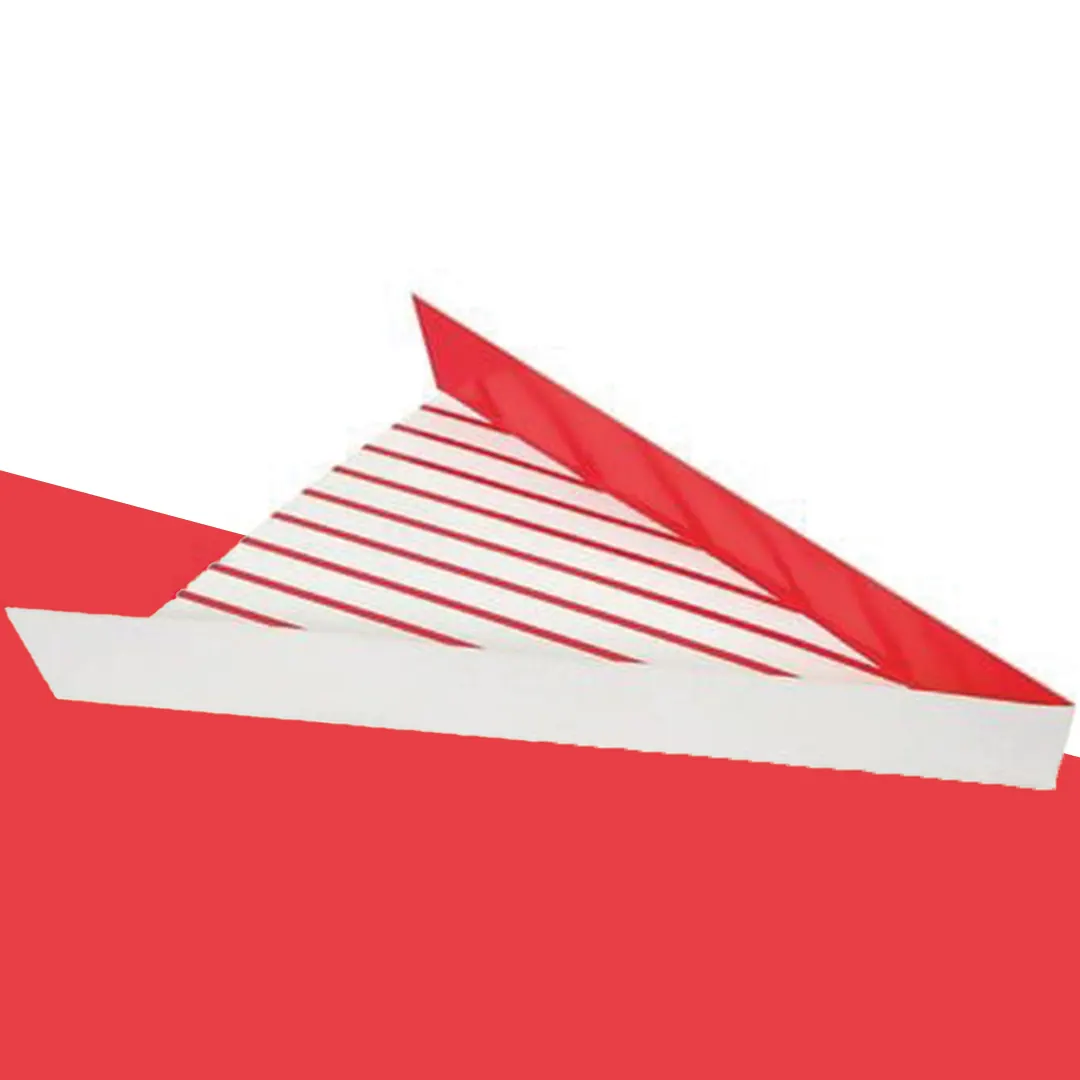
Food Trays
A pizza tray carries a hot, heavy, flexible disc that will fold if the board underneath it does.
Rigidity across the diameter is the whole specification, and it gets harder as the pizza gets bigger.
From £0.30 per trayIndicative starting price, excluding VAT and delivery. Your unit cost moves with quantity, board, colour count and finish, and the figure that binds is the one written on your quotation.
Short enquiry
Tell us the quantity and any date you are working to. We reply with the board, print and finish, plus the minimum order quantity and lead time.
Design Your Own
Pick a colour, put your name on it, and see how the idea reads before you ask anyone for a price. It is a sketch rather than a manufacturing proof — the real shape is cut from the product you already serve.
Sleeve colour
Finish
Put the branding on the face that points upwards. That is the one a customer looks at while carrying the tray back to a table.
Carry this into the full designerThe full page adds the size, board, print and quantity, then sends the whole specification over in one go. Nothing is committed to at any point.
A board that holds a 10in pizza flat may sag noticeably under a 16in one. The unsupported span grows faster than intuition suggests.
Specify against your largest pizza rather than your most common one, or run two board weights.
| Diameter | Sized to your largest pizza, with a small margin |
|---|---|
| Board | Rigid; weight set against the span rather than the load |
| Surface | Grease-resistant, or used with a liner |
| Edge | Plain, or with a lip to help carrying |
| The rim, which is the only area not covered |
Adding liners that keep grease off the board keeps a printed tray presentable across a service.
Tell us the internal size you need and what the tray has to carry. We reply with a written specification, the minimum order quantity and the lead time for your job.
Artwork sits on the rim and outer faces; the base is covered by food. Full file requirements are set out in our artwork guidelines.
Lead times depend on the print method, run length and press schedule, so we confirm yours on the quote rather than publishing a single figure.
Orders are dispatched on national carriers to any UK address. Seedelivery information for how dates are given.
It stops the base flexing when the box is carried at an angle, which is what causes toppings to slide to one side. On larger pizzas it makes a clear difference; on small ones it is often unnecessary.
Yes, and square boards are easier to cut with less waste, which can reduce cost. Round looks more considered on a table, so it comes down to service style.
Because the unsupported span grows faster than intuition suggests. A board that holds a 10in pizza flat can sag noticeably under a 16in one.
Yes, or run two weights. Specifying for the most common size leaves the largest one sagging, which is the complaint customers notice.
It stops the base flexing when the box is carried at an angle, which is what makes toppings slide to one side.
Square cuts with less waste and can cost less. Round looks more considered on a table, so it comes down to service style.
Either that or a liner. Cheese oil soaks into plain board and the base loses rigidity exactly where the pizza needs support.
There is little point — the pizza covers it. The rim is the only area a customer sees once the tray is loaded.
Send the box internal dimensions and we will size it to sit inside with a small clearance rather than forcing it.
Yes, and they are often used instead of a box where a customer eats on the spot. Outdoor use argues for a coated surface.
Sizing questions are usually quicker on the phone, especially if you have the product in front of you.
Wedge trays supporting a slice all the way to the tip.
Specification & quote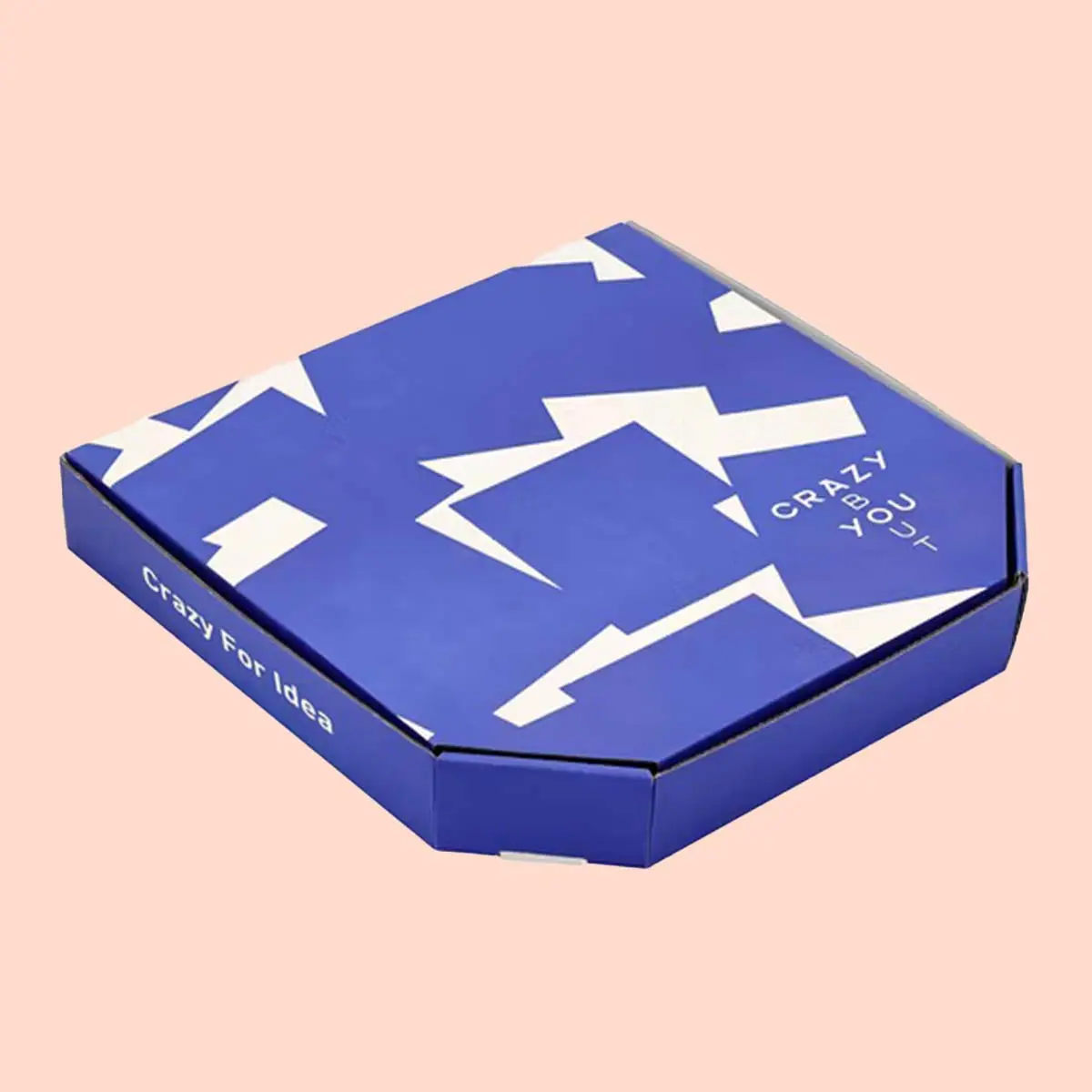
Liners that keep grease off a box base and cheese off the board.
Specification & quote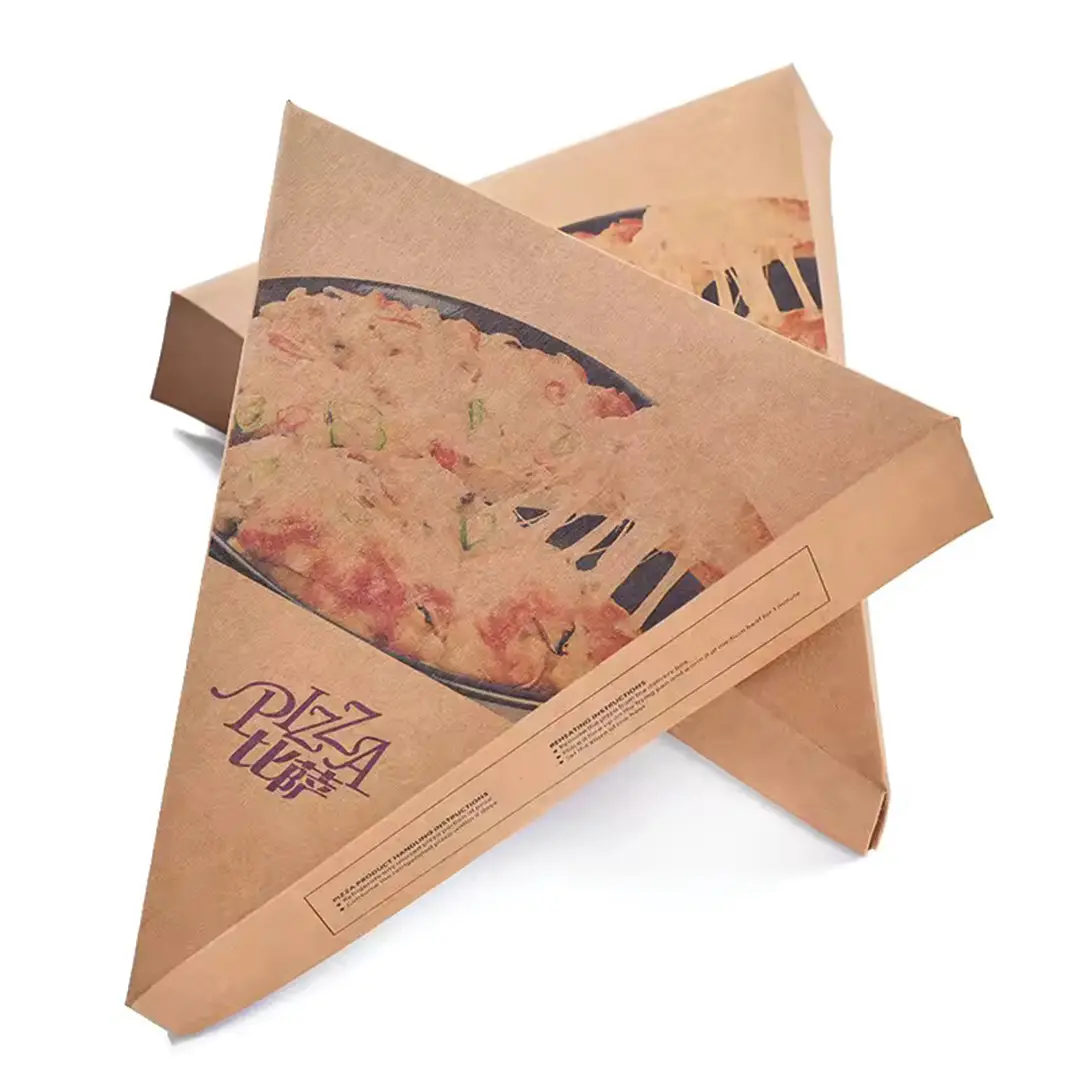
Wedge sleeves that stop a hot slice folding at the tip.
Specification & quote
General-purpose printed trays for markets, events and canteens.
Specification & quote