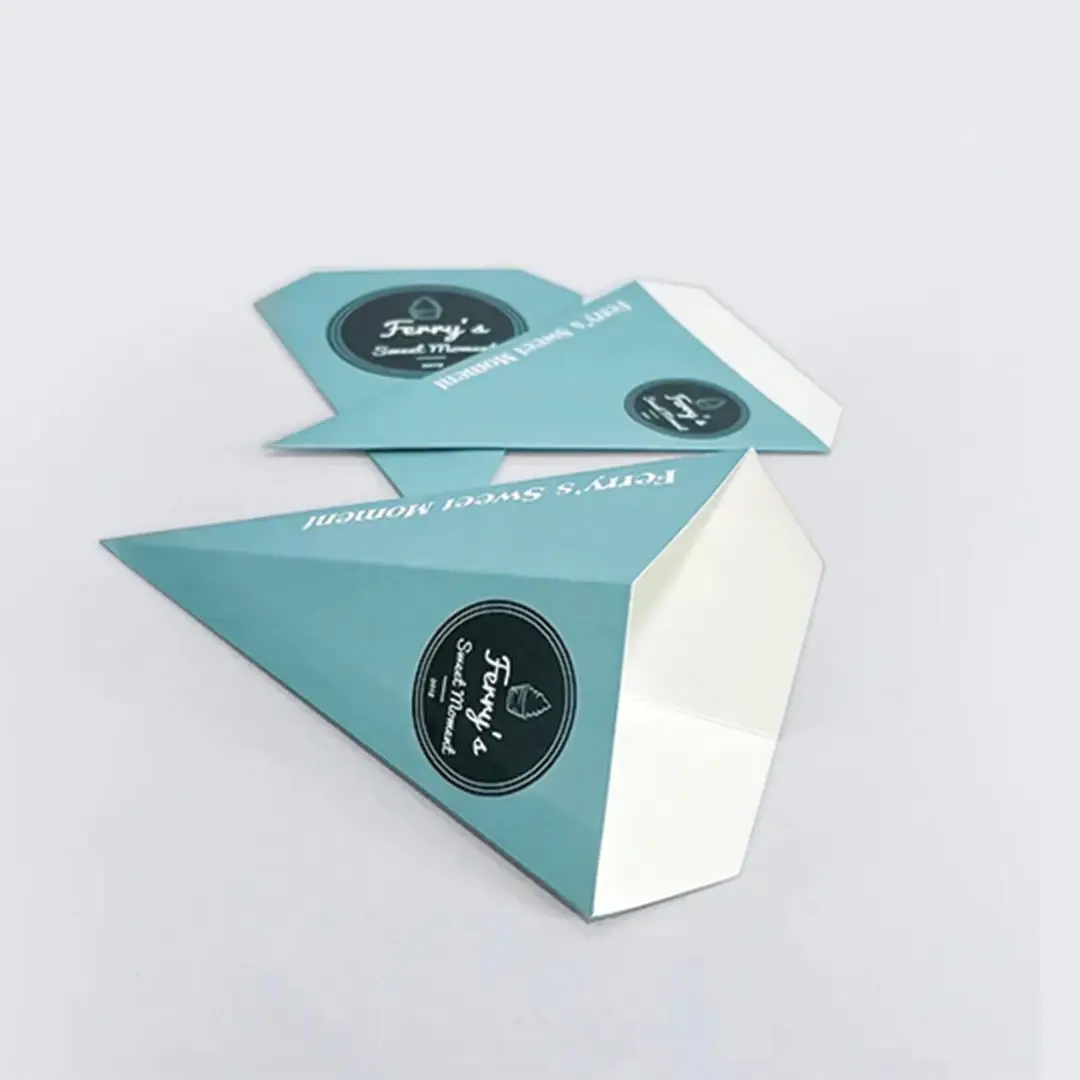
Custom Crepe Sleeves
Wraps for folded and rolled crepes with warm, wet fillings.
Specification & quote
Food Trays
A folded crepe served flat with sauce and fruit on top needs a tray rather than a wrap. It is wide, warm and wet, and it cannot be picked up cleanly.
The tray also gives somewhere for a fork to work against.
From £0.30 per trayIndicative starting price, excluding VAT and delivery. Your unit cost moves with quantity, board, colour count and finish, and the figure that binds is the one written on your quotation.
Short enquiry
Tell us the quantity and any date you are working to. We reply with the board, print and finish, plus the minimum order quantity and lead time.
Design Your Own
Pick a colour, put your name on it, and see how the idea reads before you ask anyone for a price. It is a sketch rather than a manufacturing proof — the real shape is cut from the product you already serve.
Sleeve colour
Finish
Put the branding on the face that points upwards. That is the one a customer looks at while carrying the tray back to a table.
Carry this into the full designerThe full page adds the size, board, print and quantity, then sends the whole specification over in one go. Nothing is committed to at any point.
Unlike most trays here, this one has cutlery used on it. A fork pressing into a soft board tears it and the sauce goes underneath.
A firmer board or a coated surface stands up to that. It is a different requirement from simply carrying weight.
Where customers walk away with them, cone holders for crepes eaten on the move suit better than a tray.
| Size | Set from the folded crepe plus toppings |
|---|---|
| Board | Firm enough to resist a fork; grease and moisture resistant |
| Walls | Low walls to contain sauce without hiding the crepe |
| Rim only; the base is covered | |
| Finish | Coated surface where sauces are used heavily |
Tell us the internal size you need and what the tray has to carry. We reply with a written specification, the minimum order quantity and the lead time for your job.
Artwork sits on the rim and outer faces; the base is covered by food. Full file requirements are set out in our artwork guidelines.
Lead times depend on the print method, run length and press schedule, so we confirm yours on the quote rather than publishing a single figure.
Orders are dispatched on national carriers to any UK address. Seedelivery information for how dates are given.
On a soft or thin board it can, particularly once sauce has softened it. Specifying a firmer or coated board avoids it, and it is worth flagging that cutlery is used.
Just high enough to stop sauce running off. High walls hide the crepe, which is what the customer is buying, so most sites go as low as the sauce allows.
Only with a lid and a board specified for the journey. For walking customers a cone holder suits better than a flat tray.
Set it from your folded crepe plus the topping footprint, which varies with pan size and how heavily you finish it.
Not through a coated board within a normal serve. Uncoated board shows a dark patch within a few minutes.
That is the sensible approach. The base is entirely covered once the crepe and toppings are on it.
They add water on top of the oil from sweet sauces, which strengthens the case for a coated surface.
Flat-packed they nest well. A low-walled tray takes less room than a deep one, which suits small dessert counters.
Yes, and savoury fillings are usually oilier, which makes the coated surface more useful rather than less.
Often, if the footprints are close. Measure both made up with toppings before assuming a single tray covers them.
Sizing questions are usually quicker on the phone, especially if you have the product in front of you.
Wraps for folded and rolled crepes with warm, wet fillings.
Specification & quote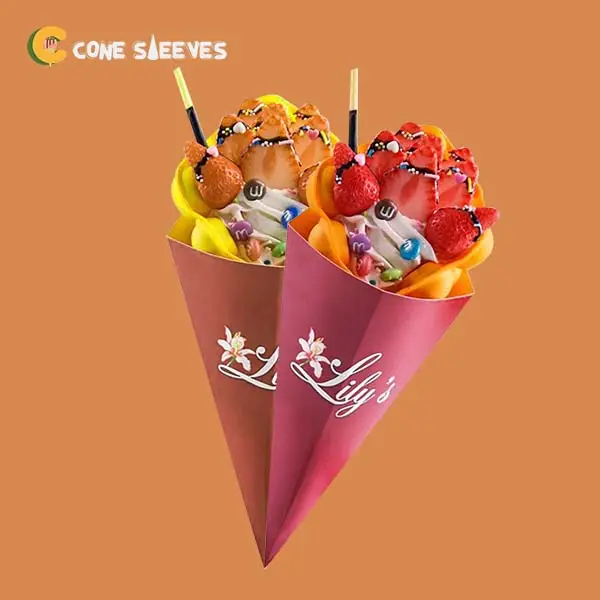
Cone holders sized for rolled crepes, with a wider opening than an ice cream wrap.
Specification & quote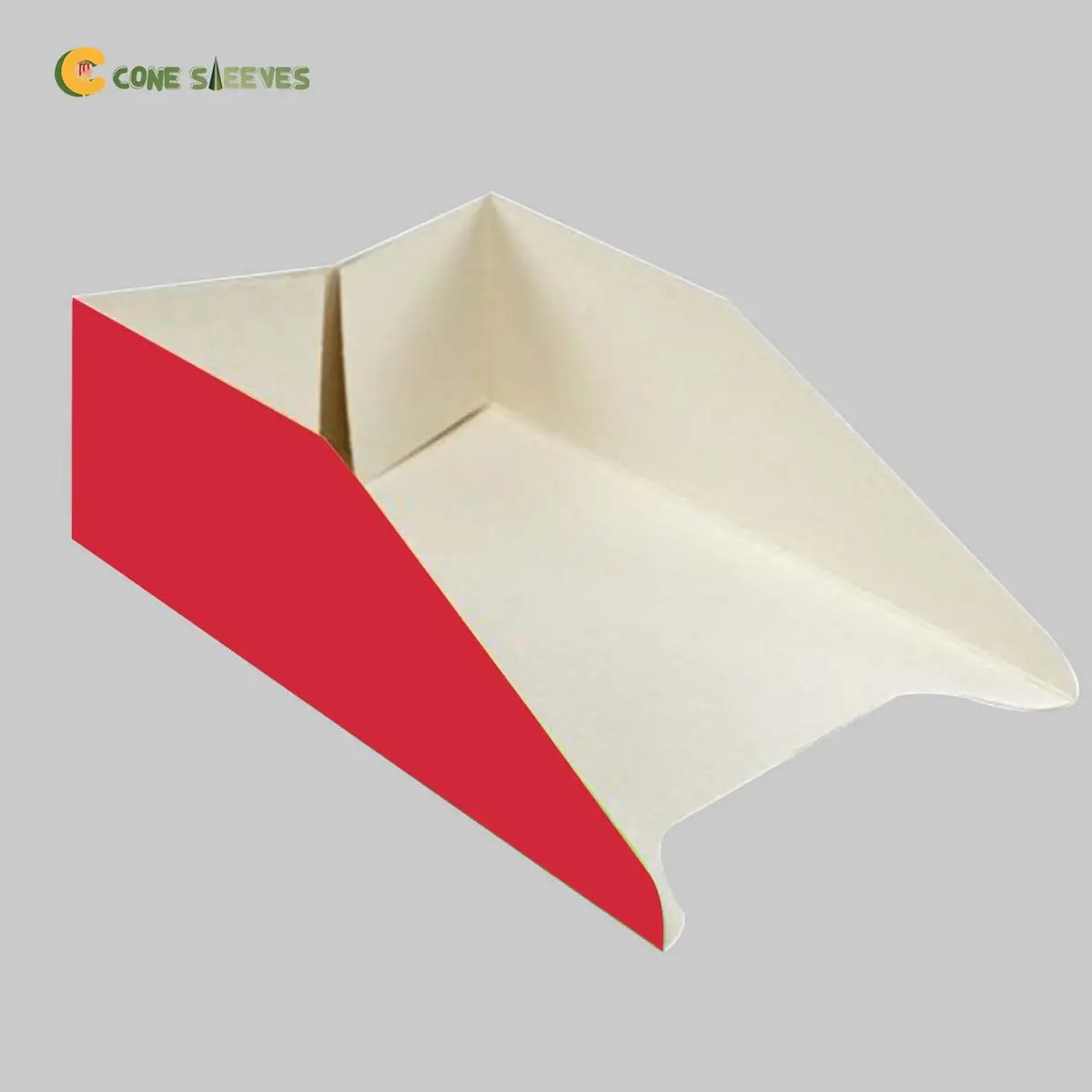
Trays sized for loaded waffles with sauces and toppings.
Specification & quote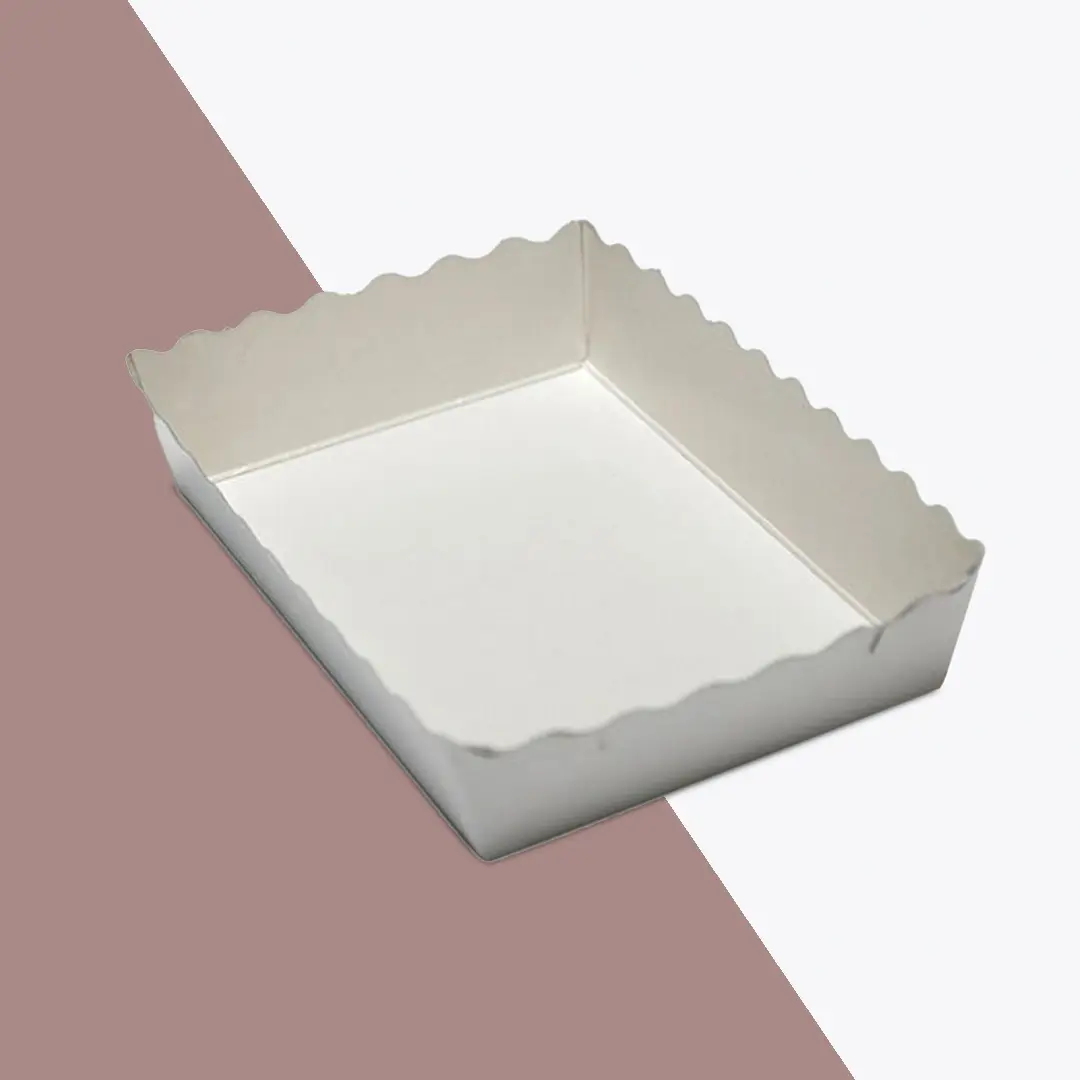
Presentation trays for plated desserts and sharing boards.
Specification & quote