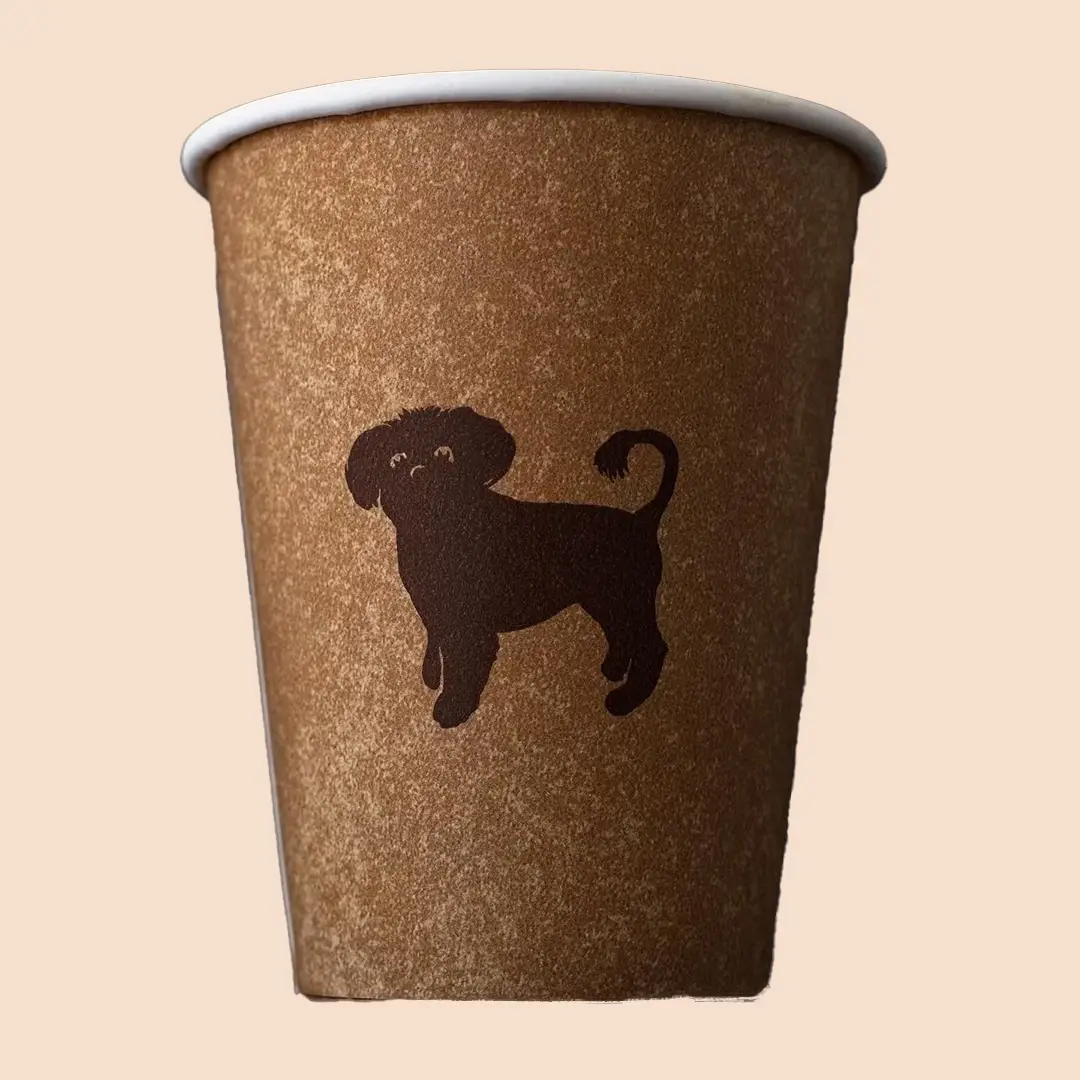
Printed Paper Cups
Full-colour artwork wrapped around the cup body.
Specification & quote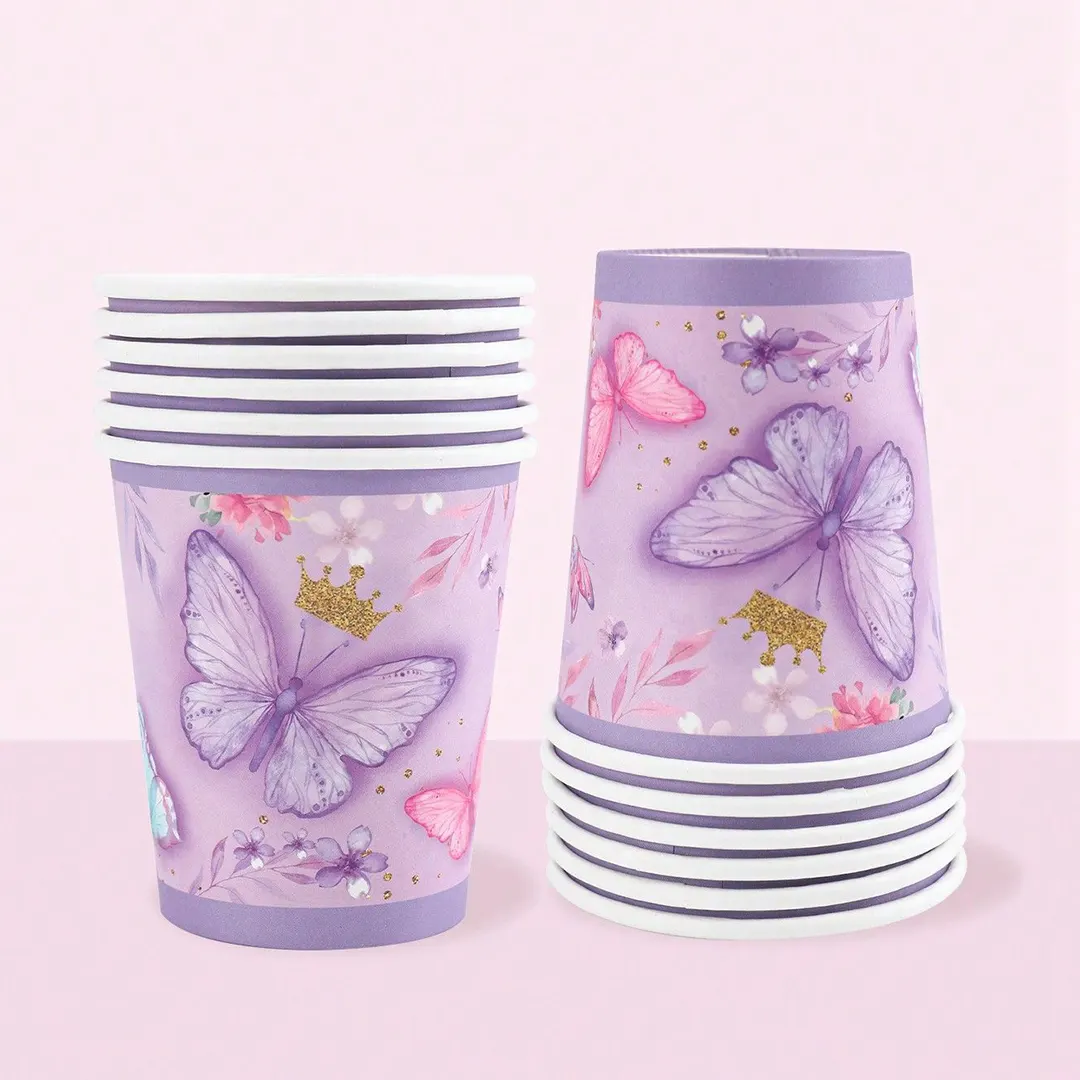
Printed & Seasonal Cups
A repeating pattern solves the problem every printed cup has: whichever way the customer holds it, the design looks intentional.
There is no wrong side to a pattern, which is why illustrated cups have stayed popular in cafés and at events.
From £0.30 per cupIndicative starting price, excluding VAT and delivery. Your unit cost moves with quantity, board, colour count and finish, and the figure that binds is the one written on your quotation.
Short enquiry
Tell us the quantity and any date you are working to. We reply with the board, print and finish, plus the minimum order quantity and lead time.
Design Your Own
Pick a colour, put your name on it, and see how the idea reads before you ask anyone for a price. It is a sketch rather than a manufacturing proof — the real shape is cut from the product you already serve.
Sleeve colour
Finish
A printed sleeve brands a plain cup you already buy, which is why a single site usually reaches for one before it reaches for a printed cup.
Carry this into the full designerThe full page adds the size, board, print and quantity, then sends the whole specification over in one go. Nothing is committed to at any point.
A cup blank is a curved fan, so a strict grid distorts noticeably once formed. Organic motifs — leaves, florals, insects, abstract marks — absorb that distortion without looking wrong.
That is why patterned cups tend to use flowing artwork rather than geometric repeats.
The geometry behind this is covered on how flat artwork maps onto a cup blank.
Tell us the volume you pour and whether you need matching lids. We reply with a written specification, the minimum order quantity and the lead time for your job.
Cup blanks are a curved fan, so we supply a template to design on. Full file requirements are set out in our artwork guidelines.
Lead times depend on the print method, run length and press schedule, so we confirm yours on the quote rather than publishing a single figure.
Orders are dispatched on national carriers to any UK address. Seedelivery information for how dates are given.
Not necessarily. Cost follows the number of inks rather than how much surface they cover, so a one-colour pattern prices much like a one-colour logo.
Straight-line grids will, because the blank is a curved fan. Flowing or organic patterns absorb the distortion without looking incorrect, which is why they are the usual choice.
Not necessarily. Cost follows the number of inks rather than how much surface they cover, so a one-colour pattern prices like a one-colour mark.
Straight grids will, because the blank is a curved fan. Flowing or organic patterns absorb the distortion without looking wrong.
In a deliberately clear area of the pattern. Leaving that gap looks intentional; dropping a logo onto a busy field does not.
Noticeably, which helps on cups stacked and handled before service. A flat solid colour shows every mark.
Yes, at 300 dpi at final size, printed in full colour. Bear in mind a hand covers a band of it throughout the drink.
Very small motifs can close up on board. Test at actual size rather than judging from a screen at 200 per cent.
Easily, because there is no die on a cup print. Only the artwork changes between runs.
They do, and a repeating motif reads as playful where a corporate mark does not.
Sizing questions are usually quicker on the phone, especially if you have the product in front of you.
Full-colour artwork wrapped around the cup body.
Specification & quote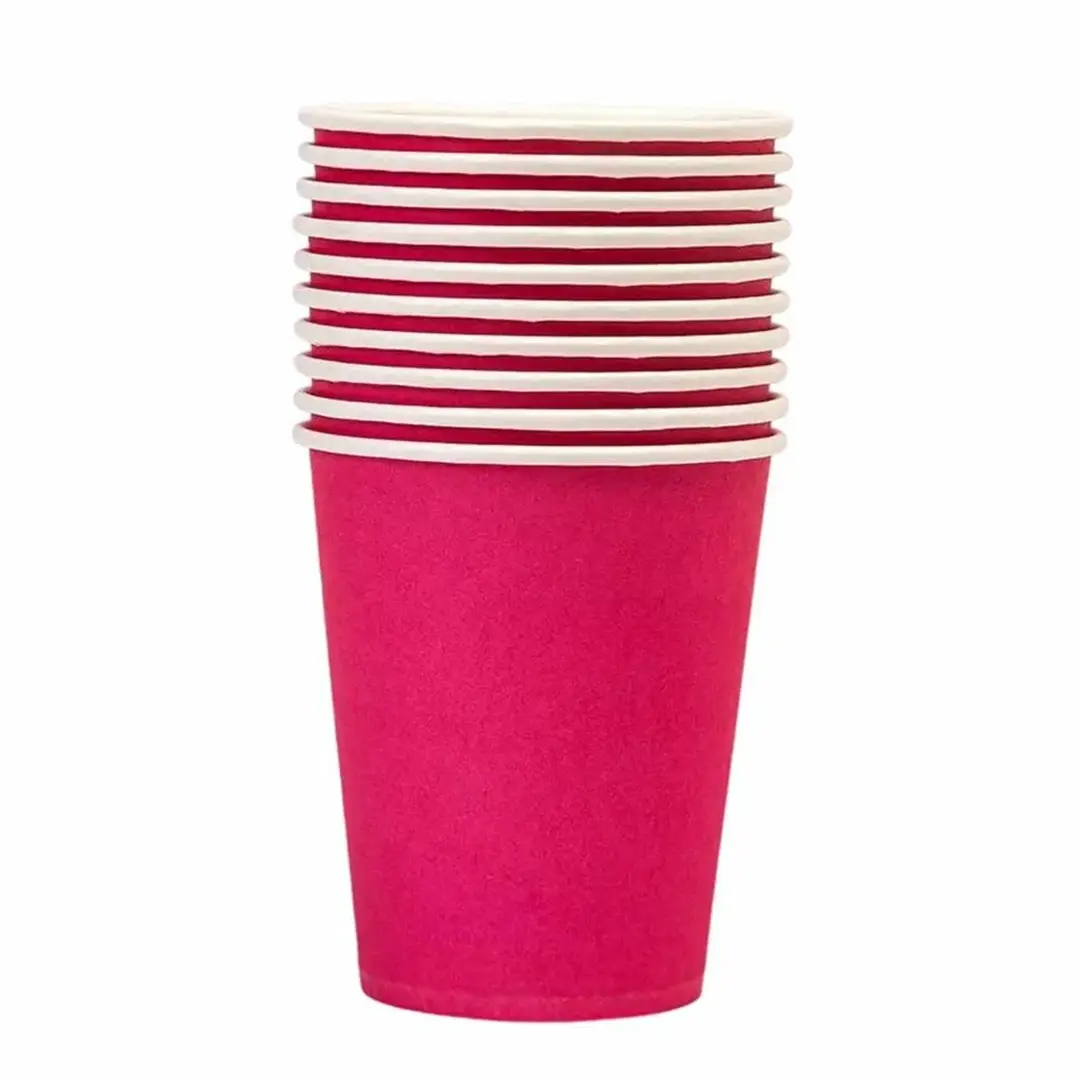
Solid colour bodies matched to your brand palette.
Specification & quote
Repeating dot patterns in your own colours, readable from any angle.
Specification & quote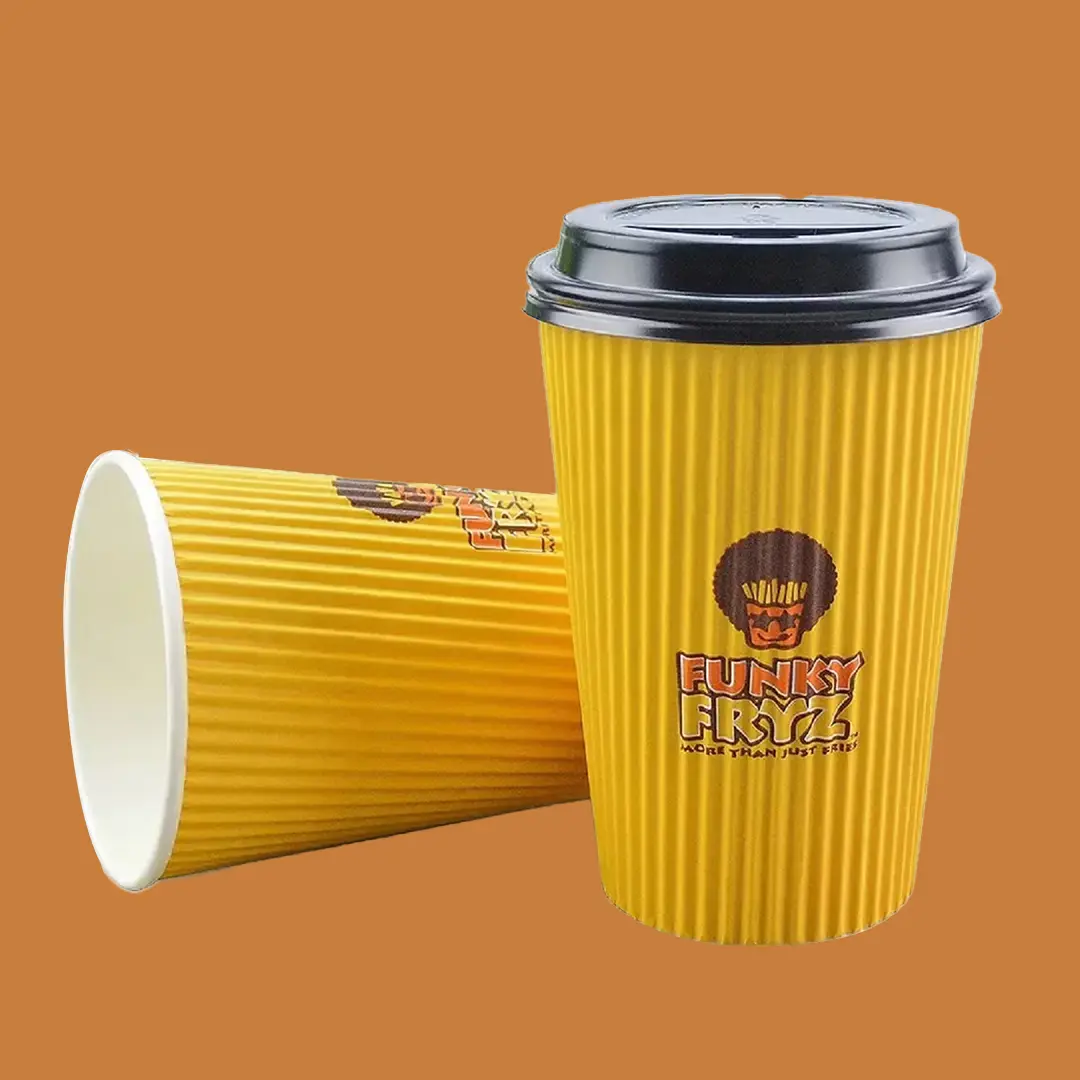
Single-colour logo printing — the cheapest branded cup available.
Specification & quote