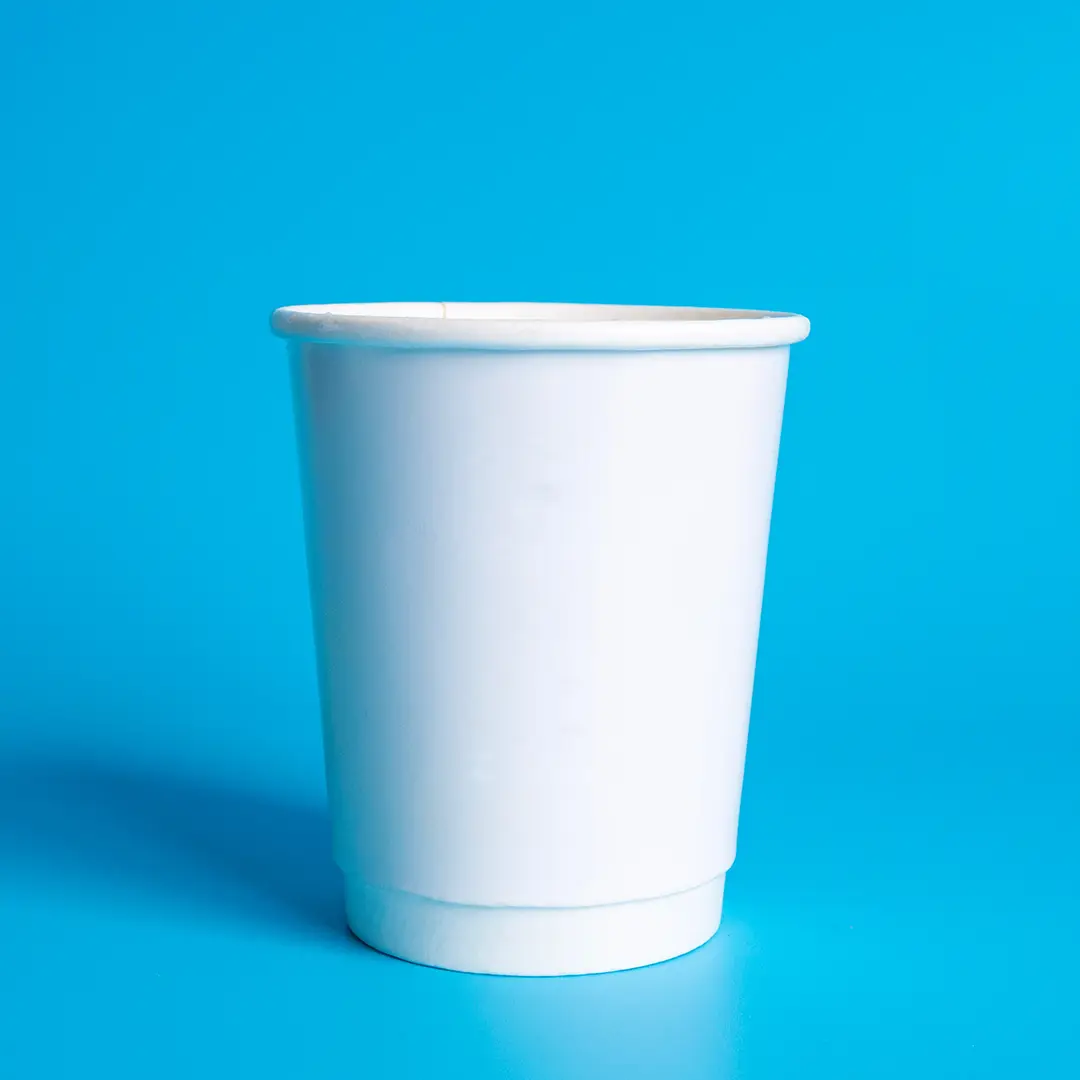
White Paper Cups
The default base: cheapest to print and the most colour-accurate.
Specification & quote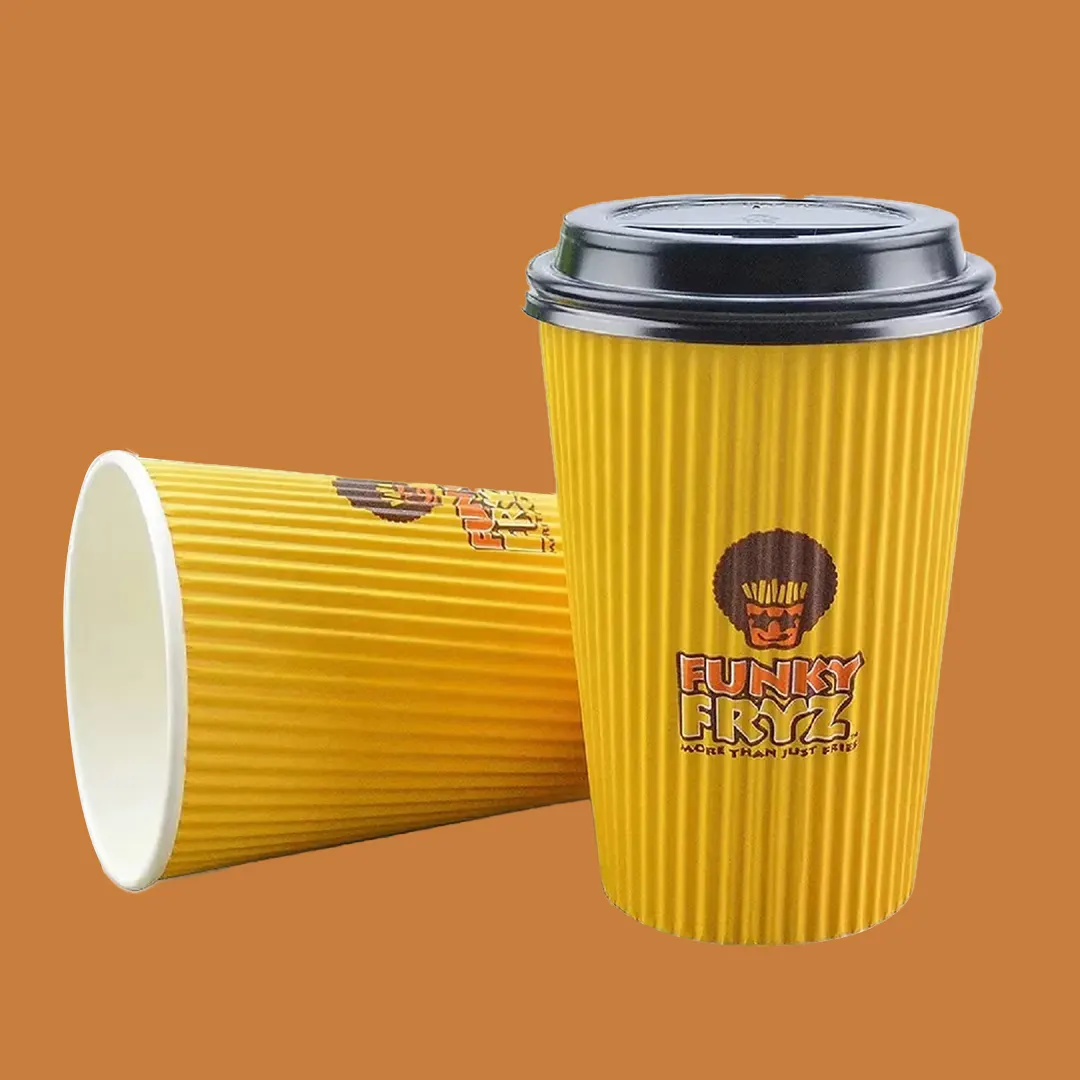
Printed & Seasonal Cups
The cheapest branded cup possible is a white cup with a one-colour logo. Ink covers a few per cent of the surface, and everything else is board you were buying anyway.
For a business putting its name on packaging for the first time, this is where the maths works.
From £0.30 per cupIndicative starting price, excluding VAT and delivery. Your unit cost moves with quantity, board, colour count and finish, and the figure that binds is the one written on your quotation.
Short enquiry
Tell us the quantity and any date you are working to. We reply with the board, print and finish, plus the minimum order quantity and lead time.
Design Your Own
Pick a colour, put your name on it, and see how the idea reads before you ask anyone for a price. It is a sketch rather than a manufacturing proof — the real shape is cut from the product you already serve.
Sleeve colour
Finish
A printed sleeve brands a plain cup you already buy, which is why a single site usually reaches for one before it reaches for a printed cup.
Carry this into the full designerThe full page adds the size, board, print and quantity, then sends the whole specification over in one go. Nothing is committed to at any point.
| One-colour logo | Full coverage design | |
|---|---|---|
| Ink used | A few per cent of the surface | The entire printable area |
| Cost | Lowest branded option | Considerably higher |
| Brand presence | Modest but clear | Strong from a distance |
| Colour matching | Straightforward with a spot ink | Also straightforward, but across more area |
| Suits | First orders, minimal brands | Established identities |
A well-placed single mark on a clean cup reads as confident rather than cheap.
The instinct with a single logo is to make it big. The better move is to repeat it two or three times around the cup at a modest size.
A hand covers about a third of the cup, so a repeated mark is always visible while a single large one often is not.
This works most economically on plain white cups as a base, where no coverage cost is involved.
Tell us the volume you pour and whether you need matching lids. We reply with a written specification, the minimum order quantity and the lead time for your job.
Cup blanks are a curved fan, so we supply a template to design on. Full file requirements are set out in our artwork guidelines.
Lead times depend on the print method, run length and press schedule, so we confirm yours on the quote rather than publishing a single figure.
Orders are dispatched on national carriers to any UK address. Seedelivery information for how dates are given.
Fine lines and small type start to close up on board, particularly on kraft. Send us the artwork and we will tell you what will hold rather than letting you find out on the run.
Repeated, in most cases. A hand covers a third of the cup at any time, so one large mark is often hidden while a repeated smaller one always shows.
Repeated. A hand covers a third of the cup, so one large mark is often hidden while a repeated smaller one always shows.
Fine lines and small type close up on board, particularly kraft. Send the artwork and we will tell you what holds before the run.
Because ink covers only a few per cent of the surface. Everything else is board you were buying regardless.
On a conventional press each ink is a separate plate, so it becomes a different job. If a second colour is likely, price it now.
Not on a good board with a well-placed mark. Plenty of well-regarded cafés use exactly this specification deliberately.
Vector artwork with the colour named as a Pantone reference, positioned on our die template rather than on a rectangle.
Yes, though it will read warmer and darker. Dark marks hold up on kraft; pale tints do not.
It is the usual starting point, because it proves the cup, the lid and the sizing before any larger print spend.
Sizing questions are usually quicker on the phone, especially if you have the product in front of you.
The default base: cheapest to print and the most colour-accurate.
Specification & quote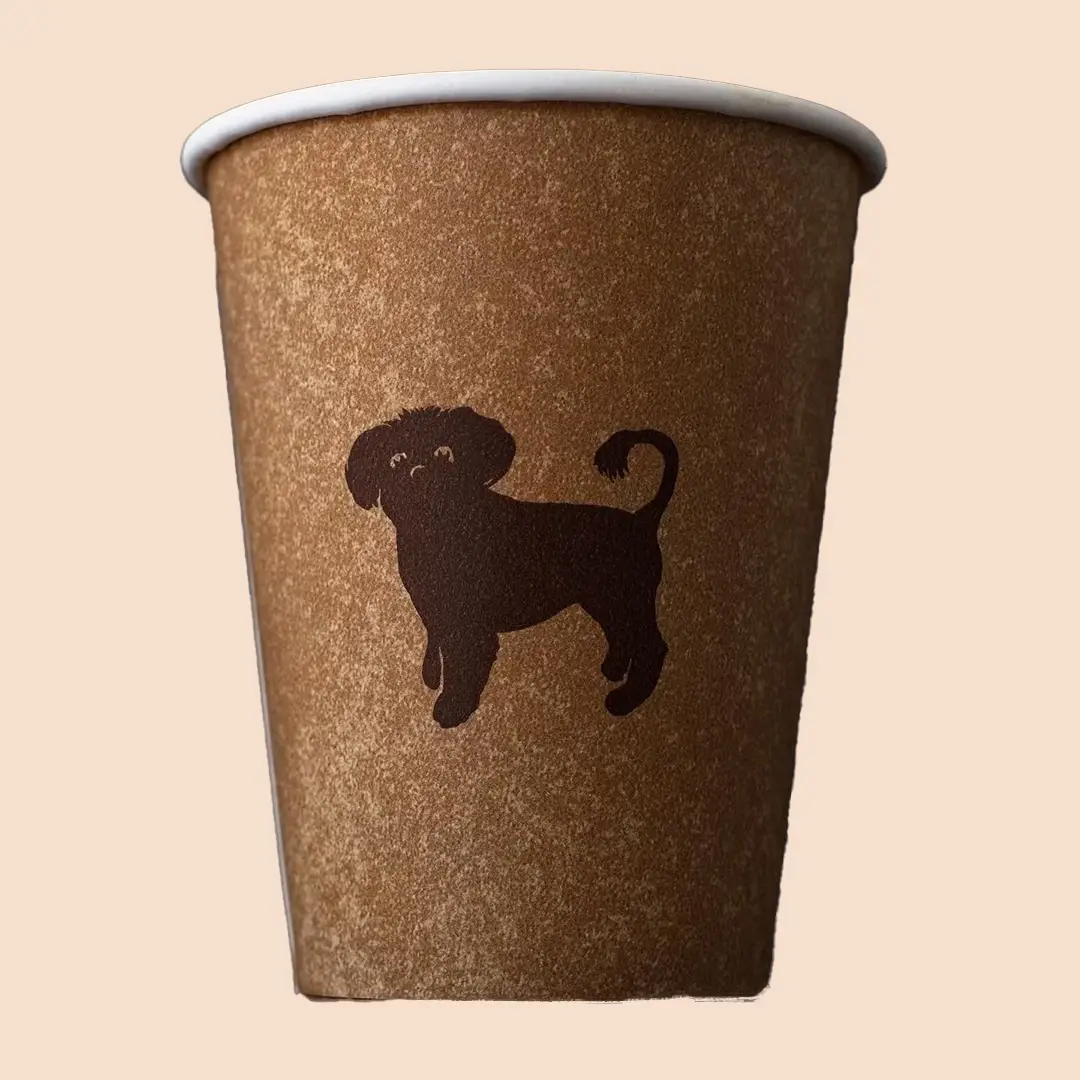
Full-colour artwork wrapped around the cup body.
Specification & quote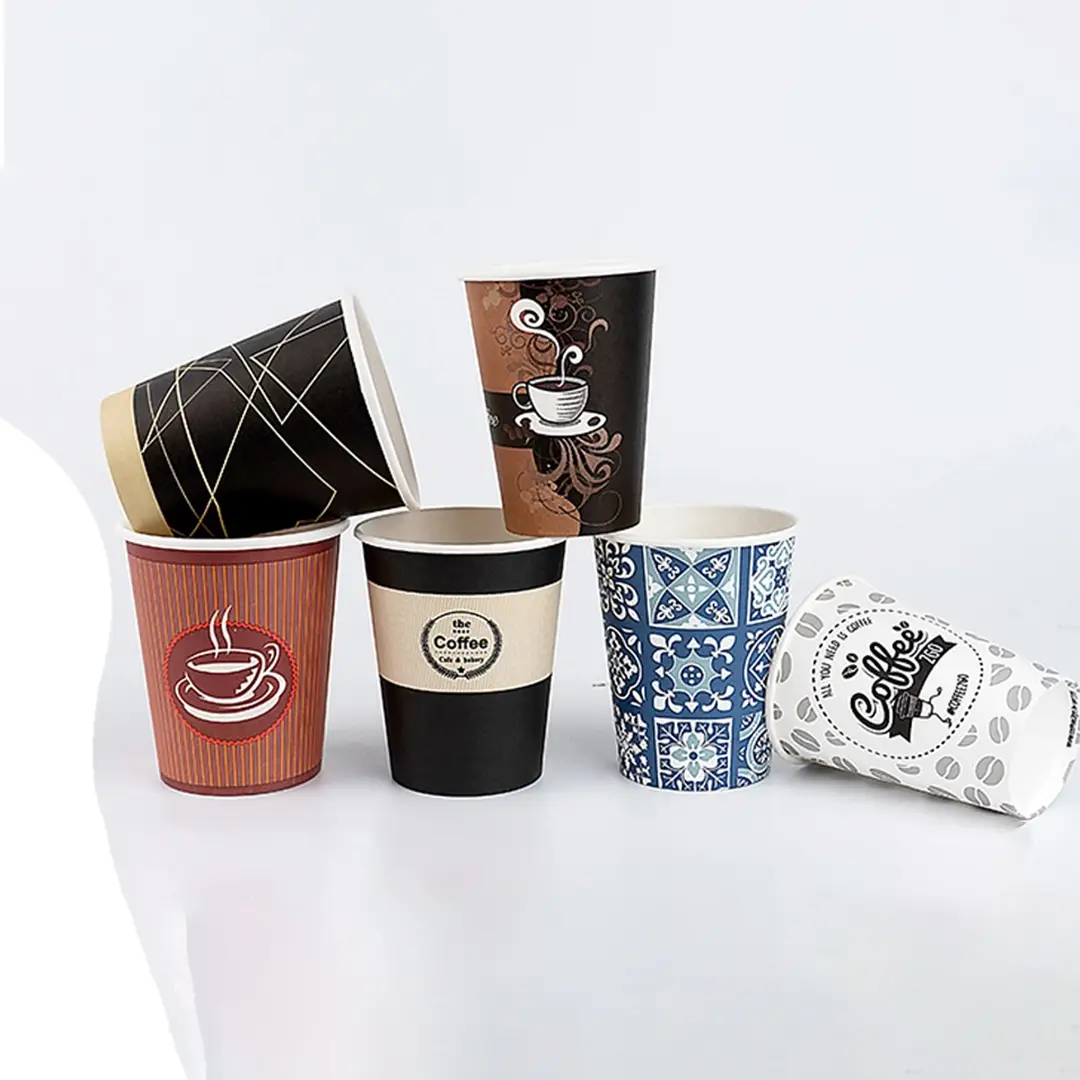
Branded takeaway cups, designed around how they are held.
Specification & quote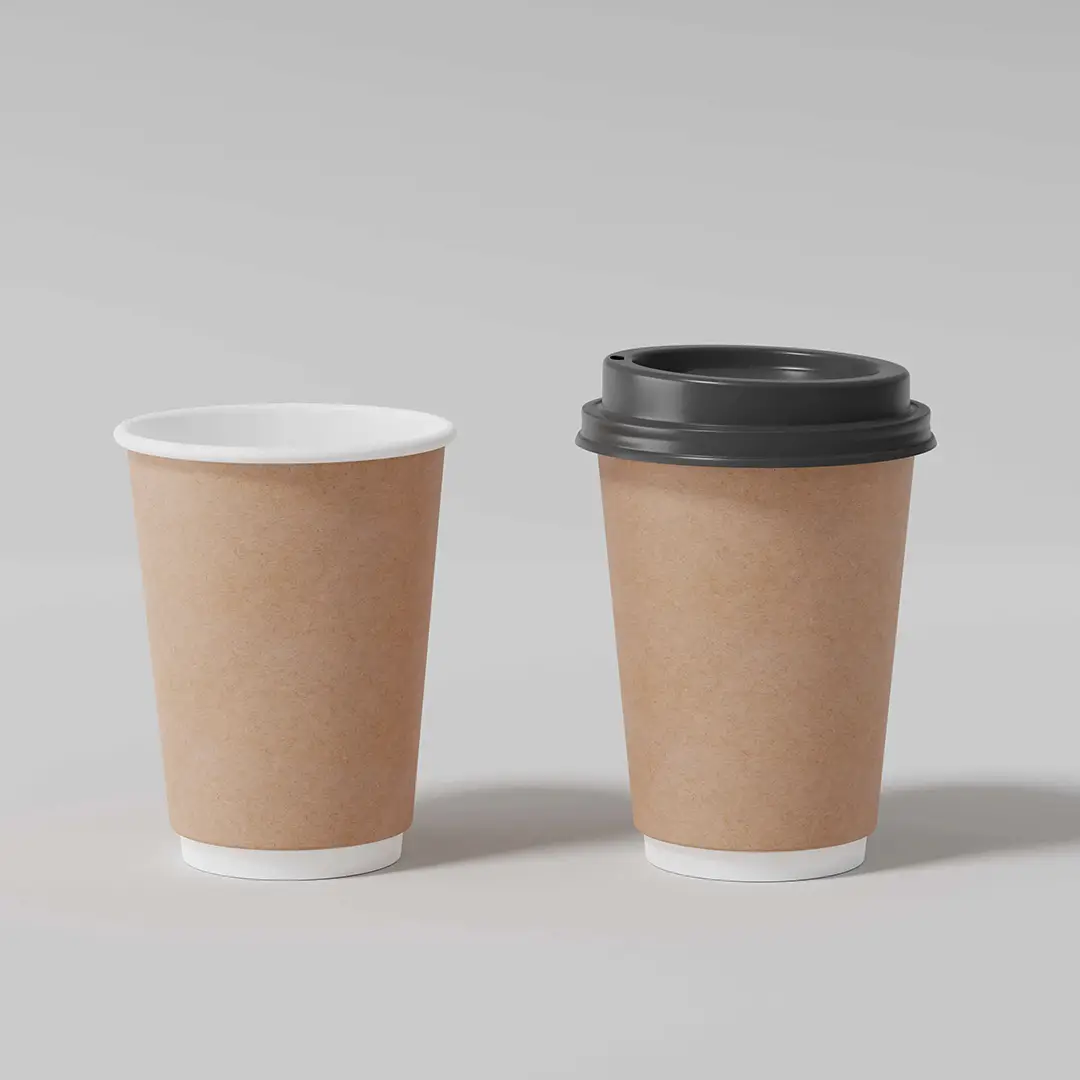
Brown board takeaway cups suited to simple, strong designs.
Specification & quote