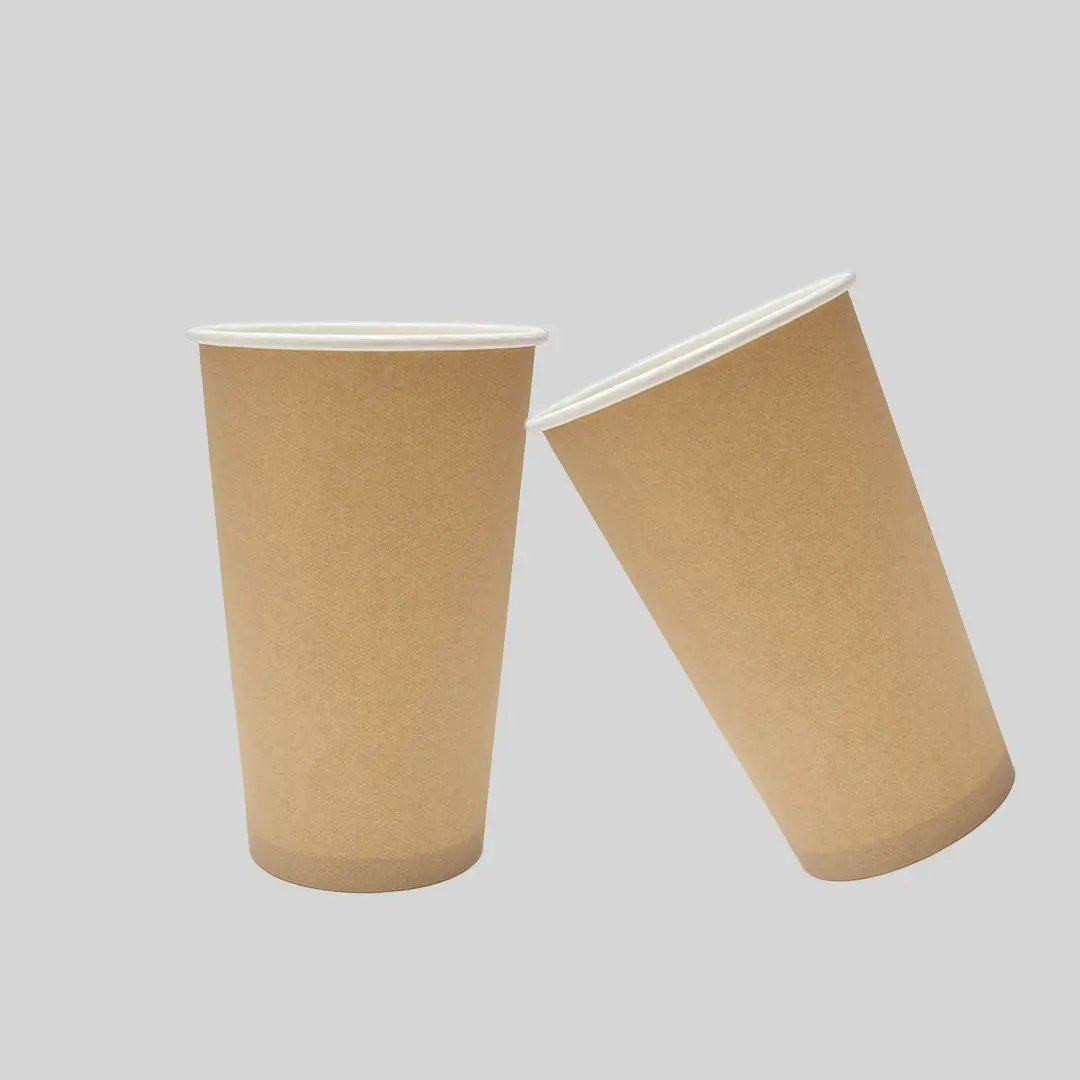
Kraft Paper Cups
Unbleached brown board cups with a plain, unfussy look.
Specification & quote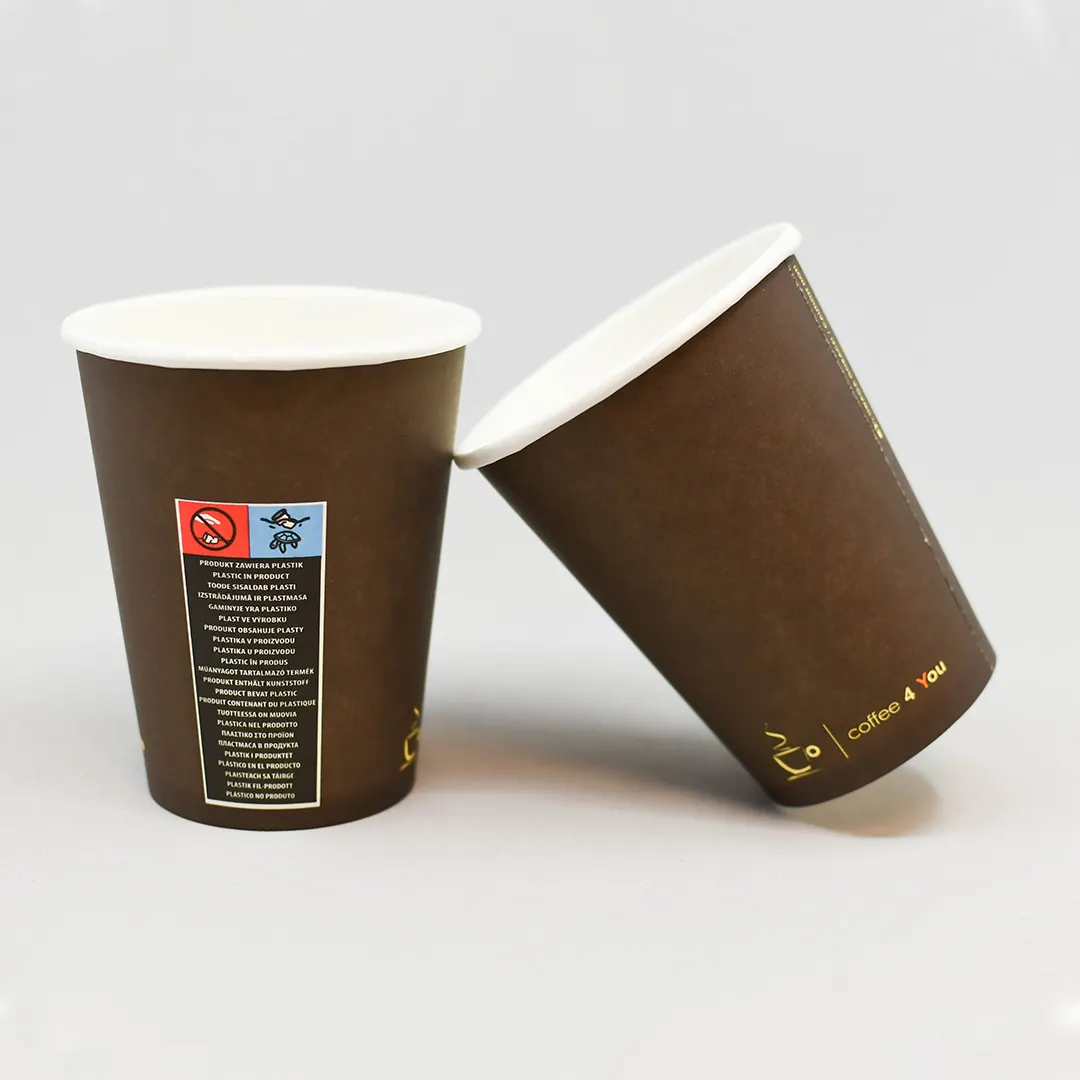
Coloured Paper Cups
There are two ways to get a brown cup, and they cost very different amounts. One is unbleached kraft board that is naturally brown; the other is a white cup printed brown.
They look similar on a shelf and behave differently in every other respect.
From £0.30 per cupIndicative starting price, excluding VAT and delivery. Your unit cost moves with quantity, board, colour count and finish, and the figure that binds is the one written on your quotation.
Short enquiry
Tell us the quantity and any date you are working to. We reply with the board, print and finish, plus the minimum order quantity and lead time.
Design Your Own
Pick a colour, put your name on it, and see how the idea reads before you ask anyone for a price. It is a sketch rather than a manufacturing proof — the real shape is cut from the product you already serve.
Sleeve colour
Finish
A printed sleeve brands a plain cup you already buy, which is why a single site usually reaches for one before it reaches for a printed cup.
Carry this into the full designerThe full page adds the size, board, print and quantity, then sends the whole specification over in one go. Nothing is committed to at any point.
| Natural kraft | Printed brown | |
|---|---|---|
| Cost | No ink needed for the colour | Full coverage ink |
| Consistency | Varies slightly between board batches | Consistent, because it is printed |
| Colour matching | Cannot be matched to a Pantone | Can be matched precisely |
| Print on top | Colours shift on the warm base | Colours sit on ink, more predictable |
| Feel | Slightly textured, uncoated look | Smoother |
Brands that need a specific brown print it. Brands that want a natural look use kraft and accept the variation.
Unbleached board is a natural material, and its shade shifts a little between mill batches. Two orders six months apart can differ visibly if placed side by side.
Most sites never notice. Brands that hold cups next to other packaging in the same brown do, which is when printed brown becomes the safer specification.
If you are leaning towards the natural route, kraft board and how artwork behaves on it covers the print implications.
Tell us the volume you pour and whether you need matching lids. We reply with a written specification, the minimum order quantity and the lead time for your job.
Cup blanks are a curved fan, so we supply a template to design on. Full file requirements are set out in our artwork guidelines.
Lead times depend on the print method, run length and press schedule, so we confirm yours on the quote rather than publishing a single figure.
Orders are dispatched on national carriers to any UK address. Seedelivery information for how dates are given.
Kraft, usually by a clear margin, because the colour costs nothing in ink. Printed brown is chosen when consistency or an exact match matters more than the saving.
Closely, but not exactly — the board shade drifts a little between batches. If your cups sit alongside other packaging in a matched brown, printing the colour removes that risk.
Kraft, usually by a clear margin, because the colour costs nothing in ink. Printed brown buys consistency rather than appearance.
Closely, not exactly. Unbleached board shifts between mill batches, which shows if cups sit beside other matched packaging.
When the brown has to match an existing Pantone across several items, or when batch variation would be visible on your counter.
Yes, because subsequent colours sit on ink rather than on a warm natural base, which makes them more predictable.
No. Kraft is slightly textured and reads as uncoated; printed brown on white board feels smoother and more manufactured.
Most choose kraft, because the natural look is the point. Printed brown suits brands that need exact consistency.
No. Both need the same lining, and the wall construction determines heat comfort regardless of the outer colour.
Board samples are usually straightforward. Ask at quote stage and we will tell you what can be sent.
Sizing questions are usually quicker on the phone, especially if you have the product in front of you.
Unbleached brown board cups with a plain, unfussy look.
Specification & quote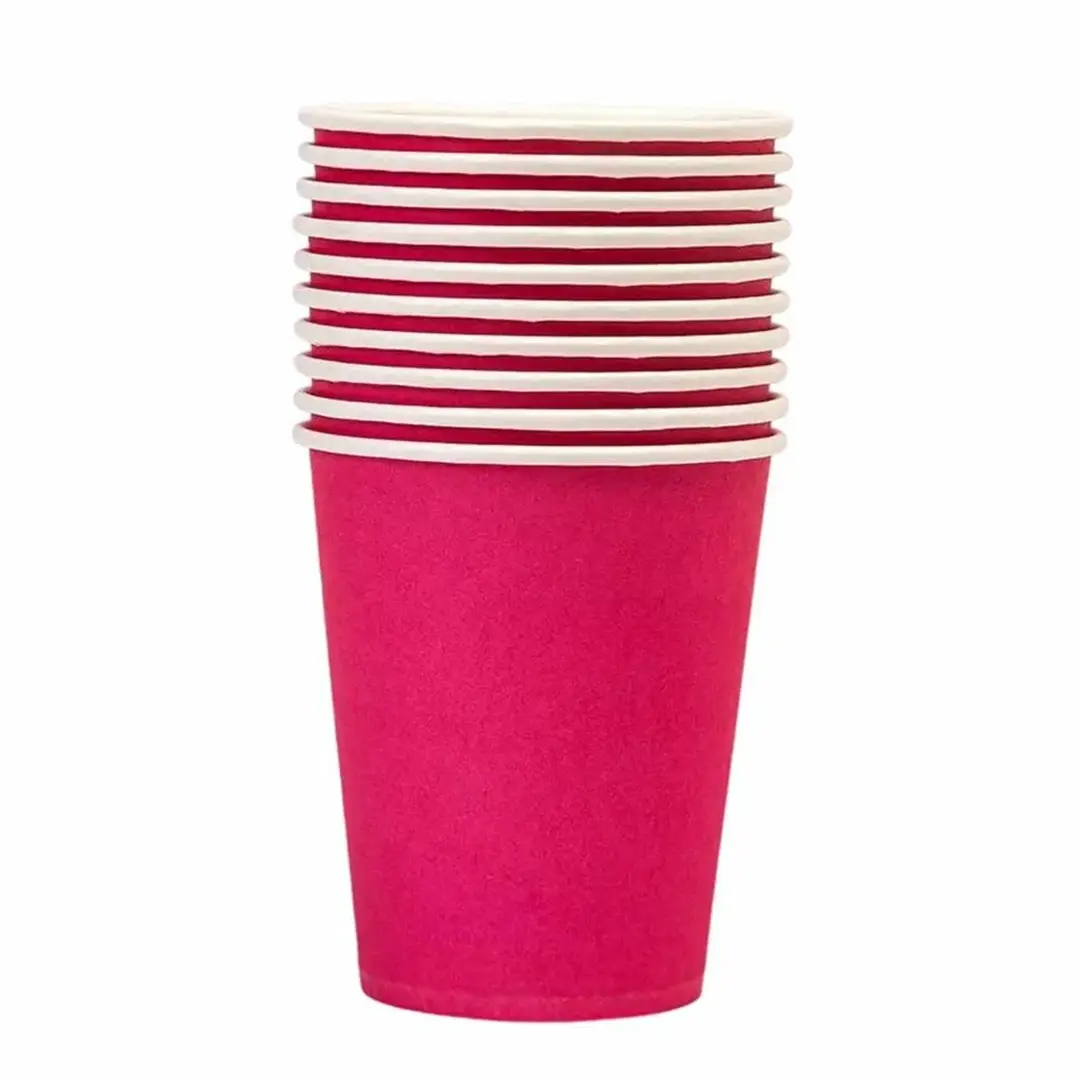
Solid colour bodies matched to your brand palette.
Specification & quote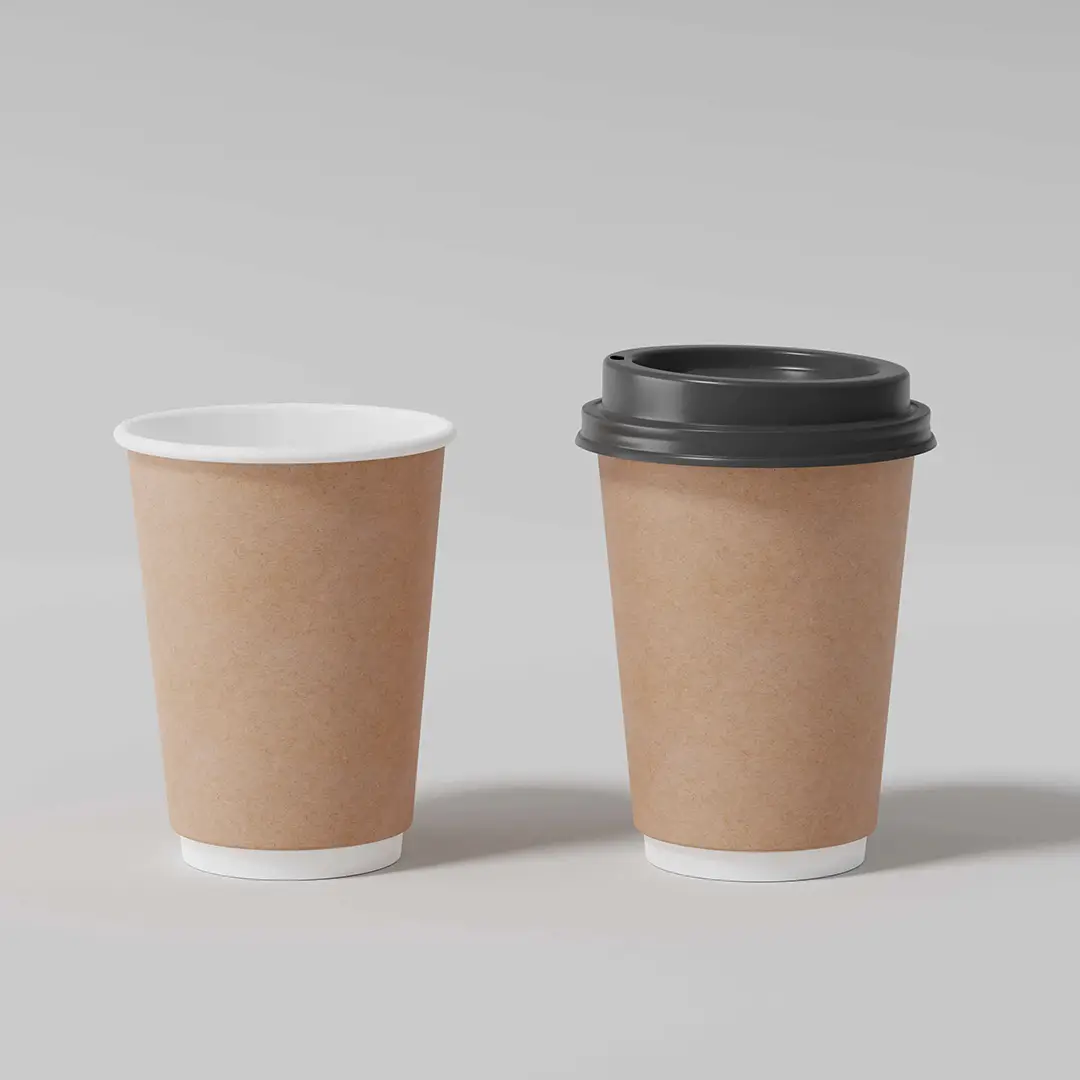
Brown board takeaway cups suited to simple, strong designs.
Specification & quote
The default base: cheapest to print and the most colour-accurate.
Specification & quote