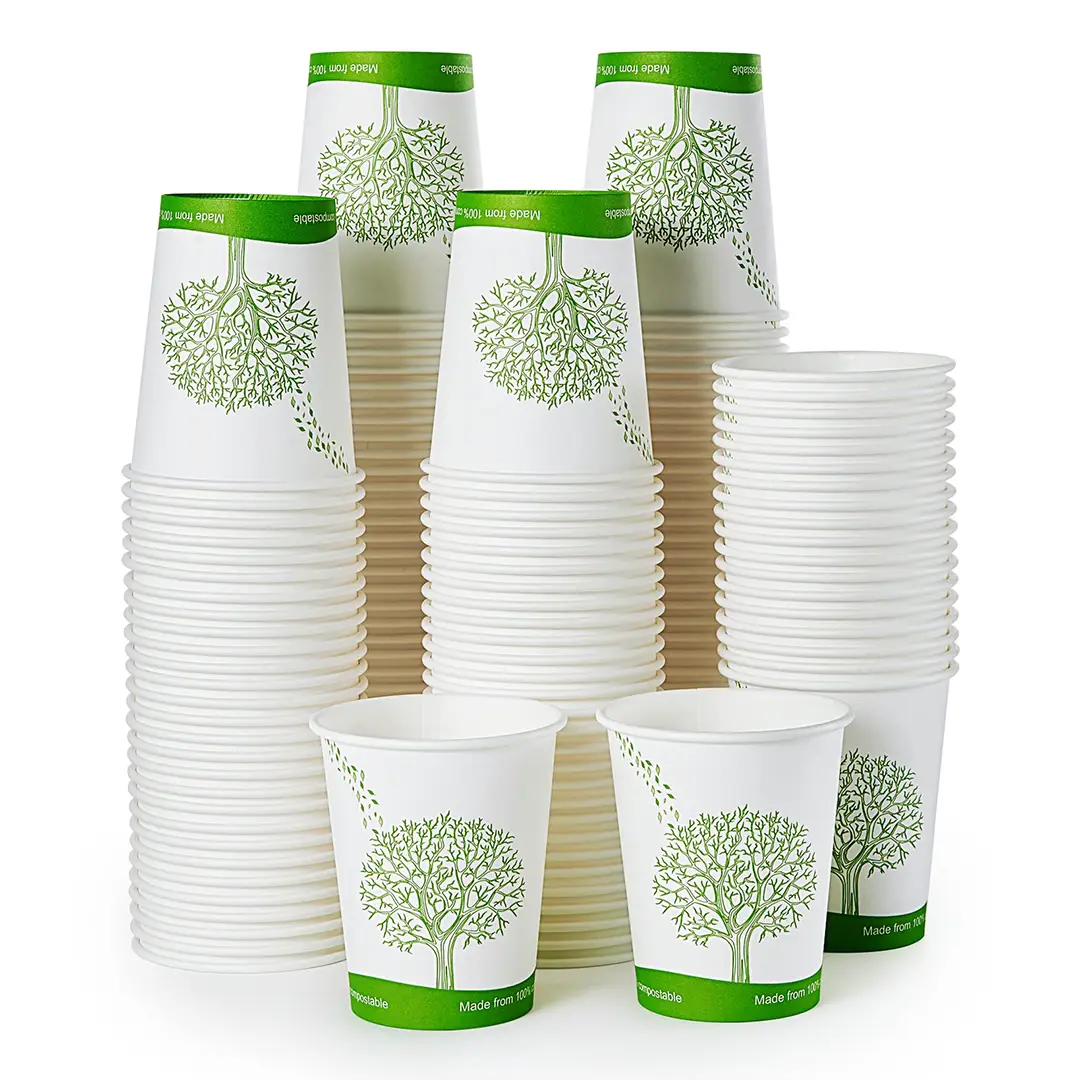
Eco-Friendly Paper Cups
Alternative linings and recycled content, with the trade-offs stated.
Specification & quote
Paper Cup Materials
Almost every paper cup is recyclable in principle and a great many are not recycled in practice. The gap between those two statements is the whole subject of this page.
What decides the outcome is not usually the cup — it is whether a separate collection exists where the cup is thrown away.
From £0.30 per cupIndicative starting price, excluding VAT and delivery. Your unit cost moves with quantity, board, colour count and finish, and the figure that binds is the one written on your quotation.
Short enquiry
Tell us the quantity and any date you are working to. We reply with the board, print and finish, plus the minimum order quantity and lead time.
Design Your Own
Pick a colour, put your name on it, and see how the idea reads before you ask anyone for a price. It is a sketch rather than a manufacturing proof — the real shape is cut from the product you already serve.
Sleeve colour
Finish
A printed sleeve brands a plain cup you already buy, which is why a single site usually reaches for one before it reaches for a printed cup.
Carry this into the full designerThe full page adds the size, board, print and quantity, then sends the whole specification over in one go. Nothing is committed to at any point.
A lined paper cup needs a facility that can separate the lining from the fibre. Those facilities exist, and they are not what most general waste goes to.
A cup sent to general waste performs the same regardless of how it was specified. Arranging the collection is the step that changes the outcome.
Specifically whether they take lined paper cups as a separate stream, not whether they take card.
Cups used in-store go into your bins. Cups taken away go into street bins, which you do not control.
There is no point specifying for a stream you cannot access.
The instruction printed on the cup should describe what a customer can actually do.
Our article on practical steps that reduce packaging waste covers the decisions that make more difference than the cup specification.
We will tell you exactly what board and lining a quoted cup uses so you can check it against your own collection. We will not publish a general claim that a cup "is recycled", because that depends on circumstances outside the packaging.
Confirmed in writing per order rather than claimed here
Tell us the volume you pour and whether you need matching lids. We reply with a written specification, the minimum order quantity and the lead time for your job.
Cup blanks are a curved fan, so we supply a template to design on. Full file requirements are set out in our artwork guidelines.
Lead times depend on the print method, run length and press schedule, so we confirm yours on the quote rather than publishing a single figure.
Orders are dispatched on national carriers to any UK address. Seedelivery information for how dates are given.
Only if it is accurate for the people using it, which usually means a collection they can reach. A cup marked recyclable that goes into general waste is worse than an unmarked one, because it misleads.
That depends on the facilities available to you rather than on a universal ranking. Start from what your contractor collects and work backwards to the specification.
Only if it is accurate for the people using it, which usually means a collection they can reach. A misleading mark is worse than none.
Because the lining has to be separated from the fibre. Those facilities exist and are not where most general waste goes.
It matters a great deal. Cups used in-store go into bins you control; cups carried out do not, which is where most of them go.
What is available depends on the specific stock and what is in supply when your job runs. We confirm it in writing per quote.
Sometimes, though removing lamination elsewhere can offset it. We price a conventional specification alongside so the difference is visible.
Something specific and checkable rather than broad. A modest accurate claim is far more credible than a general one.
No. A brown or green cup says nothing about disposal, and customers frequently read it as if it does.
Yes, board grade and lining, so you can check it against your own collection before making any claim on the pack.
Sizing questions are usually quicker on the phone, especially if you have the product in front of you.
Alternative linings and recycled content, with the trade-offs stated.
Specification & quote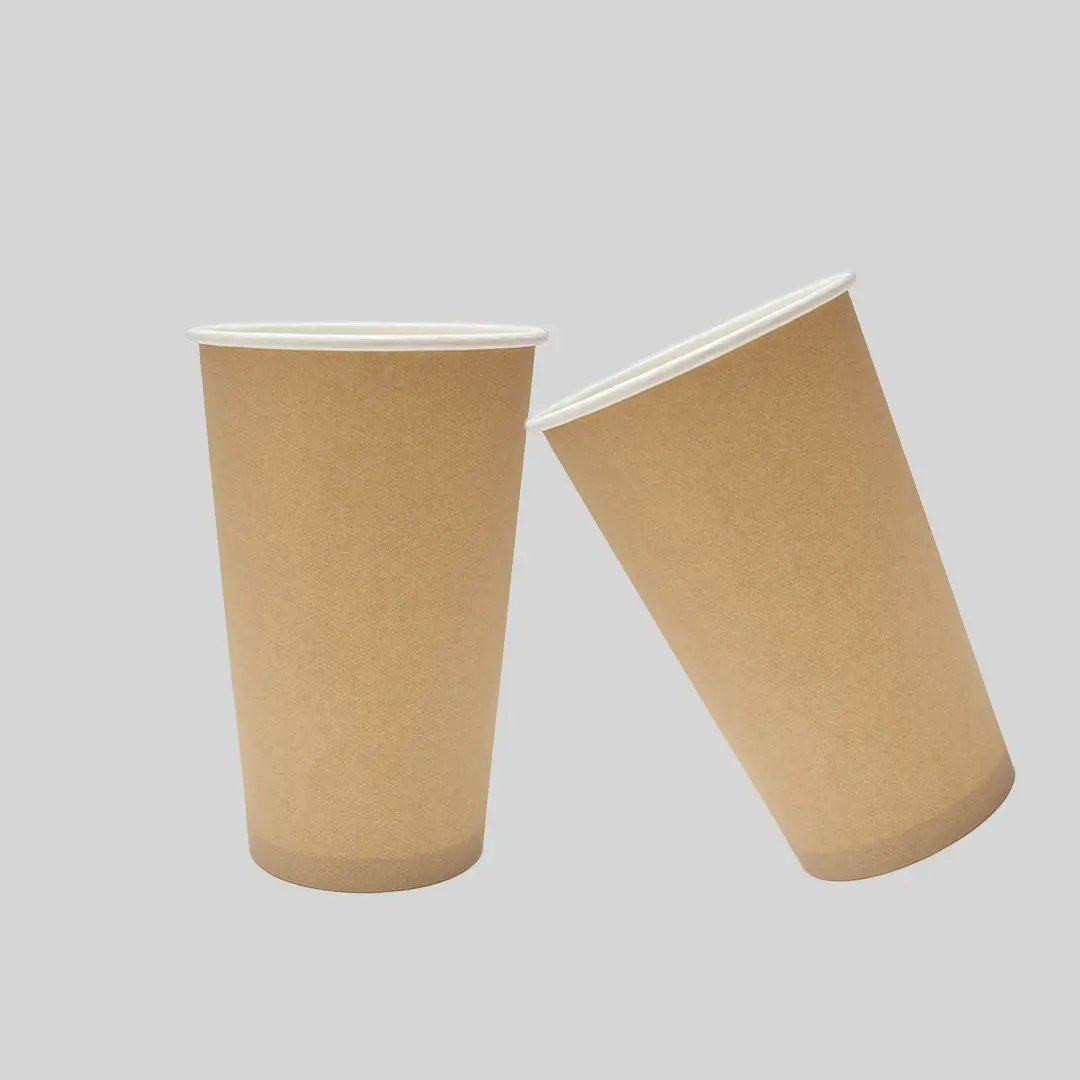
Unbleached brown board cups with a plain, unfussy look.
Specification & quote
Unlaminated sleeves specified for recyclability, without overclaiming.
Specification & quote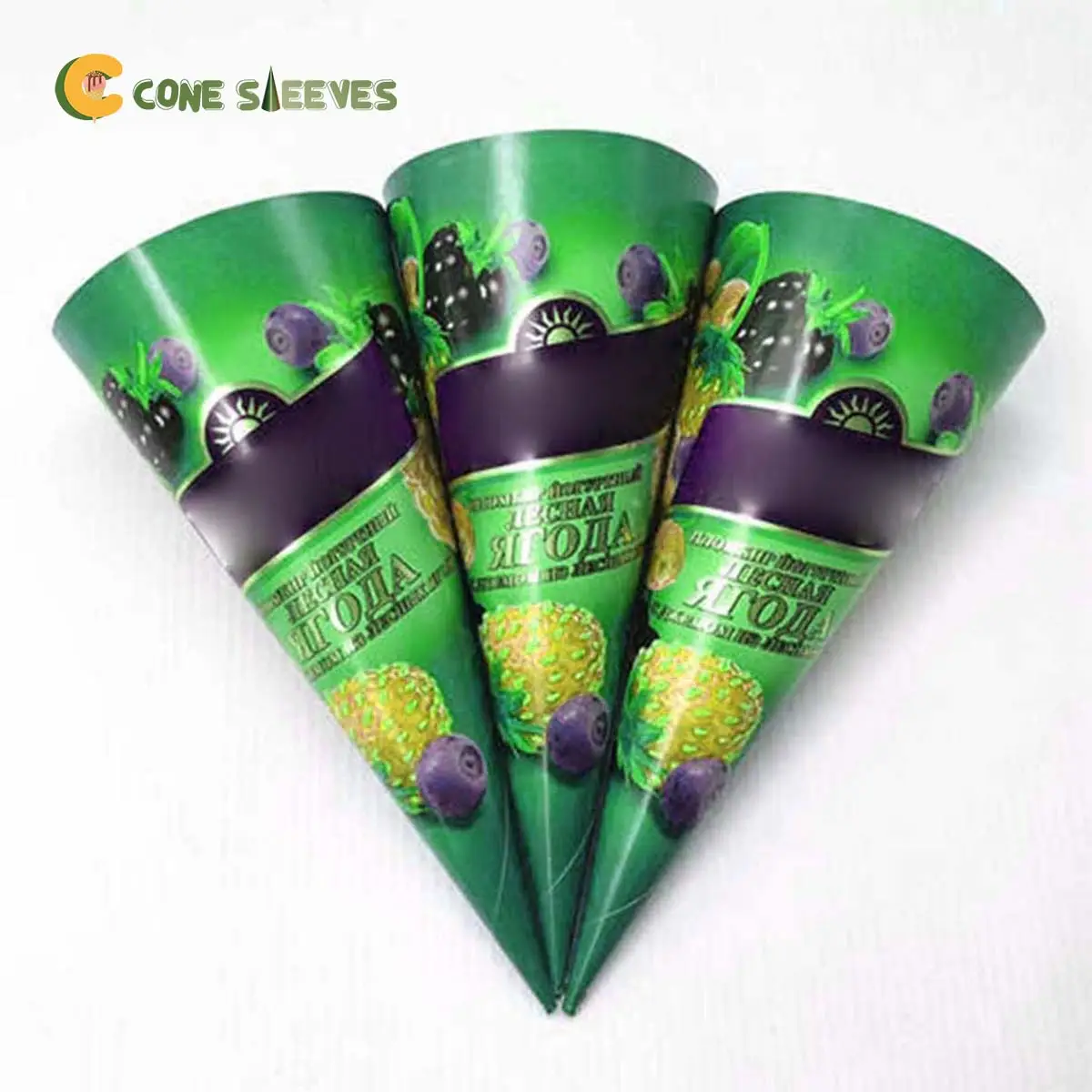
Unlaminated board sleeves specified for recyclability, without overclaiming.
Specification & quote