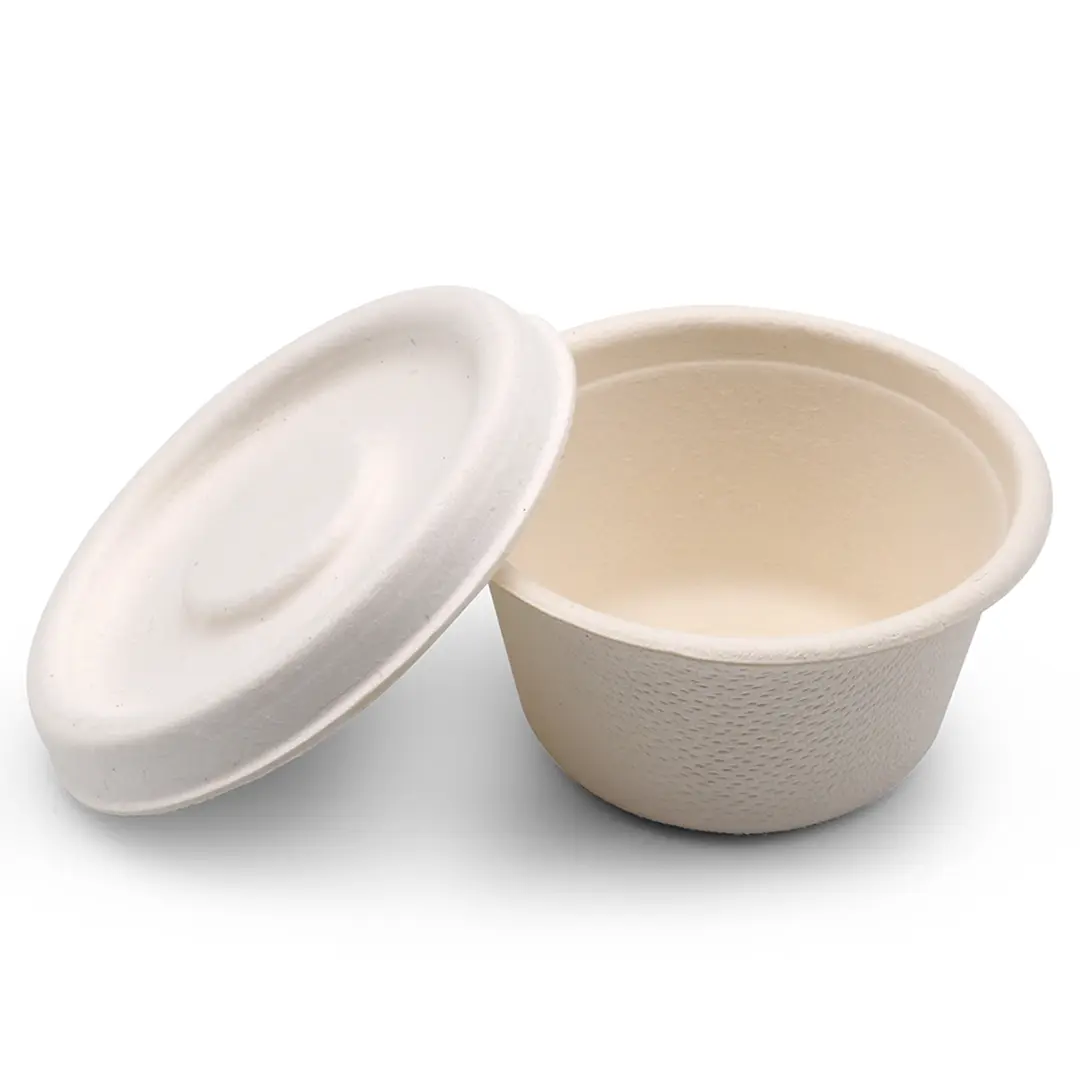
Paper Sauce Cups
Dip pots with lids that seal properly for delivery orders.
Specification & quote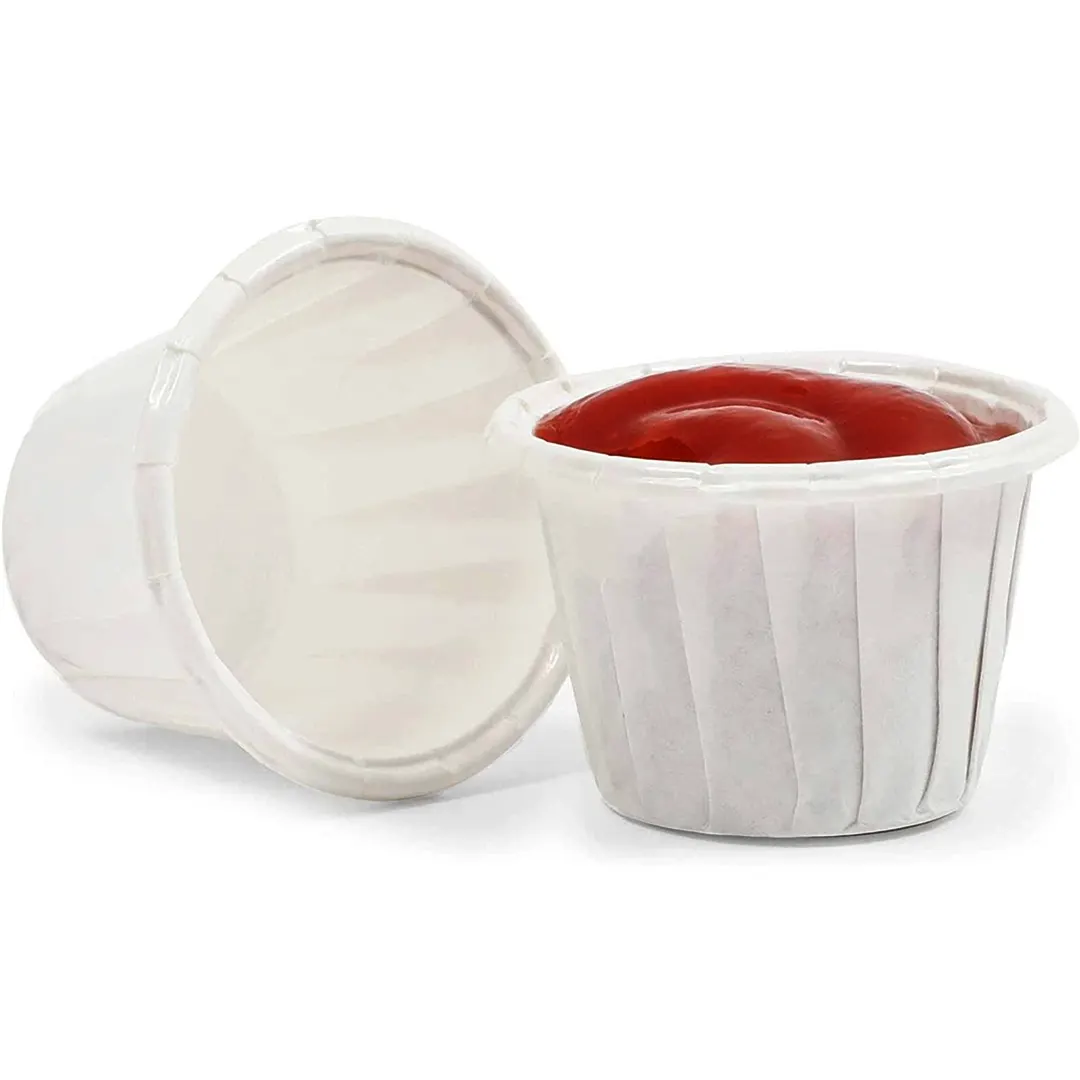
Food Cups
Portion cups are bought by the tens of thousands and used for about ten seconds each. Nobody looks at them.
That makes denesting — how cleanly one comes off the stack — more important than anything printed on the outside.
From £0.30 per cupIndicative starting price, excluding VAT and delivery. Your unit cost moves with quantity, board, colour count and finish, and the figure that binds is the one written on your quotation.
Short enquiry
Tell us the quantity and any date you are working to. We reply with the board, print and finish, plus the minimum order quantity and lead time.
Design Your Own
Pick a colour, put your name on it, and see how the idea reads before you ask anyone for a price. It is a sketch rather than a manufacturing proof — the real shape is cut from the product you already serve.
Sleeve colour
Finish
A printed sleeve brands a plain cup you already buy, which is why a single site usually reaches for one before it reaches for a printed cup.
Carry this into the full designerThe full page adds the size, board, print and quantity, then sends the whole specification over in one go. Nothing is committed to at any point.
During a rush, staff pull portion cups off a stack one-handed. Cups that stick together cost seconds every time, and seconds add up across a service.
A slight step or rib in the wall keeps them separated. It is invisible to the customer and the single most useful feature on the product.
Lids matter if portions travel; without them a pot in a delivery bag empties itself.
For delivery in particular, sauce pots and the lids they need for delivery cover the sealing question.
Tell us the volume you pour and whether you need matching lids. We reply with a written specification, the minimum order quantity and the lead time for your job.
Cup blanks are a curved fan, so we supply a template to design on. Full file requirements are set out in our artwork guidelines.
Lead times depend on the print method, run length and press schedule, so we confirm yours on the quote rather than publishing a single figure.
Orders are dispatched on national carriers to any UK address. Seedelivery information for how dates are given.
Rarely. They are seen for seconds and bought in huge volumes, so the print budget almost always does more good on the item the customer carries out of the door.
They lack a denesting feature, or the stack has been compressed in storage. A slight step in the wall keeps them separated, and it is worth specifying rather than assuming.
If portions travel, yes. Without one a pot in a delivery bag empties itself into the order.
Match it to your actual portion rather than a round number. An over-large pot looks mean when half full.
Essentially, though sauce use puts more demand on the lining. Tell us what goes in them and we will specify accordingly.
Yes, though a compressed stack is what causes sticking. Store them upright rather than on their side under weight.
This is a product bought by the tens of thousands, and the economics improve with volume. Send your annual usage.
They are widely used for portion control there, where a fixed measure matters more than any branding.
If portions travel, yes. On a tray they are unnecessary and add cost to a very high-volume item.
Usually one, matched to your standard portion. A second size only earns its storage where you serve two clearly different measures.
Sizing questions are usually quicker on the phone, especially if you have the product in front of you.
Dip pots with lids that seal properly for delivery orders.
Specification & quote
Espresso and sampling cups where print area is the main limit.
Specification & quote
The 2oz to 6oz band for tasting, sampling and portions.
Specification & quote
Unlined cups for dry snacks, at a lower cost than lined stock.
Specification & quote