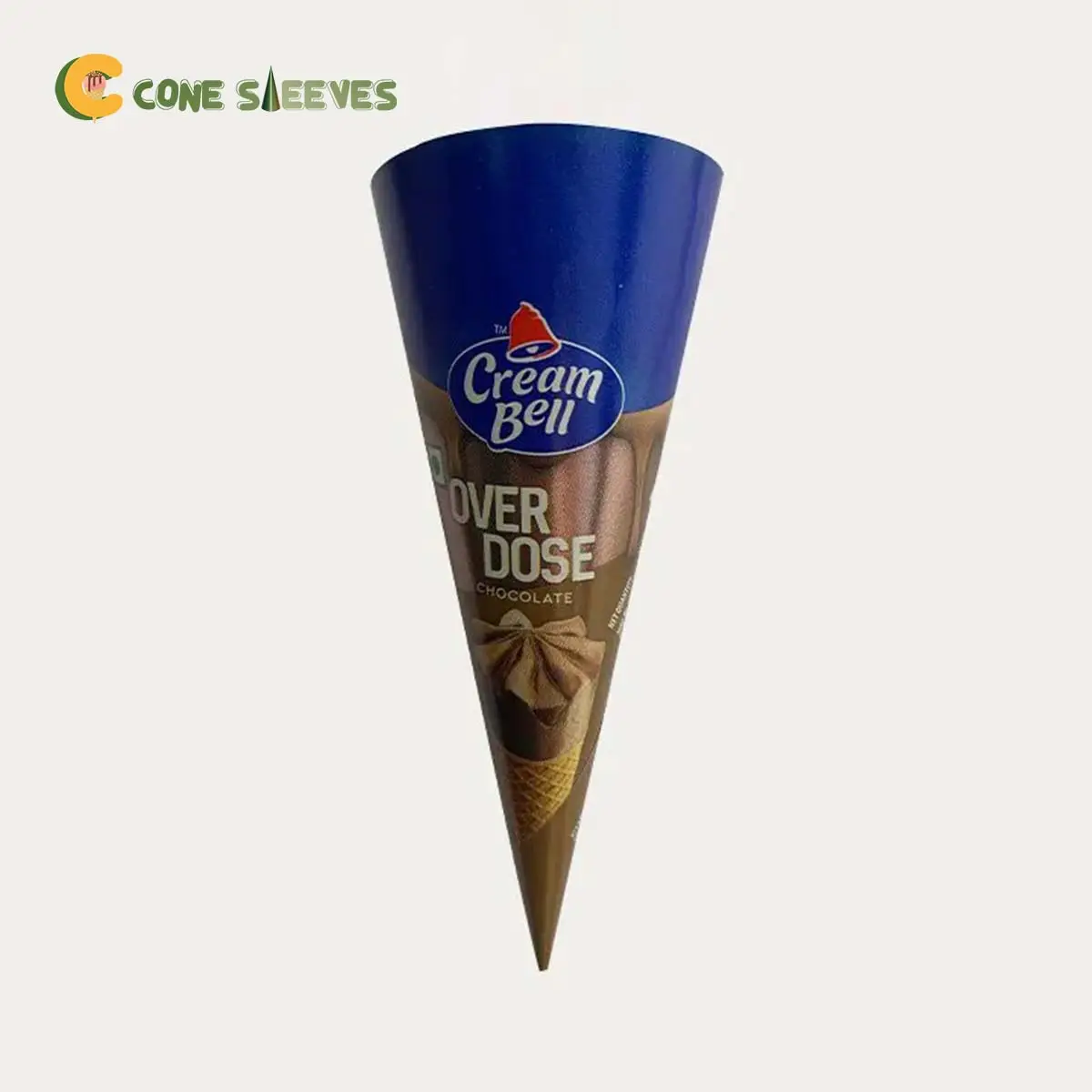
Custom Printed Ice Cream Cone Sleeves
Full-colour printed sleeves cut to the cone you already serve.
Specification & quote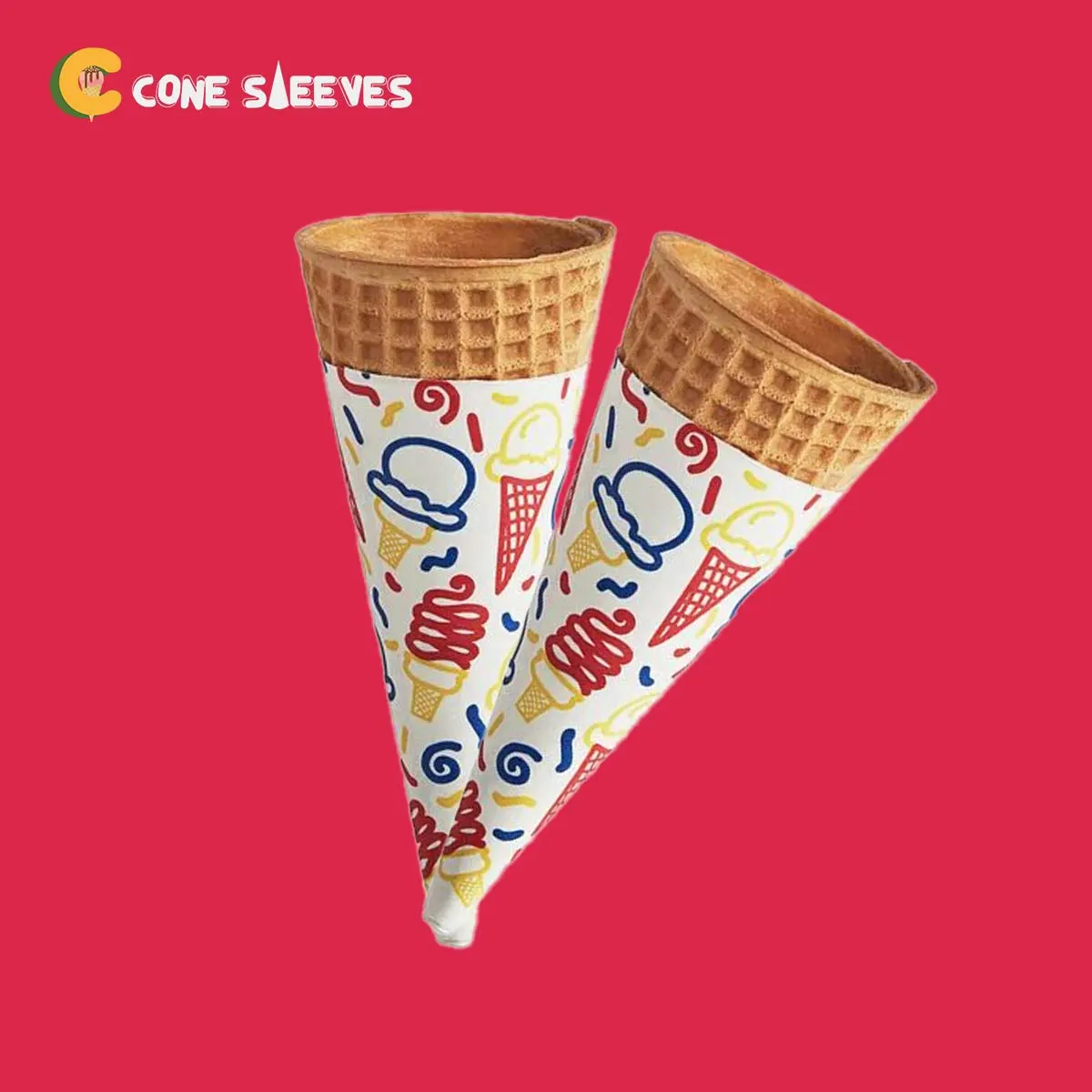
Cone Sleeves
Rolled ice cream is made to order on a cold plate, which means the customer waits, watches, and films it. By the time the rolls are lifted into a cone the product is softer and wetter than a scoop from a cabinet.
A sleeve for this needs more board and more coverage than a standard scoop wrap.
From £0.30 per sleeveIndicative starting price, excluding VAT and delivery. Your unit cost moves with quantity, board, colour count and finish, and the figure that binds is the one written on your quotation.
Short enquiry
Tell us the quantity and any date you are working to. We reply with the board, print and finish, plus the minimum order quantity and lead time.
Design Your Own
Pick a colour, put your name on it, and see how the idea reads before you ask anyone for a price. It is a sketch rather than a manufacturing proof — the real shape is cut from the product you already serve.
Sleeve colour
Finish
Leave two or three centimetres of wafer showing. Customers read a visible cone as freshly made, and the sleeve still catches the first drips.
Carry this into the full designerThe full page adds the size, board, print and quantity, then sends the whole specification over in one go. Nothing is committed to at any point.
Rolls carry more surface moisture than a firm scoop and they start to slump as soon as they leave the plate. Melt reaches the sleeve early and keeps coming.
A greaseproof-lined or coated board resists that far longer than plain board, which goes translucent and loses stiffness within a few minutes.
A stiffer board and a deeper wrap answer all four at once.
Rolled ice cream is usually finished with sauces and toppings that sit above the rim. If your serve is built high, the sleeve should stop lower so the customer has somewhere clean to hold without touching the toppings.
| Board | Greaseproof-lined or coated, heavier than a standard scoop sleeve |
|---|---|
| Depth | Deeper wrap than a cabinet scoop, set below the topping line |
| Full colour; the sleeve appears in customer video | |
| Finish | Matt lamination is the usual choice for handling marks |
Send us two or three of the cones you use, or the top diameter and slant height. We reply with a written specification, the minimum order quantity and the lead time for your job.
We supply a die template cut to your cone before design work starts. Full file requirements are set out in our artwork guidelines.
Lead times depend on the print method, run length and press schedule, so we confirm yours on the quote rather than publishing a single figure.
Orders are dispatched on national carriers to any UK address. Seedelivery information for how dates are given.
You can, and plenty of sites do at first. The board tends to soften faster because the product is wetter, and the topping height often means the wrap sits in the wrong place. Both are cheap to fix on a second order.
Not waterproof, but grease and moisture resistant. Nothing in board packaging is designed to hold standing liquid — the aim is to stay stiff and clean for the ten minutes the customer is eating.
Often not, if the cone is the same. What changes is the board and the depth, because the product is wetter and usually built higher above the rim.
Far enough that the customer can hold it without touching sauce, which on a heavily finished serve is lower than you would expect. Measure a made-up cone rather than an empty one.
Almost always, because the preparation is filmed. That is a genuine argument for a laminated finish, which holds its appearance under the lights better than uncoated board.
It will, and many sites begin there. The board tends to soften faster because the product is wetter, which is usually the first thing they change at reorder.
It is one of the better places for it, since the cone is filmed. Keep it large enough to read on a phone screen and clear of the overlap.
Generally yes. The serve is heavier and wetter, and the cone spends longer in the hand while the customer photographs it before eating.
Store stock away from the preparation area and specify a coated or lined board. A cold plate throws moisture into the air continuously through a service.
Yes, and running them together keeps the colour consistent. Printed separately months apart, the same brand colour drifts enough to be visible side by side.
Sizing questions are usually quicker on the phone, especially if you have the product in front of you.
Full-colour printed sleeves cut to the cone you already serve.
Specification & quote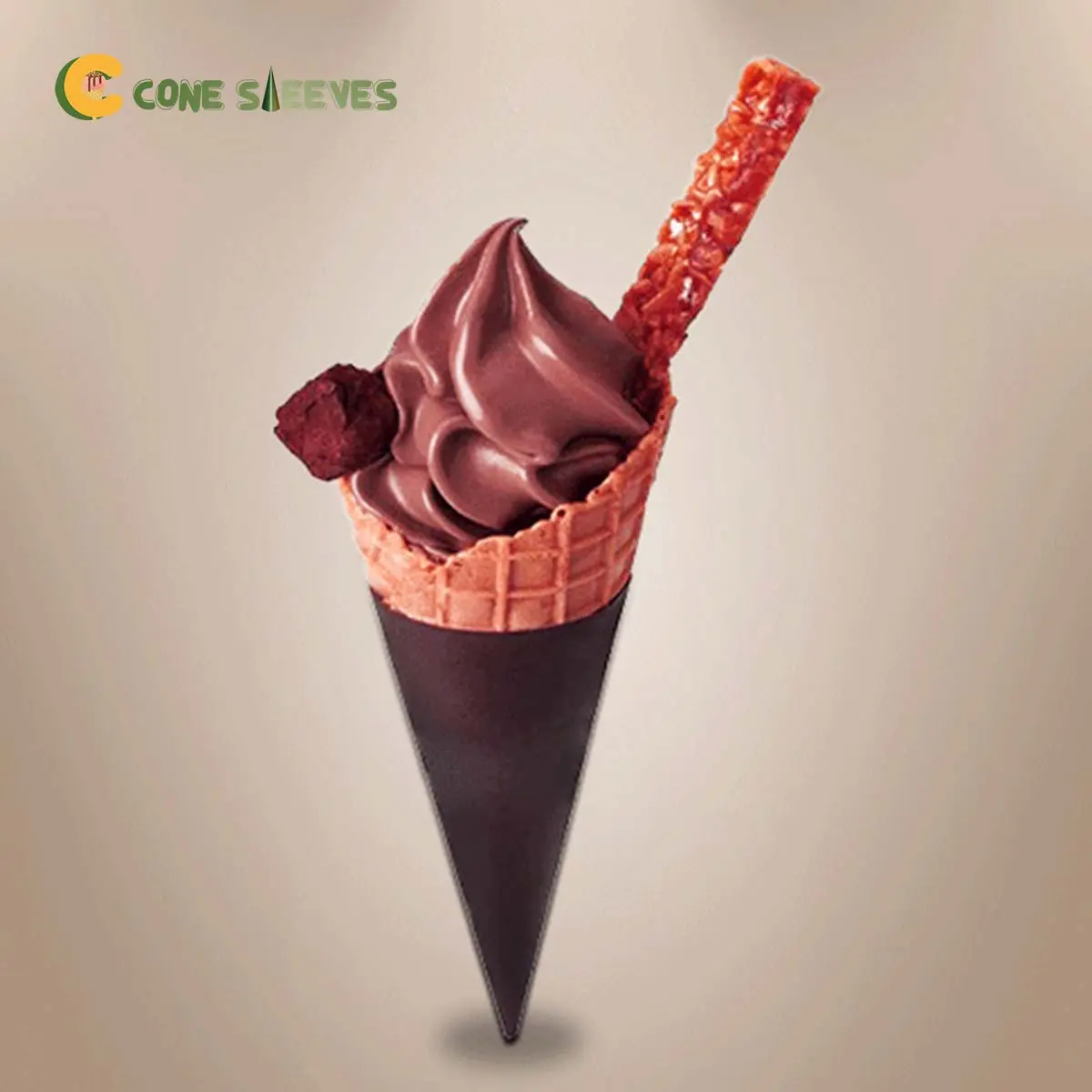
Sleeves cut to the wide taper of a waffle cone.
Specification & quote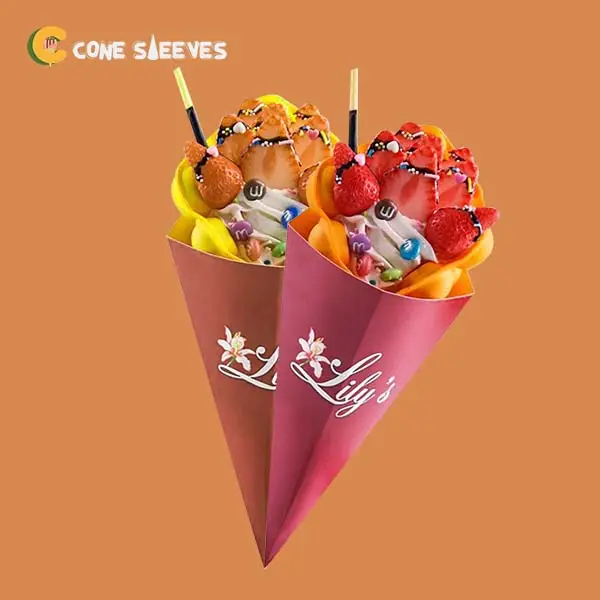
Cone holders sized for rolled crepes, with a wider opening than an ice cream wrap.
Specification & quote
Heavier board wraps that hold their shape under a large scoop.
Specification & quote