Custom Pastry Bags
Flat grease-resistant bags for fast bakery counter service.
Specification & quote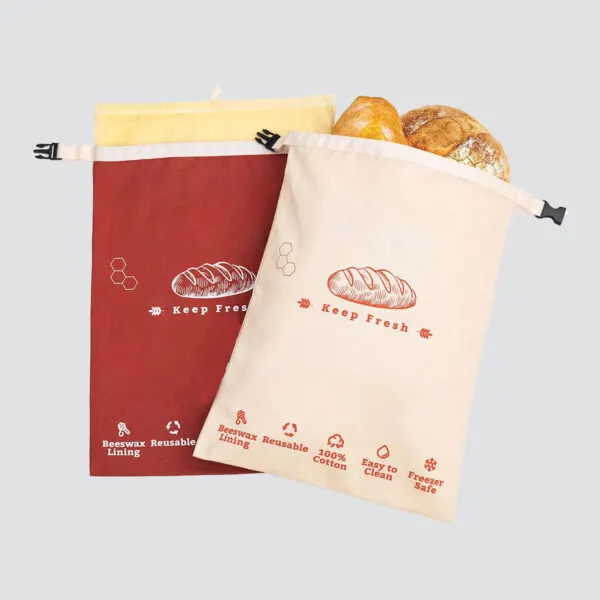
Printed Paper Bags
A good crust is the first thing to go when bread is packaged badly. Sealed in something airtight, a loaf steams and the crust softens within an hour.
Paper bags exist for bread precisely because they let it breathe, which is a feature rather than a limitation.
From £0.30 per unitIndicative starting price, excluding VAT and delivery. Your unit cost moves with quantity, board, colour count and finish, and the figure that binds is the one written on your quotation.
Short enquiry
Tell us the quantity and any date you are working to. We reply with the board, print and finish, plus the minimum order quantity and lead time.
Design Your Own
Pick a colour, put your name on it, and see how the idea reads before you ask anyone for a price. It is a sketch rather than a manufacturing proof — the real shape is cut from the product you already serve.
Sleeve colour
Finish
On unbleached board every colour prints warmer than it looks here. Two inks chosen for kraft beat four fighting the brown.
Carry this into the full designerThe full page adds the size, board, print and quantity, then sends the whole specification over in one go. Nothing is committed to at any point.
| Paper bag | Sealed bag | |
|---|---|---|
| Crust | Stays crisp | Softens within an hour |
| Crumb moisture | Dries out over a day or two | Stays soft longer |
| Suits | Artisan loaves eaten within a day | Sliced bread with a longer shelf life |
| Window | Optional cut-out or film panel | Product usually visible anyway |
| Look | Craft bakery | Supermarket |
The right answer depends entirely on whether the crust or the shelf life matters more to your customers.
A 800g tin loaf and an 800g bloomer are completely different shapes, and a bag that suits one is wrong for the other.
Bakeries running several shapes usually need two or three bag sizes rather than one sized by weight.
For the counter side of a bakery, flat bags for pastries and single items handle smaller items.
Measure the item, then add enough on each side to fold and tuck. We reply with a written specification, the minimum order quantity and the lead time for your job.
One or two colours reproduce most reliably on an absorbent stock. Full file requirements are set out in our artwork guidelines.
Lead times depend on the print method, run length and press schedule, so we confirm yours on the quote rather than publishing a single figure.
Orders are dispatched on national carriers to any UK address. Seedelivery information for how dates are given.
It keeps the crust crisp and lets the crumb dry slowly, which suits an artisan loaf eaten within a day or two. For longer shelf life a sealed bag holds moisture better, at the cost of the crust.
A window shows the crust and colour, which sells an artisan loaf. It also adds a material and a cost, so plenty of bakeries print the loaf type instead and keep the bag simple.
A sealed bag holds moisture and softens the crust within an hour. Paper exists for bread precisely because it breathes.
By shape rather than weight. An 800g tin loaf and an 800g bloomer need different bags entirely.
Two or three for a bakery running several shapes. Sizing by weight alone is the usual mistake.
Yes, and a restrained design suits a craft bakery. Heavy coverage works against the plain paper look.
They do, and a crisp crust is exactly what a paper bag protects and a sealed bag destroys.
A freshly baked loaf can mark plain paper slightly. Most bakeries accept it, or let loaves cool before bagging.
Yes, and on digital printing several loaf names in one run is straightforward. Send the split between them.
They do, though wholesale bags often carry less retail information than shelf packs. Tell us which use dominates.
Sizing questions are usually quicker on the phone, especially if you have the product in front of you.
Flat grease-resistant bags for fast bakery counter service.
Specification & quote
Shopping bags built for a mixed load of tins, jars and produce.
Specification & quote
Brown paper bags suited to simple, strong printed designs.
Specification & quote
Counter and retail bags for cookies, with optional window panels.
Specification & quote