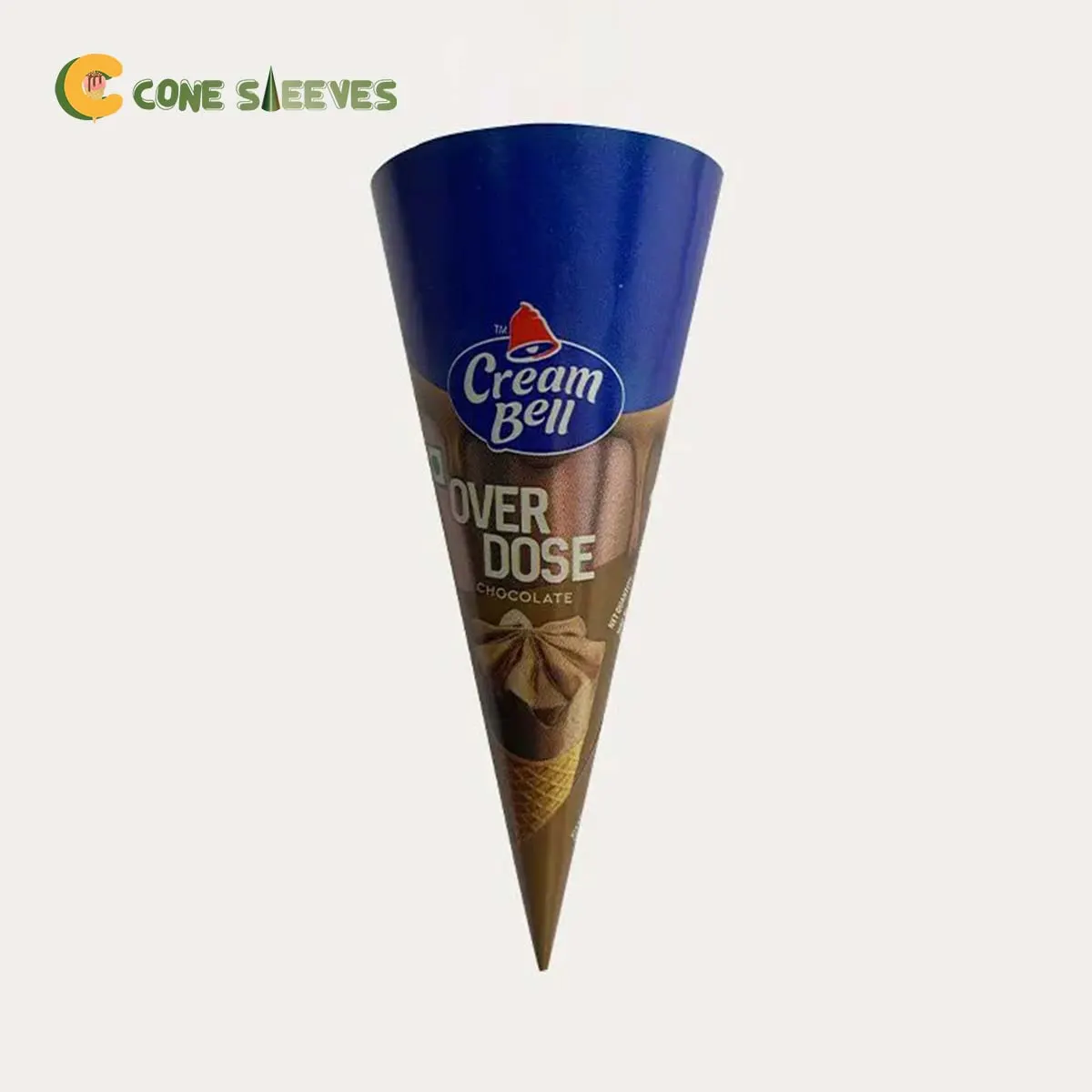
Direct Contact Is the Question That Decides Everything
The first thing to establish about any piece of packaging is whether food touches it directly, and for how long.
A cone sleeve touches a wafer continuously for the whole time a customer is eating. A gift card sleeve touches nothing edible at all. Those two sit at opposite ends of a spectrum, and they need completely different specifications.
Between them sit cases that are easy to get wrong: a sleeve around a wrapped chocolate bar touches film rather than chocolate, so its requirements are much lighter than they first appear.
Questions Worth Putting to Any Packaging Supplier
These are reasonable to ask and straightforward for a supplier to answer in writing:
- Is the board grade specified for direct food contact, and which grade is it?
- Is the ink system specified for the type of contact my product involves?
- Does any lamination, coating or adhesive also come into contact with food?
- What temperature range is this specification suitable for?
- Can you confirm all of this in writing on the quote, rather than verbally?
A supplier that cannot answer these in writing is not necessarily supplying something unsuitable, but you have no record either way, and the record is what matters if you are ever asked.
Inks, and the Part People Forget
Printing sits on the outside of a cone sleeve, which sounds like it puts it safely away from the food. In practice sleeves are stacked, so the printed outer face of one sits against the inner face of the next for weeks in a box.
That is why ink systems for food packaging are specified against the whole application rather than only against the surface that faces inward.
It is a detail rather than a scare, and it is one of the reasons packaging inks differ from general commercial printing inks.
Temperature Changes the Specification
Cold food is the gentlest case. Ice cream against board is a moisture problem more than a chemical one.
Hot and oily is considerably harder. Fat is a solvent, heat accelerates everything, and a sleeve holding fried chicken is a far more demanding application than one holding a scoop of gelato.
Where food is held hot for a long period — a cabinet rather than a counter — the requirement steps up again, and the grade should be specified against that rather than against general food contact.
For anything held under heat, papers specified for hot-held applications covers what changes.
Keeping a Defensible Record
If an environmental health officer asks about your packaging, this is what makes the conversation short.
Get the Specification in Writing at Order Stage
Board grade, lining, ink system and any coating, on the quote or the order confirmation.
File It with Your Supplier Records
Alongside your other supplier documentation, not in an email folder you will not find later.
Note What the Packaging Is Used For
A brief line recording which product it holds and at what temperature. That is what links the specification to your actual use.
Recheck When Anything Changes
A new board, a new menu item served hotter, a new supplier — any of these makes the old record incomplete.
What We Confirm and What We Do Not
We confirm the board grade, lining, ink system and finish for every item we quote, in writing, so you can hold that record. We do not publish blanket food-safety assurances on this website, because suitability depends on your product, its temperature and how long it is in contact — none of which we know until you tell us.
Confirmed in writing per order rather than claimed here
Allergens and Labelling Are a Separate Matter
Packaging suitability and food labelling are often discussed together and are entirely different obligations. A perfectly specified sleeve tells a customer nothing about what is inside it.
Where a product is pre-packed rather than made to order, labelling requirements apply, and the packaging has to leave room for that information.
The practical implication for packaging is simple: decide the label size early and reserve a clear area for it, so a sticker does not land across your logo.
The layout side of this is covered on reserving label space in a packaging design.
A Short Summary
Establish whether food touches the packaging directly and at what temperature. Ask for the board, lining and ink system in writing. File the answer with your supplier records and revisit it whenever the product or the packaging changes.
None of that is onerous, and it turns a subject that sounds intimidating into four lines on a quote.
Situations Where the Answer Changes
A specification that was correct when it was set can stop being correct without anyone noticing:
- A new menu item served hotter than anything the packaging was specified against.
- A change of board at reorder, agreed on price rather than on specification.
- Moving from counter service to delivery, which lengthens contact time considerably.
- A supplier change where the new packaging looks identical and is not the same grade.
- Adding a sauce or a topping that is oilier or more acidic than the original product.
Each of these is a reason to re-confirm the specification rather than assume the old record still describes what you are buying.
Questions
Are printed cone sleeves safe for direct contact with ice cream?
When both the board grade and the ink system are specified for direct food contact, yes. That is a specification decision rather than something to assume, so ask for it in writing and keep the record.
Does printing on the outside matter if food only touches the inside?
It can, because sleeves are stacked in transit and the printed face of one sits against the inner face of the next. That is why packaging inks are specified against the whole application rather than one surface.
Do we need documentation for environmental health?
Having the specification in writing makes any such conversation considerably shorter. What you need to hold depends on your own food safety management system, which is a question for whoever manages it.
Do you provide documentation?
We confirm the board grade, lining, ink system and finish in writing on your quote, which is the record worth filing.
Does the ink matter if food only touches the board?
It can, because sleeves are stacked and the printed face sits against the inner face of the next one in the box.
What changes when food gets hotter?
Everything gets more demanding. Fat is a solvent and heat accelerates it, so a specification for cold food may not hold for fried.
Is a sleeve around a wrapped item different?
Considerably lighter a requirement, because it touches film or foil rather than food. Tell us which applies.
Who is responsible for the specification?
We confirm what we supply; you decide whether it suits your food, your process and your own food safety system.
Does packaging cover allergen labelling?
No. Those are separate obligations. What packaging can do is leave clear space for whatever labelling you apply.
How often should we review the specification?
Whenever the food, the temperature, the holding time or the supplier changes. Any of those makes the old record incomplete.